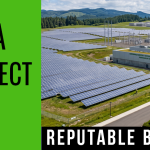
 Solar photovoltaics (PV) has been growing at an exponential rate, more than doubling in the past 3 years to reach over 300 GW of power generation capacity. This has been driven by cost reduction, making rooftop solar more attractive to homeowners, and making utility-scale installations competitive against conventional fossil-fuel power plants.
On the other hand, concentrating solar power (CSP) has experienced less growth. Globally, just 1.5 GW of new CSP capacity became operational from 2015-2017. The United States hasn’t installed any new CSP capacity at all since September 2015 [2].
Conventional CSP designs use large plant sizes, with large amounts of thermal energy storage, to leverage economies of scale and increase capacity factor. This makes sense as a strategy to minimize the cost of generating electricity on a per-kWh basis, but it doesn’t consider the value of the electricity provided by the plant, or the resulting profitability of the plant. Further, large plant sizes require huge capital investments (>$1B). This limits conventional CSP to only utility-scale markets increases financial risk and doesn’t allow CSP to progress by learning through iteration (like PV has done).
So if CSP is falling behind now, what can be done with CSP in the future?
The primary benefit of CSP is that with low-cost thermal energy storage, it can provide high-value electricity, and out-compete batteries for renewable generation when the sun isn’t shining (thermal energy storage cost is near 20 $/kWh, while batteries are unlikely to drop below 150 $/kWh [3-5]). This is certainly important for utilities that are concerned with grid reliability as PV grows (have you heard of the “Duck Curve”? [6]), but could also provide a more reliable source of electricity for micro-grids or other applications with smaller electricity demands.
read more
 It’s called a nanoflower, but if you could brush your cheek against its microscopic petals, you would find them cool, hard and … rusty.
 Flow batteries haven’t been around as long as lithium or lead acid batteries, but everyone, it seems, has heard of them, ever since the technology came down to earth from a NASA programme a few decades back and into ‘civilian’ and corporate hands. It’s been predicted for some time that the redox flow energy storage space will, after some turmoil and rapid consolidation, find success in providing energy storage at durations of more than four hours. This past couple of weeks have been a tale of both turmoil and success.
 According to the new market research report “Battery Energy Storage System Market by Element (Battery, Hardware), Battery Type (Lithium-Ion, Advanced Lead Acid, Flow Batteries, Sodium Sulfur), Connection Type (On-Grid And Off-Grid), Ownership, Application, and Geography – Global Forecast to 2023“, published by MarketsandMarkets™, the market is expected to grow from
  Aggreko-owned storage system experts Younicos claimed first place in the pv magazine Energy Storage Highlights award. Alexander Schönfeldt, the company’s VP sales EMEA, describes this award-winning concept and reveals more details about Younicos’ new rental storage system.
 After Tesla’s massive plan to create
  Earlier this month, the 800 megawatt Bay State Wind offshore project being developed jointly by Ørsted and Eversource off the coast of Massachusetts announced a deal which will see it work with local NEC Energy Solutions to develop an energy storage solution for the offshore wind farm.