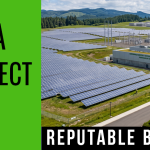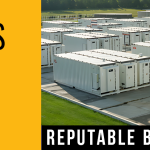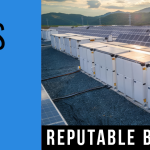
 The solar power pipeline is already popping, now the batteries needed to get us to 80% with wind+solar are starting to get down to the mad and exponential growth we’re told to expect.
Per the US Energy Storage Monitor, from Wood Mackenzie Renewables & Power along with the Energy Storage Association (ESA), total energy storage deployed expanded by 60% in terms of energy and 300% on a power basis in the third quarter of 2018 versus the prior year. However, given a strong Q2 both volumes as measured by energy and power were flat or declining in Q3 ’18 versus the previous quarter.
In total, 61.3 MW / 136.3 MWh of energy storage was installed during Q3 2018. California continued to achor the market, while Hawaii and New York had strong quarters. Behind the meter installations accounted for around 57-60% of the volume on a power basis deployed.
Going out mostly until 2023, the report noted that the front of the meter pipeline expanded to approximately 33 GW of power. This pipeline more than doubled from just over 15 GW reported at the end of the second quarter.
This pipeline does not include behind the meter deployments, and as noted in this report these represented approximately 60% of the volume this quarter. Future growth is expected to heavily expand on the utility scale.
For instance, PG&E recently approved four energy storage projects totalling 567 MW / 2.64 GWh. These include a 300 MW / 1200 MWh system by Vistra Energy, and a 182.5 MW / 1,095 MWh six hour system by Tesla, which are the largest battery projects seen by pv magazine USA staff in the United States to date.
The report estimates that $474 million worth of energy storage will be installed in 2018, and that by 2023, it will break $4.5 billion, representing 10X revenue growth over five years.
The report also suggested that the start of Massachusetts’ SMART program represents a “massive near term opportunity for solar-plus-storage”. The report forecasts that the program will lead toward 80 MW of energy storage installed in total, with Massachusetts’ installed storage expected to grow from 5.4 MW in 2018 to 54 MW in 2019.
read more A team of experts from NC State University and N.C. Central University has released a report detailing energy storage options that the North Carolina General Assembly (NCGA) can use to inform energy policy. The report has short- and long-term implications for both power grid and renewable energy development in North Carolina.
 Around half a million residential PV system owners signed up to Japan’s feed-in tariff policy for 10-year contracts, that will soon expire, may be able to find new ways to benefit from their solar using battery storage.
 MIT engineers have come up with a conceptual design for a system to store renewable energy, such as solar and wind power, and deliver that energy back into an electric grid on demand. The system may be designed to power a small city not just when the sun is up or the wind is high, but around the clock.
 BOULDER, Colo.–(BUSINESS WIRE)–A new report from Navigant Research tracks global energy storage projects, providing data on the country, region, market segment, capacity, status, technology vendor, systems integrator, applications, funding, investment, and key milestones of each project.
 NEW YORK, Dec. 5, 2018 — Peak Power Inc., a leading energy services provider, announced today that it has successfully completed the installation of 375 kW / 940 kWh of battery energy storage with GHP Realty, a division of Houlihan-Parnes Realtors, LLC, at their headquarters at 4 West Red Oak Lane, White Plains, New York. This project was funded in part through an incentive from a Con Edison Energy Efficiency program.
 Wow, talk about the Deep State in action. President* Trump promised to bring back all the coal jobs, but meanwhile the Department of Energy has been busily laying plans for next generation, long duration energy storage systems. That translates into more opportunities for bringing wind and solar power into the nation’s electricity grid, and that pretty much slams the door on the idea of reviving the nation’s coal power sector.
 The Midcontinent Independent System Operator (MISO) on Monday (Dec. 3) filed its official proposal with the Federal Energy Regulatory Commission that some experts say will determine the future of the emerging battery storage marketplace in the U.S.