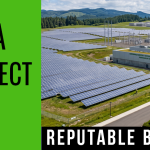
 The New South Wales Department of Planning & Environment has approved three separate solar projects amounting to 492MW capacity, including one project with 100MWh of battery storage.
Wagga Wagga
It has approved the construction of a new 47MW solar farm in Gregadoo, Wagga Wagga, providing more than 150 construction jobs over the coming year.
Director of Resource Assessments, Clay Preshaw, said the AU$61 million facility will be able to power more than 17,500 homes each year and provide a significant economic boost to Wagga Wagga’s local economy.
The project is being managed by Green Switch Australia (GSA).
Suntop
The Department has also approved the AU$262 million, 170MW Suntop Solar Farm project in the state’s Central West, 10 kilometres west of Wellington, which will power up to 70,000 homes and provide up to 250 jobs during construction.
The project will be developed by Photon Energy Australia.
Darlington
The Department has also approved the AU$407 million, 275MW solar farm at Darlington Point near Griffith, including a 100MWh battery energy storage system, which will power over 130,000 homes each year and provide up to 300 jobs during and after construction.
The project is being developed by Edify Energy.
To date, the NSW Government and independent regional planning panels have approved a total of 50 large-scale solar projects across the state
read more UK water utility Northumbrian Water is to pilot the use of battery storage units at a number of its sites under a new revenue-sharing partnership with developer Argonaut Power.
 There was a great deal of debate running up to the release of New York’s energy storage target on the PSC decision. When New York Democratic Gov. Andrew Cuomo announced New York’s energy storage Roadmap this summer he called for a 1,500 MW by 2025 target, but several analysts said the target could be twice as high.
 The 115th U.S. Congress has not even adjourned for the winter, and already a newly resurgent Democratic Party is making demands that reflect its majority status in the U.S. House come January.
 2018 has been a big, yet bumpy, year for the U.S. energy storage market. We’ve seen huge increases in behind-the-meter installations in homes and businesses, but also supply bottlenecks and policy uncertainties that restrained larger-scale battery installations.
 KATOWICE, Poland, Dec. 11, 2018 /PRNewswire/ — The combination of photovoltaics (PV) and energy storage will become the ultimate energy solution for mankind, said Li Zhenguo, president of LONGi Green Energy Technology Co., Ltd, a world-leading manufacturer of monocrystalline silicon PV products. Li made the remarks on Tuesday at a sideline event during the 24th Conference of the Parties to the United Nations Framework Convention on Climate Change (UNFCCC) in Katowice, Poland.
 Making stand-alone energy storage systems eligible for a federal Investment Tax Credit (ITC) would create jobs and help modernize the U.S. electricity grid, according to over 150 companies and industry groups representing storage, wind, solar, hydro, manufacturing and other sectors.
 Energy storage will not only help North Carolina replace coal-powered electricity in the state in the coming decades but may also offset the need for new natural gas plants as well.
 In the quest for conserving energy, researchers are leaving no stone unturned. As far as recent efforts go, the most highly-publicized development has been the Tesla-created giant battery — the Hornsdale Power Reserve (HPR) in South Australia — which recently reported savings of $40 million in its first year. However, the Neoen-owned HPR is still just a giant lithium-ion battery, and lithium is not in unlimited supply.