 Renewable energy supplier and project developer Neoen has begun construction on the largest grid-connected energy storage system in mainland France, a 6MW / 6MWh system which will provide frequency regulation services.
The company announced that work has started on Azur Stockage, a project in the Azur municipality, Nouvelle-Aquitaine. It will be controlled remotely and will respond in under 30 seconds to grid signals, helping inject or draw power from the grid to keep it balanced at its 50Hz operating frequency.
The project’s ‘largest’ tag comes with the qualifier that it is the largest on the French mainland – Energy-Storage.news and our sister site PV Tech have reported over the past couple of years on ongoing tenders for solar-plus-storage projects on France’s numerous island territories.
Projects awarded as a result of those tenders include 17 projects totalling 22.3MW on La Réunion and 16 projects totalling 15.6MW in Guadeloupe. Solar development stalled in France a few years ago, although current President Emanuel Macron and in particular predecessor Francoise Holland and his minister for ecology between 2014 and 2017 Ségolène Royal, saw the island territories, which pay large amounts of imported fuels for electricity, as a win-win for reviving the solar sector in a country largely dependent on domestic nuclear facilities and companies. As a result of the first round of tenders, bids in the next round came in 40% lower, on average.
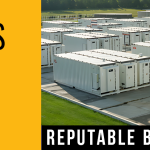
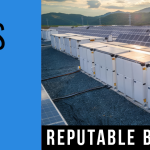
Neoen’s 6MW frequency balancing unit
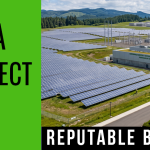
Neoen is building a 9MWp solar PV plant near to the new facility in Azur and is therefore already active in the local area. Energy storage system provider and integrator Nidec ASI will assemble containers for the batteries and all auxiliary equipment in France. Nidec will then create the turnkey battery energy storage system (BESS), also becoming responsible for its operations and maintenance (O&M) when it goes into service.
 Negotiations in New Hampshire produced a pivotal test case for how home energy devices can reduce overall grid costs.
 This year, yet another billionaire took a big bet on energy storage – twice. First, Patrick Soon-Shiong’s company NantEnergy bought zinc-air battery manufacturer Fluidic and earlier this month, he added in Sharp’s SmartStorage division in the US.
 CARMEL, Ind. — Storage is glaringly absent from MISO’s potential plans to manage a possible 40% renewable penetration on the grid, stakeholders told the RTO this week.
 Johnson Controls (NYSE:JCI) and Toshiba (OTCPK:TOSBF, OTCPK:TOSYY) are planning to work together in developing and manufacturing lithium ion batteries, Argus reports, amid a growing shift to electric vehicles from vehicles running on fossil fuels.
 There is very strong demand for energy storage products. Homeowners in Hawaii and California are buying heavily, while broadly, residential solar customers show a very high level of interestin the product.
 In September, South Australia confirmed a plan to set up an AU$100 million (USD $72 million) fund to help households purchase home energy storage batteries. Households could receive subsidies of up to AU$6,000 (USD $4,300) on a purchase of a battery that would store electricity either from a solar-panel system or from the South Australian grid. The electricity could then be used during an emergency or a blackout.