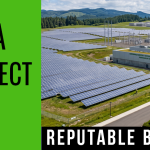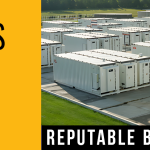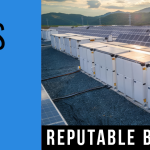
 Jobs in New York’s energy storage sector have grown to approximately 3,900 – a 30% increase from 2012 through 2015, according to a new report from the New York State Energy Research and Development Authority (NYSERDA).
The agency says New York’s commitment to clean energy helped spur this strong growth, and storage will advance the state’s 50% by 2030 clean energy standard, as storage technology can save power generated from solar, wind, and combined heat and power (CHP) systems for later use.
The report projects that by 2030, New York’s energy storage industry could realize annual global revenues between $5.6 billion and $8.7 billion. In addition, jobs could reach between 17,300 to 26,800 employees (a consistent growth scenario versus a delayed market adoption scenario).
“New York State has become a hub for energy storage technologies – creating new, skilled technology jobs and meeting the needs of utilities, building owners, manufacturers and other large power users,” says John B. Rhodes, president and CEO of NYSERDA. “Under Gov. Cuomo’s Reforming the Energy Vision to create an energy system that is cleaner, more affordable and more resilient, strong growth continues for storage technology and investments.”
NYSERDA says it has invested in more than 50 energy storage technology development projects across the state. It is also working to reduce soft costs associated with distributed energy storage systems by 33% in five years.
In December, NYSERDA hosted a two-day, on-site power conference and expo, which brought together stakeholders in solar, energy storage and CHP to facilitate discussions about when and how the technologies can work together to help New York meet its clean energy goals.
Along with several partners, NYSERDA established the New York Battery and Energy Storage Technology Consortium (NY-BEST) in 2010 to help advance the state’s energy storage industry. The consortium now includes Fortune 500 companies, startups, universities, national research centers and laboratories spanning all facets of the energy sector, NYSERDA says.
“NY-BEST is pleased that our efforts to grow the energy storage industry in New York State are producing positive results,” says Dr. William Acker, executive director of NY-BEST. “Thanks to the state’s clean energy policies and strategic investments, New York State has created an unmatched ecosystem for energy storage companies seeking to grow their businesses, and we look forward to continuing to help foster the growth of this industry in New York.”
Click Here to Read Full Article
read more Over the next eight to nine years, energy storage capacity in developing countries is expected to skyrocket from 2 gigawatts (GW) today to more than 80GW, according to a new report by the World Bank Group.
 A new residential energy storage pilot seeks to better understand how batteries installed in homes can be used at the neighborhood level by grid operators to absorb solar power generation excesses during the day and discharge them when needed later in the day.
 New research from the World Bank Group indicates energy storage capacity will increase 40-fold in developing countries over the next 8-9 years; growing to 80GW from 2016’s 2GW capacity.
 From the perspective of both renewable-energy advocates and electric utilities, grid-scale energy storage offers many potential benefits.
 As renewable energy explodes worldwide and displaces legacy power generation systems, stationary energy storage will be implemented with increasing regularity to allow electrical systems to operate more efficiently with lower prices, fewer emissions and increased reliability. Because of this, the energy storage market is expected to grow from 172MW in 2014 to 12,147MW in 2024, according to Navigant Research. So it is only natural that companies across the globe are scrambling to get their piece of this rapidly growing pie. To date, the vast majority of the entries into the energy storage market have depended on lithium-based battery chemistry, but, the idea that lithium-ion is the technological and economic front-runner in the stationary storage space is a myth that is in dire need of de-bunking.
 Canadian underwater energy storage company Hydrostor is eyeing US$1 billion of contracts to replace decommissioned U.S. peak power plants in the next two or three years, its chief executive said.
 The Bay State could soon follow the Bay Area as a leading battery boomtown.
 CALGARY — The rise of renewable power has created a need for energy storage that companies are fulfilling with underwater balloons, multi-tonne flywheels and decades-old designs.