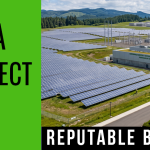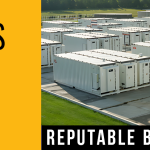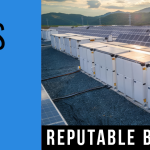
 In the world of electricity, few topics are generating more headlines this year than energy storage. Market watcher Navigant Research figures more than 1,420 projects are under way across the power grid, with a new installation trumpeted almost every week.
“Overall, the global energy storage industry is poised to continue to grow quickly over the next several years,” Navigant analyst Ian McClenny noted in a recent update about the market. “With emerging infrastructure becoming increasingly integrated, dynamic and complex, flexible resources like storage will provide added value to existing and new power-generating assets.”
Although energy storage long has been a technology on the brink — drawing R&D dollars from the likes of Tesla founder Elon Musk, the U.S. military and a growing number of utility pilot projects — there is reason to believe that storage tech has entered a new phase in its evolution.
One statistic that should get you thinking: data from research firm Mercom Capital Group estimates that about $820 million was dedicated to energy storage project financing during 2016. That compares with just $30 million tracked by the company in 2015.
Several initiatives have captured the attention of mainstream media, rather than just the trade press: “A Big Test for Big Batteries,” proclaimed The New York Times in a January article about three huge grid-scale projects in Southern California. The installations are part of broader investments by San Diego Gas & Electric and Southern California Edison meant to improve the stability of the local grid and make it easier to integrate renewable energy generating resources, including solar photovoltaic farms. One storage farm can offer up to 30 megawatts of capacity for up to four-hour stretches. Utilities in other regions are dabbling.
“It’s fair to say we don’t have long-range experience with this technology to say that it is perfect or a nirvana,” Alice Jackson, vice president for Midwest utility Xcel, told The Times. “It’s something we’ll observe as California goes through its experience.”
Click Here to Read Full Article
read more A new pilot project from Illinois’ largest utility is bringing energy storage out from behind the substation and into the neighborhood.
 The energy storage market will expand dramatically in the coming years from an annual installation size of
  On-board batteries are the way of the future. Energy storage is the right approach to make energy systems on board ships more intelligent and efficient. Energy storage systems can be especially beneficial on vessels with a widely fluctuating fuel consumption profile.
 North America has well over 20 GW of utility-scale PV with hundreds of MWs coming on yearly. Energy storage can help maximize the production of both existing and new utility-scale PV installations. In this free guide, Dynapower — the leading manufacturer of utility-scale inverters with over 350 MWs installed worldwide — provides a comprehensive overview of the three systems for coupling solar with storage — AC-coupled, hybrid plus storage, and a new approach DC-coupled with a converter. In addition to a system overview of each solution, Dynapower provides an analysis of the value streams each system type can bring online for installation owners to boost production and revenues.
 For months, the energy storage market has lived in very few places, making it hard to get too excited about updates to the market leaderboard. But that’s starting to change.
 Arguing that energy storage is “critical to ensuring a resilient, reliable, cost-effective and sustainable grid”, the Energy Storage Association joined with 52 other organisations to plead the place of storage in the Trump’s administration’s infrastructure priorities.
 “
“ Since the invention of electricity there is always a challenge to store it for future use. With the technological advancement, battery storage has offered a way to store energy chemically-especially renewable energy, so that it can be used at the point of demand or to balance grid. Amid surge in solar and wind power generation and their intermittent nature, the battery storage demand has increased manifold, and now batteries are big enough to give power backup to mega cities.
 Researchers from the US Department of Energy (DOE) National Renewable Energy Laboratory (