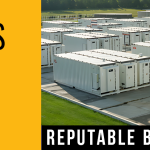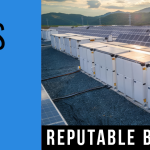
 A distributed energy storage network of 8,000 batteries located at 7,000 telecom facilities in France has reduced utility demand by 10 to 15 MW during two demand response events. And now the company that managed the program wants to bring it to the U.S.
Actility, which provides IoT-based grid balancing and demand response programs, wants to launch its program in the US by partnering with utilities and energy providers in the same way it does in Europe. In addition, it is seeking to work with companies, like France’s Orange Telecom, that have distributed battery networks, said Cedric De Jonghe, the energy business manager for Actility.
Orange Telecom has batteries in the 10- to 20-kW size range at 7,000 locations in France, and was one of Actility’s first partners, “lending” the batteries–and getting paid for it–during critical peak periods on the grid system. Actility aggregated the batteries to respond to the high peak periods.
“In 2017 we have experienced two activations thus far during moments when the electricity grid in France was facing a critical situation,” said De Jonghe.
Actility in 2010 began offering demand response services and started searching for ways to implement non-traditional demand response programs, De Jonghe said.
“We were looking for flexibility in highly distributed sources” in industries such as the telecom industry, he said. It launched its green demand response program in 2016.
In its first green demand-response project, Actility partnered with Orange, in addition to RTE, the largest Transmission System Operator (TSO) in Europe, and Enedis, the largest French Distribution System Operator, to create a “clean demand response” program that responds to spikes in energy demand.
Click Here to Read Full Article
read more Speakers from 22 countries will be gathering at the
  40MWh (megawatt hours) of battery systems will soon be installed at 27 Walmart stores across Southern California.
 Power management company Eaton today announced a contract with
  Maryland on April 10 became the first state in the nation to pass legislation enacting a tax credit for residential and commercial energy storage installations.
 Energiewende
 Vermont’s new Republican governor has said he
  The results of the National Grid’s Enhanced Frequency Response (EFR) tender published in August 2016 have come to be seen as something of a pivotal moment for the fortunes of energy storage in the UK – especially for battery technology.
 California’s Self-Generation Incentive Program (SGIP), the scheme to incentivise the use of distributed energy, opens for applications at the beginning of next month, weighted to favour energy storage.