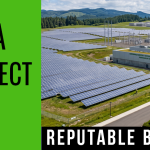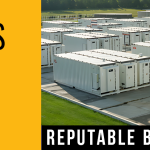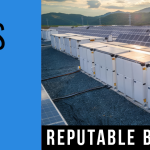
 The greatest challenge that solar power faces is energy storage. Solar arrays can only generate power while the sun is out, so they can only be used as a sole source of electricity if they can produce and store enough excess power to cover the times when the sun is hidden.
Traditional batteries have not been up to the task, but recent innovations in energy storage are rapidly resolving the issue. Research is still ongoing, but many of the newest developments have the potential to turn solar power into the dominant source of energy. You think it’s impossible? The IRENA already confirmed in their 2014 report that it is equally, or in many cases, more cost-effective to use alternative energy for power production rather than fossil fuels.
Fractal Circuitry
Nature itself has provided the inspiration for one of the most promising ways to store energy. A team at RMIT University has come up with a new storage method that manages to be about 3000 percent more efficient than traditional batteries. It also has the potential to help with energy capture and storage in a variety of smaller contexts, such as cell phones, watches, and even electric cars. That widespread potential will most likely be enough to ensure that this technology gets all of the support that it needs to mature into a powerful tool.
The new method relies on the combination of a supercapacitor and a powerful new electrode. The supercapacitor works as the gateway to the new system. It can absorb and discharge energy very quickly, but it can’t store very much energy at once. Previously, that meant that they were almost useless for storing solar power. The new electrode fixes that problem. It uses a large set of repeating circuits to hold energy and carry it through the system. The new electrode is a much more efficient form way to store energy than traditional batters, both in terms of cost and space. Combining the two systems creates a system that can hold a huge amount of energy and transmit that energy with high speed and efficiency.
New Batteries
While most research into storing solar power focuses on finding alternatives to batteries, there are some contexts where they remain useful. Most power plants are reluctant to use batteries because they are relatively expensive and take up a lot of space compared to the amount of energy that they store. That prevents them from being viable for large facilities in most cases. On the other hand, those problems aren’t important for private homes. They don’t need to store a huge amount of energy at once, and batteries that are big enough to meet their needs are reasonably affordable. In many cases, the simplicity of using an array of batteries is more valuable than the increased efficiency of other methods.
The new Tesla Powerwall 2 is proof that batteries are strong option for storing domestic solar power. It can store more energy in less space than previous models, so it’s fairly easy to fit it into an existing home. It also includes an inverter, which is necessary to run most appliances on solar power. It doesn’t have quite as much power as most of the alternatives, but it’s more convenient than they are, which encourages adoption on a small scale.
Click Here to Read Full Article
read more It may not have a clever name, but Mercedes-Benz’s home energy storage solution looks primed to bring some competition to Tesla’s Powerwall in certain markets.
 LONDON, April 24, 2017 /PRNewswire/ — Supercapacitors are an emerging energy storage technology that will take a key role in the future of energy systems.. Batteries and supercapacitors combined offer the best solution for many energy systems from the automotive sector to grid energy storage, allowing batteries not only to perform better but also to extend their lifetime whilst reducing both CAPEX and OPEX.
 STOCKHOLM, Apr 25, 2017 (PR Newswire Europe via COMTEX) — STOCKHOLM, April 25, 2017 /PRNewswire/ —
 Based on the lithium-ion battery technology that Mercedes-Benz has used to power 80,000 hybrid and fully electric vehicles since 2012, Mercedes Benz residential storage batteries are now ready for sale to customers in the UK. Up to 8 battery modules, each with a capacity of 2.5 kWh, can be combined to create an energy storage system with a capacity of 20 kWh. Industrial applications have even greater scalability.
 Since President Trump’s election to office, his administration has made it very clear that building and restoring infrastructure is at the top of their “to-do” list. The Energy Storage Association and their supporters are looking to turn Trump’s priority into an opportunity for their agenda. To create this opportunity, the ESA, and other supporting organizations, are turning to Congress for assistance.
 LG Chem has formally launched its series of residential battery systems for the North American market.
 As part of its REV program, New York regulators recently
  San Diego Gas & Electric (SDG&E) has signed contracts for five new local battery storage facilities for a total of 83.5 MW.
 Eos is the first company to accept orders below $100 per usable kWh for a complete DC battery system including battery modules, battery management system, and outdoor-rated enclosure. The company’s price-cap guarantee ensures that future purchases will receive the lower contracted price or any future price for an equivalent volume purchased the same year. It is also offering up to 20-year performance guarantees at additional cost to optimise capacity under a wide range of applications and use cases.