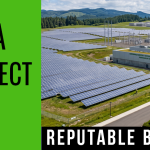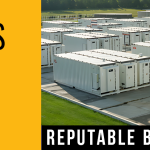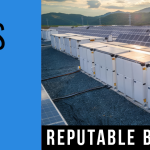
 The solar industry is no longer just talking about pairing energy storage with solar generation.
An increasing number of solar-plus-storage projects have been cropping up around the country, as lithium-ion prices drop lower and customers get more comfortable with storage technology. The AES plant in Kauai set a record-low price in January, only to be beaten by Tucson Electric Power’s sub-4.5 cents per kilowatt-hour PPA announced in May — proving this technology isn’t just for islands and remote microgrids anymore.
For the large developers in particular, storage makes the solar product more appealing to a utility by giving the power plant flexibility and mitigating its effects on grid operations. On the islands of Hawaii, storage has already become necessary for adding major solar capacity; on the mainland, its value increases along with renewable penetration.
To get a handle on just how extensive the interest in storage-backed solar is, I got a list of the 10 largest utility-scale solar developers from my colleagues at GTM Research and tracked down the storage status of each one.
Seven of the top 10 solar developers have incorporated storage into their business strategy, and have either deployed storage alongside PV or are pursuing hybrid installations. The remaining three did not comment on how storage fits into their plans.
“This is well beyond one developer — this is really a trend we’re seeing in the industry,” said Colin Smith, a solar markets analyst at GTM Research. “Solar-plus-storage has become a forced differentiator in the industry.”
First Solar: Bidding on storage
The thin-film solar specialist first invested in energy storage in 2015, when it joined a $50 million investment round in German startup Younicos. At the time, First Solar CTO Raffi Garabedian commented, “As the promise of storage continues to evolve, we are eager to understand how it will broaden our own power plant offerings.”
These days, the No. 1 U.S. solar developer routinely permits new projects in the western U.S. for the possible addition of storage, because so many customers are asking about it, said Scott Rackey, head of PV-plus-storage development at First Solar.
“It’s a small cost to gain the optionality later,” Rackey said.
First Solar has been bidding on solar-plus-storage, including several projects at the scale of 100 megawatts of PV with 100 megawatts of battery capacity. The ideal ratio varies depending on the local grid, Rackey noted: the Southeast tends to have more appetite for PV generation during the day than Arizona, for instance, where oversupply of nondispatchable PV is becoming a challenge.
“It’s really become cost-effective in roughly the last year or year and a half for dispatchable PV,” Rackey said. “We can deliver energy comparable to or less expensively than a new-build fossil fuel plant.”
Expect some storage news from this company, then, in the months to come. First Solar, by the way, prefers the svelter acronym “PVS,” rather than the cumbersome hyphenations of “solar-plus-storage.”
Click Here to Read Full Article
read more Sharp Electronics Corp.’s Energy Systems and Services Group and CivicSolar, are offering Sharp’s SmartStorage
  Batteries — whether they’re powering a smartphone or storing energy on the grid — take a beating.
 Giants of the UK energy sector are to work within a new collaborative group aimed at enabling significant cost reductions for the electricity system through the use of energy storage applications.
 The first quarter was the biggest quarter ever in terms of energy storage installations, but it could also be the biggest quarter of the year, according to the latest version of the U.S Energy Storage Monitor released by GTM Research and the Energy Storage Association.
 Characterized by diverse geographic regions and climate zones, cities, towns and villages in Chile often are separated by difficult terrain and long distances, Sitting atop one of two colliding tectonic plates – the oceanic Nazca and continental South American – the Andean nation, as has come to be known worldwide, is also prone to cataclysmic earthquakes.
 CARROLL, N.H. — Energy storage technology is still moving faster than state regulators and the markets can accommodate, speakers told the 70th Annual Symposium of the New England Conference of Public Utilities Commissioners (NECPUC) on Tuesday.
 Leading U.S. battery researchers say a