
USTDA backs tender request for 25MW hybrid solar-storage in Sierra Leone

on June 20, 2017

Energy Storage NewsThe US Trade and Development Agency (USTDA) has put out a tender request for a 25MW hybrid solar-diesel-storage project in Sierra Leone. 

The facility will be developed by local independent power producer (IPP) Solar Era Holdings, a subsidiary of global EPC Africa Growth Energy Solutions.

The project is set to be delivered in two phases; phase 1 is a 5MW grid-connected facility in Bo, the country’s second largest city. Phase 2 is the larger 20MW hybrid facility that is expected to be a solar-diesel-battery plant. The combination of the three technologies is ideal for Sierra Leone; with much of the population in rural communities that lack access to the national grid. Pairing solar with diesel allows the latter to offset solar’s fluctuating energy source for harmonised delivery of power. The storage component also serves to stabilise the grid via frequency regulation and ramp-rate control.

The tender pertains to finding an EPC for phase 1 of the project. USTDA is currently supporting the development of phase 1 and the launch of phase 2 with a grant which will fund a feasibility study – currently being carried out by Power Engineers Incorporated – to assess the technical, financial and economic viability of the project.

This project represents an opportunity for US engineering and design companies to partner with a Sierra Leonean firm as the country seeks to increase its energy generation capacity as well as diversify its energy mix.

The deadline for submissions is 16 June 2017. 

Back in April, the USTDA provided grants for one of Sub Saharan Africa’s first utility solar-plus-storage projects, located in Kenya. 

Click Here to Read Full Article

read more

Energy Storage NewsUSTDA backs tender request for 25MW hybrid solar-storage in Sierra Leone

IFC: Energy Storage Can Open Doors to Clean Energy Solutions in Emerging Markets

on June 20, 2017

CFIFor more than a hundred years, electrical grids have been built with the assumption that electricity has to be generated, transmitted, distributed, and used in real time because energy storage was not economically feasible . This is now beginning to change. Battery storage at grid scale is on the verge of commercial viability. This is good news, not only because of the over one billion people worldwide who continue to live without access to electricity, but also because of the enormous contribution energy storage can make to greater supply and use of clean energy.

As clean energy generation becomes more mainstream around the world, its variability and supply fluctuation begin to impact the electricity systems for which energy storage is a key factor. Storage can help even out spikes and dips in solar and wind resource availability and enable energy distribution to be shifted from the time of generation to the time of peak demand. There is no well-defined threshold level of renewable energy supply needed to ensure nonstop supply but in most cases grid systems operators begin to invest in storage when 10% of their overall supply comes through renewable sources of wind and solar.

Over more than a decade, energy storage system vendors and battery manufacturers have been perfecting large-scale battery technology by extending its life cycle, toughening it to harsh environments, evolving management systems and, most importantly, continually driving down the cost. The industry has now reached a pivotal moment, with large storage systems becoming more competitive with other grid assets from a business perspective.

The technology has been proven in the markets of North America and Europe with several vendors offering competing technologies and solutions. What’s more, the capacity for installation and operation already exists. Back-of-the-envelope calculations show more and more cases of clean energy becoming viable in an ever increasing number of markets. We can see that stationary storage has clearly begun its evolution from a niche solution to a mainstream grid asset. Nonetheless, as with solar, there is a time lag between achieving viability and mainstreaming storage with commercial partners.

According to a recent study commissioned by IFC, the World Bank’s ESMAP and the US Department of Energy, energy storage deployment in emerging markets is expected to grow 40% a year over the next decade, up from 2GW currently installed in emerging markets, resulting in about 80GW of new storage capacity. This will open up new markets and offer tremendous opportunities.

Click Here to Read Full Article

read more
CFI.coIFC: Energy Storage Can Open Doors to Clean Energy Solutions in Emerging Markets

Lithium technology still leads the pack for renewable energy storage

on June 20, 2017

The-NationalThe biggest obstacle for renewable energy has always been taming the infrequent surges of the resource.

But energy storage options could help harness those bursts to send power in a controlled manner.

There are various types of storage components but lithium ion batteries are still the primary player. However, this technology has been around for awhile. In fact, the electronics heavyweight Sony was the first company to manufacture and sell lithium ion batteries more than 25 years ago.

The popularity of lithium ion may partly be attributed to Tesla and Panasonic, as the pair – along with other strategic partners – are working to create what the electric car maker calls its Gigafactory. The production facility is slated to ramp up production next year, pushing out 35 gigawatts her hour of lithium ion batteries – or more than the total amount of the product manufactured worldwide in 2013. And with the increase in production, there has been a decrease in prices.

Logan Goldie, the head of energy storage analysis at Bloomberg New Energy Finance (BNEF), said lithium ion battery pack prices have dropped by 72 per cent to US$273 per kilowatt hour last year from $1,000 per kWh in 2010. “At the lower end of the range, you have packs being sold for less than $200 per kWh today,” he said.

There are a number of alternative technologies that can help to store power, but lithium ion is versatile, with rapidly falling prices and improving performance. Mr Goldie said most of this is driven by the investments in electric vehicles (EVs) – such as the move from Tesla and Panasonic to hugely increase roll out of lithium ion batteries for EVs. “The growing interest in EVs is thus spurring investment in the technology, that is in turn benefiting stationary storage developers,” he said. “Other technologies don’t have this overlap and so have much smaller current addressable markets, which impacts their ability to scale, pricing and operational experience.”

Traditionally energy storage projects have been stand-alone rather than being tied to a scheme such as solar photovoltaic (PV), but there is a new movement combining both solar PV and batteries particularly where there are local grid constraints. The United States is leading the charge – last month a utility in Arizona signed a PV plus storage agreement for about 4.5 cents per kWh, although removing tax subsidies puts it at about 6 cents.

However, the longest storage time Mr Goldie has so far seen for this technology is six hours, although there are other longer-term, but more costly, solutions such as sodium sulphur batteries or flow batteries.

“Focusing on lithium ion, the limiting factor has really been cost – four years ago, most people were only talking about lithium ion as being suitable for applications up to an hour and this has gradually extended since then.”

Click Here to Read Full Article

read more
The NationalLithium technology still leads the pack for renewable energy storage

Energy Recap: Are Giant Batteries The Future For Renewable Energy Storage?

on June 19, 2017

Seeking AlphaWelcome to the latest edition of the Energy Recap. This week, we wanted to highlight an interesting article that we came across recently titled “The Race to Build a Better Battery for Storing Power.” The article notes that one of the major downsides of renewable energy – such as solar and wind power – is that it can be “unreliable as the primary source for power grids.” If this energy could be stored in giant batteries until it was needed, that would be a major step forward in this arena.

So, what’s your take on the idea of creating batteries for this purpose? Do you think it’s even feasible? Please let us know by leaving your thoughts in the comments section.

On a separate note, last week we asked readers to provide any suggestions they might have as to what topics the recap should cover going forward, whether related to renewable energy or any other energy-focused topic. We’d love to hear from more of you, so please comment below with your ideas.

Click Here to Read Full Article

read more
Seeking AlphaEnergy Recap: Are Giant Batteries The Future For Renewable Energy Storage?

How hybrid energy storage aids corporate sustainability

on June 19, 2017

GreenBizThe market for commercial and industrial (C&I) energy storage has experienced rapid growth as a result of numerous market developments in the past several years. Across the entire energy storage industry, decreasing prices for batteries and other system components have helped make energy storage systems an economical solution for more customers, including building owners and managers. These systems have a unique ability to provide value for both host customers and grid operators.

Traditional benefits

An important factor supporting the C&I energy storage market is that storage fits seamlessly into building energy management and energy efficiency/service contracts that many companies already have in place. It provides a non-disruptive way to reduce electricity expenses by enabling participation in demand response programs by simply switching on the storage device, as opposed to traditional demand response that requires shutting down a load in the building. Storage also can provide several hours or more of backup power for customers’ critical loads — and microgrid functionality if tied to distributed generation resources. Energy storage provides a non-disruptive way to achieve several other benefits, as listed in the table below.

But what happens when a single storage system is not enough? As C&I building needs evolve and operations become increasingly specialized, having the correct technology that can serve a range of applications will be critical to realizing total system benefits. 

In recent years, battery technology innovations have been focused on software management to maximize round-trip efficiency. While this will continue to be important, behind-the-meter customers could see greater benefits from hybrid energy storage systems. These systems can add advantages on top of what conventional battery technologies offer for C&I customers.

Click Here to Read Full Article

read more
GreenBizHow hybrid energy storage aids corporate sustainability

SimpliPhi Power Brings Non-Toxic, Long Lasting Energy Storage to the U.K.

on June 17, 2017

Market Watch energy storageOJAI, California, and WINCHESTER, England, Jun 14, 2017 (PR Newswire Europe via COMTEX) — Company expands into Europe with new distribution partner Streamline Power

OJAI, California, and WINCHESTER, England, June 14, 2017 /PRNewswire/ — SimpliPhi Power [http://simpliphipower.com/] has continued its global expansion into Europe through a new distribution partnership with Streamline Power Limited [http://www.streamline-power.com/]. The award-winning [http://simpliphipower.com/simpliphi-power-access-honored-2017-energy-industry-innovation-year-stevie-awards/] SimpliPhi Lithium Ferrous Phosphate battery solution has already been installed in a residential project in Winchester, England, the first of many installations underway in the region. The excess energy generated by the Winchester home’s rooftop solar array is stored by two SimpliPhi 3.4 kWh batteries, which are safely installed under the home’s main staircase, a closet similar to the one occupied by a famous boy-wizard.

“We are delighted to expand into the U.K. and beyond with Streamline Power, and that our PHI batteries were chosen by the Winchester family over other Lithium chemistries available in the market. This small installation showcases big implications – by removing the hazardous element cobalt from our battery chemistry, we are able to provide safe storage solutions that do not pose the risk of thermal runaway and fires. Not only does this mean the PHI batteries can be safely installed in small unventilated spaces, such as a closet inside the home, but they create efficient, powerful and long term solutions that de-risk the energy storage proposition overall. People should not have to chose between their own safety and access to power, much less store clean solar energy in toxic and hazardous batteries,” said SimpliPhi CEO Catherine Von Burg.

SimpliPhi Power has a 15-year track record of providing quality, durable and reliable energy storage solutions for the entertainment, military, residential, commercial and utility markets. The company began its international expansion [http://simpliphipower.com/simpliphi-power-and-dpa-solar-bring-cobalt-free-lithium-battery-systems-to-australia-new-zealand/] beyond North America into the budding Australian market in late 2015. Now SimpliPhi continues to expand with Streamline Power, part of Solar PV Partners, a company with demonstrated ability to roll out new battery technologies in residential and commercial applications for off-grid and grid connected customers in the U.K. and Europe.

“We researched the energy storage market to find the highest performing, longest life and safest Lithium battery made today and identified SimpliPhi Power as the ideal solution. SimpliPhi Power has proven its performance in some of the harshest environments and use-cases on earth, will not catch fire, is non-toxic, requires no maintenance and lasts longer than any other battery,” commented Managing Director of Streamline Power Dennis Garrison. “We are very proud to be their partner in the U.K. and have already had very high demand for SimpliPhi energy storage systems in universities and commercial properties, as well as in residential.”

Click Here to Read Full Article

read more
Market WatchSimpliPhi Power Brings Non-Toxic, Long Lasting Energy Storage to the U.K.

How Do We Get to 100% Renewable Energy? Could be Storage, Storage, Storage

on June 17, 2017

UCSAs communities, companies, and even entire Midwestern utility companies move to supply 100% of electricity needs from renewable energy, the question presents itself: is this even possible? The answer, it turns out, is yes—and it’s made possible by the technical capabilities of advanced energy technologies (and especially storage).

This is UCS, so let’s talk about how to get the hard stuff done. To replace conventional generation with renewables, eventually all the services from fossil-fuel power plants have to be supplied by adding wind, solar, smart consumer appliances and electric vehicles, and storage.

As renewable energy is added by businesses and utilities, here are 5 great building blocks for a future that is 100% renewable energy.

1. Solar is capable of so much more than energy

The utility industry has begun to recognize that new technologies available can provide the reliability functions they need. The adoption of digital controls on solar and wind systems, particularly the inverters, make reliability functions available and useful already, without storage.

The fastest changing parts of the power grid and thus the tool box of solutions are coming from solar—which has present deployments averaging over 10,000 MW per year—and the sudden return of interest and capital to utility-scale energy storage.

The California grid operator has taken the challenge posed by UCS to demonstrate that the solar farms being built today are capable of providing a range of “essential services.” See this summary of a field test where a solar farm demonstrated faster and more accurate performance than other generator types. Wind turbines have also demonstrated these capabilities.

2. Storage is becoming part of the power plant

New energy storage deployments demonstrate just how quickly we can overcome the limit that the sunset creates for solar. The trajectory of energy storage substituting for conventional generation can be traced from actual practices. Beyond the early or largest examples of non-battery energy storage recently illustrated in the New York Times, going forward, there is widespread and dramatic potential for the use of battery storage by businesses and hybrid power plants.

Battery storage added at a power plant, both conventional and renewables, can take on duties that were met by old generators. First seen in remote locations, battery storage paired with generation began in isolated grids in places like Hawaii and Chile where ancillary services from very small generator fleets were unavailable or constraining the grid operations. This helped establish the technical and commercial foundation for expansion to larger grids in the United States.

Recent energy storage deployments now demonstrate a turning point. Present state-of-the-art technology adoption includes manufacturer General Electric (GE) adding energy storage to improve the performance of its line of peaking plants.

Click Here to Read Full Article

read more
Union of Concerned ScientistsHow Do We Get to 100% Renewable Energy? Could be Storage, Storage, Storage

Genbright and Ice Energy partner to reduce peak electricity demand on Nantucket

on June 16, 2017

penn-energyHINGHAM, MA–(Marketwired – Jun 15, 2017) –  Genbright LLC, a New England-based company specializing in the development and operation of new clean energy technologies, and Ice Energy, a leading provider of distributed thermal energy storage for utilities, have partnered to help reduce Nantucket’s peak energy demand using Ice Energy’s innovative energy storage solution.

The Massachusetts Department of Energy Resources (DOER) awarded Genbright and Ice Energy a contract to provide over 200 residential behind-the-meter energy storage solutions on Nantucket using Ice Energy’s proprietary Ice Bear 20 technology. Genbright will perform real-time dispatch of the Ice Bears to deliver over 1 MW of peak demand reduction, which is equivalent to one year of growth in electricity demand on the island.

“We are grateful for the opportunity to show how Genbright can provide value to ratepayers by deploying and operating new innovative technologies. The Ice Bear 20 is an ideal solution for mitigating Nantucket’s growing peak demand, and saving ratepayers money,” said Joe Crespo, Founder and Partner of Genbright. “By adding the Ice Bear to our portfolio of dispatchable clean energy technologies, Genbright is expanding its capability to help New England manage the increasingly complex needs of our electricity grid.”

Over 200 Ice Bear units will be installed on Nantucket, beginning in summer 2017. The goal of the project is to prove how new energy storage technologies can be deployed as “non-wires alternatives” to defer the need for a third undersea cable to Nantucket, which is expected to cost between $75-100 million. The total value of this project is approximately $3 million. 

Replacing standard residential AC units, the Ice Bear provides a unique solution to the problem of peak electricity demand. An Ice Bear freezes water into ice at night when demand for power is low and electricity is abundant. During the day, the ice is used to provide air conditioning instead of energy-intensive AC compressors. Ice Bear systems also reduce CO2 emissions.

“Partnering with Genbright on projects in New England, such as the Nantucket non-wires alternative, is a perfect example of how Ice Energy can contribute to clean, affordable and reliable energy, a common goal shared with other New England communities,” said Mike Hopkins, CEO of Ice Energy.

“We are proud and excited for Nantucket to be chosen to serve as a demonstration location for this innovative energy storage project, and to be a model for other areas experiencing peak load issues,” said Lauren Sinatra, Energy Project and Outreach Coordinator for Nantucket. “Local participants will enjoy increased comfort as well as savings on their energy bills. They will also be doing their part for the greater good of the island by helping to defer the need for traditional contingency support, such as back-up diesel generation and a costly third undersea cable.”

Click Here to Read Full Article

read more
Penn EnergyGenbright and Ice Energy partner to reduce peak electricity demand on Nantucket

Canada’s Biggest Energy Storage Project Will Be On-Line in a Few Months

on June 16, 2017

energy storage greentech mediaThe rapidly growing U.S. energy storage industry deployed 71 megawatts and 234 megawatt-hours of capacity in the first quarter of 2017.
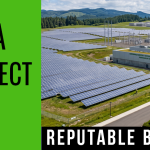
Now, Canada is showing signs of life with a 12.8-megawatt/52.8-megawatt-hour energy storage project to be built and installed by Powin Energy.

It will be the largest energy storage project in Canada when operational.

Powin has joined with Hecate Energy to build and install the project at two sites in Ontario, using a modular 140-kilowatt element to construct the systems. The project applies energy storage to frequency regulation, voltage control, and reactive power support.

The Independent Electricity System Operator (IESO) is employing these projects as part of its long-term energy plan and expects the systems to be on-line by the end of September 2017. That’s one of the clear advantages of energy storage: fast deployment.

The company building this system has experience in rapid installations; Powin deployed a 2-megawatt/9-megawatt-hour storage system in less than six months to help compensate for the Aliso Canyon natural gas leak in Southern California Edison territory. (Tesla, Greensmith Energy and AES Energy Storage completed even bigger projects for the Aliso leak in six months’ time.)

“When IESO announced 34 megawatts of Phase 1 procurement back in July 2014, it was the largest such procurement of energy storage in North America, of which the Hecate project was the single biggest award. Since then, the project, along with the remainder of Phase 1 projects, haven’t become operational yet. It almost seems like eons ago in storage years,” said Ravi Manghani, director of energy storage research at GTM.

“From Powin’s perspective, the delay couldn’t have worked any better,” Manghani explained. “Back in 2014, Powin was still an early-stage company throwing everything at the dartboard, but since then it has received investment from SFCE (parent company of Suntech), and Powin has slowly but surely started winning contracts in California and the Pacific Northwest — and now this 52-megawatt-hour contract in Canada.”

Click Here to Read Full Article

read more
GreenTech MediaCanada’s Biggest Energy Storage Project Will Be On-Line in a Few Months

Today’s Top Solar Developers Have Become Storage Developers, Too

on June 16, 2017

energy storage greentech mediaThe solar industry is no longer just talking about pairing energy storage with solar generation.

An increasing number of solar-plus-storage projects have been cropping up around the country, as lithium-ion prices drop lower and customers get more comfortable with storage technology. The AES plant in Kauai set a record-low price in January, only to be beaten by Tucson Electric Power’s sub-4.5 cents per kilowatt-hour PPA announced in May — proving this technology isn’t just for islands and remote microgrids anymore.

For the large developers in particular, storage makes the solar product more appealing to a utility by giving the power plant flexibility and mitigating its effects on grid operations. On the islands of Hawaii, storage has already become necessary for adding major solar capacity; on the mainland, its value increases along with renewable penetration.

To get a handle on just how extensive the interest in storage-backed solar is, I got a list of the 10 largest utility-scale solar developers from my colleagues at GTM Research and tracked down the storage status of each one.

Seven of the top 10 solar developers have incorporated storage into their business strategy, and have either deployed storage alongside PV or are pursuing hybrid installations. The remaining three did not comment on how storage fits into their plans.

“This is well beyond one developer — this is really a trend we’re seeing in the industry,” said Colin Smith, a solar markets analyst at GTM Research. “Solar-plus-storage has become a forced differentiator in the industry.”

First Solar: Bidding on storage

The thin-film solar specialist first invested in energy storage in 2015, when it joined a $50 million investment round in German startup Younicos. At the time, First Solar CTO Raffi Garabedian commented, “As the promise of storage continues to evolve, we are eager to understand how it will broaden our own power plant offerings.”

These days, the No. 1 U.S. solar developer routinely permits new projects in the western U.S. for the possible addition of storage, because so many customers are asking about it, said Scott Rackey, head of PV-plus-storage development at First Solar.

“It’s a small cost to gain the optionality later,” Rackey said.

First Solar has been bidding on solar-plus-storage, including several projects at the scale of 100 megawatts of PV with 100 megawatts of battery capacity. The ideal ratio varies depending on the local grid, Rackey noted: the Southeast tends to have more appetite for PV generation during the day than Arizona, for instance, where oversupply of nondispatchable PV is becoming a challenge.

“It’s really become cost-effective in roughly the last year or year and a half for dispatchable PV,” Rackey said. “We can deliver energy comparable to or less expensively than a new-build fossil fuel plant.”

Expect some storage news from this company, then, in the months to come. First Solar, by the way, prefers the svelter acronym “PVS,” rather than the cumbersome hyphenations of “solar-plus-storage.”

Click Here to Read Full Article

read more
GreenTech MediaToday’s Top Solar Developers Have Become Storage Developers, Too