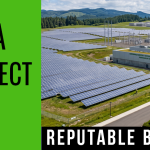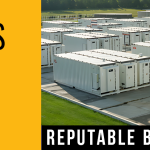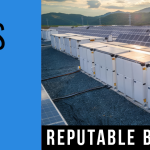
 State standards are driving electric utilities’ use of renewable energy — but without battery storage capacity, electricity generated from wind, water or the sun may soon saturate the market in certain regions.
Ten years ago, utilities underestimated how much renewable energy they would use due to states’ regulations and the falling cost of wind and solar power. But without large-scale battery storage, the increases observed so far could be at risk of plateauing.
The growth and breakthroughs in renewable energy contributed to lowering the country’s carbon footprint since renewable and nuclear energies do not create carbon dioxide; a saturation in the renewable energy market could also hurt some states’ ambitious climate goals.
The Energy Information Administration estimates carbon dioxide emissions from the electric power sector fell about 5 percent last year and the year before, the largest-ever decline for two years in a row since 1973.
A study out this month funded by the Energy Department looked at the relationship between planning and electricity procurement for 12 utilities in 10 Western states through 2015. The study showed Western utilities bought three times more wind energy more than regulators expected based on the utilities’ resource plans.
This uptick may not be surprising due to newer laws in 29 states and the District of Columbia that require utilities to get a set amount of renewable energy. In addition, eight other states have renewable energy goals (as opposed to enforced standards). Montana, for instance, had set a renewable portfolio standard in 2005 to use 15 percent renewable energy by 2015.
NorthWestern Energy, a Montana utility, currently surpasses the standard, with 60 percent of its electricity coming from hydropower and wind generation. But the company says renewables aren’t as reliable as other sources of power.
Click Here to Read Full Article
read more Companies are increasingly turning to intelligent energy storage solutions to reduce emissions, increase energy efficiency and enable renewable energy.
 When most people think of energy storage, they probably think of Elon Musk and Tesla‘s
  The energy storage industry group has beefed up its leadership team as it prepares for a rapid scale-up of the companies it represents.
 Concentrating solar power (CSP) has existed since 1866, but for the last couple of decades, photovoltaic (PV) has been the dominant solar technology. Now with technological advancements and
  Stem Inc. activated several of its virtual power plants, networks of
  Boston, MA, June 27, 2017 (GLOBE NEWSWIRE) — Consumer electronics like smartphones and laptops have traditionally driven the most demand for energy storage devices such as lithium-ion batteries, but clean energy advances mean that transportation and stationary energy storage will soon become the largest energy storage markets, according to
  The list of huge multinational companies seeking to source 100 percent of their energy from renewable generating sources seems to grow on a monthly basis — 63 percent of the organizations on last year’s Fortune 100 list have made a proclamation of this sort.
 There’s the battery in your watch. There’s the battery in your mobile phone. And then there’s the battery at Green Mountain Power’s Stafford Hills solar farm in Rutland, Vt.
 ALBANY, N.Y. — New York lawmakers last week unanimously passed a measure requiring the state’s