 Elon Musk has gotten a lot of attention for his proposed efforts to rebuild Puerto Rico’s electric grid, which could prove how cheap and valuable solar and energy storage could be in the decades ahead. Musk’s plan isn’t public yet, but it would likely mean bringing Powerpacks to the island to help deal with outages that still affect 90% of consumers. And this may be an instance where Tesla (NASDAQ: TSLA) could build a solution faster than most utilities.
But Tesla isn’t the only company eyeing solutions in Puerto Rico. Sonnen has said it will build microgrids on the island as well. This is potentially the first big test for solar plus storage as a fast solution to island infrastructure challenges.
With a little help from energy storage, renewable energy could be just what Puerto Rico needs. Image source: Getty Images.
How solar and energy storage could help Puerto Rico
There are two main problems facing Puerto Rico’s energy infrastructure. First, when centralized power stations go offline during a hurricane they leave thousands, or millions, of people without power. Second, downed power lines can make an operational power plant meaningless because they aren’t connected to the grid. It’s this second problem that’s the main issue for Puerto Rico today and in the long term.
A grid with more solar and energy storage could reduce both problems in Puerto Rico. Solar arrays all over the island would spread out energy generation across the island, reducing the risk that one plant will go down. And to generate enough power for the entire island, about 9.1 gigawatts of solar would need to be installed, requiring about 72,800 acres, or just 3.3% of the country’s land. Wind turbines, particularly offshore, could reduce that land usage as well. Puerto Rico could easily generate 100% of its own electricity, assuming it had enough energy storage.
From a distribution standpoint, having a de-centralized grid would help the rebuilding process. It wouldn’t stop blackouts completely, but if transmission redundancies are built into a grid based on solar and energy storage it could make blackouts less likely.
It’s not clear how much energy storage would be needed to keep Puerto Rico’s grid operations — since it’s never been done — but 55,000 megawatt-hours or about 250,000 Tesla Powerpacks would be a full day’s storage. That’s 426 times the size of the company’s Australia project, so it’s a lot, but not outside the realm of possibility.
Click Here to Read Full Article
read more A new redox flow battery demonstration project was launched in Belfast, Northern Ireland, this week.
 Hawaiian Electric Co. (HECO) has big plans for energy storage, but is wary of moving too quickly. The utility is looking for better storage technology and economics before moving too much on deployment.
 Reality is, that most people who want solar power on their home actually want energy storage as well. We want energy storage because if the grid goes down, we want our house to run smoothly – day or not, sunny or cloudy. Additionally, many of us hold onto the dream of disconnecting from The Man.
 A new study by Navigant Research indicates annual installations of utility-scale
  California is on the cusp of a dramatic jump in deploying cost-saving, climate-solving technology in the form of customer-sited energy storage, but the industry needs help cutting red tape that keeps the cost of the technology unnecessarily high for customers.
 Elon Musk didn’t need 100 days after obtaining a connection agreement to switch on the Tesla big battery in South Australia. In fact, it took him less than 100 minutes.
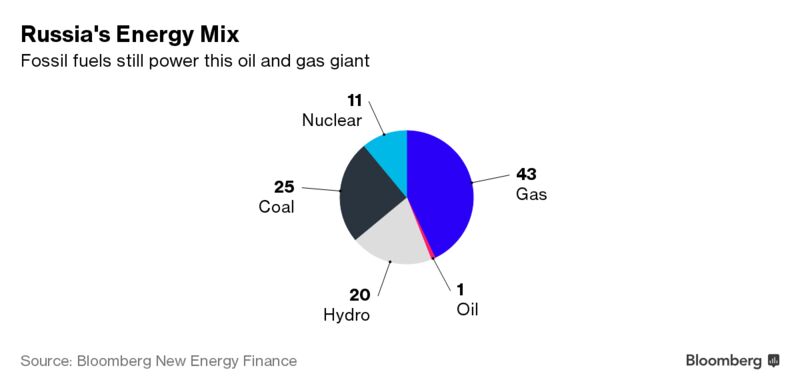
 Here’s a fun fact about Russia: it gets a