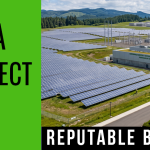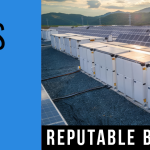
 The installed capacity of energy storage for microgrids is expected to increase dramatically over the next decade, with nearly 15 gigawatts of new cumulative capacity and revenue worth $22.3 billion, according to a new report from Navigant Research.
Navigant Research published a new report earlier this month investigating energy storage for microgrids (ESMG), providing an analysis of expected trends and market dynamics through the next decade, until 2026. Unsurprisingly, the report concludes that interest in ESMG technology is increasing alongside the interest in solar PV and wind deployments. While energy storage systems are not inherently required for a microgrid to operate, Navigant concludes that storage systems have nevertheless emerged “as an increasingly valuable component to distributed energy networks because of their ability to effectively integrate renewable generation.”
The report’s key highlight predicts that through 2026 there will be a cumulative installation of 14,850.7 MW (megawatts) of new ESMG capacity with revenue of approximately $22.3 billion in revenue.
“There are several key drivers resulting in the growth of energy storage-enabled microgrids globally, including the desire to improve the resilience of power supply both for individual customers and the entire grid, the need to expand reliable electricity service to new areas, rising electricity prices, and innovations in business models and financing,” explained Alex Eller, research analyst with Navigant Research. “Innovations in business models and financing will likely play a key role in the expansion of the ESMG market during the coming years.”
Click Here to Read Full Article
read more A distributed smart grid that can “heal” itself in the event of system components failing has energy storage and energy management software at its core, grid-scale system integrator Alfen has said.
 Renewable energy sources are only as reliable as the natural world that fuels them. A cloud passing overhead cuts off solar power; the wind stops blowing and windmills stop working. In order for us to depend on undependable power sources, we need a grid-sized backup to acts of God.
 If you live in Frankfurt, Germany and have solar panels on your roof, you might be able to generate enough energy to power your whole home throughout the day. But if you pull in too much energy for your needs, or not enough, you can trade power with another solar-powered home in Hamburg, or Berlin, or anywhere in the country. That’s the principle behind
  Conductive metal-organic frameworks could form basis of storage systems for renewable energy, says US team
 Wind and solar power are increasingly popular sources for renewable energy. But intermittency issues keep them from connecting widely to the U.S. grid: They require energy-storage systems that, at the cheapest, run about $100 per kilowatt hour and function only in certain locations.
 Molten metal could help solve a key issue with renewable power by storing energy efficiently and cheaply, researchers have claimed.
 The electric industry is going through a period where long prevailing planning and operating assumptions are being upended. Significant, multi-faceted changes in energy supply and demand technology are compelling electric utilities to fundamentally rethink their legacy business models and develop profoundly different visions of their role in the energy market.With expected technological innovation, storage will grow in importance, making it imperative for planners to consider storage for energy, capacity, and ancillary service needs in all parts of the industry value chain.
 BEIJING, Oct 12 (Reuters) – China aims to boost its large-scale energy storage capacity over the next decade, the government’s central planner said, in a major push to solve the problem of stranded power in the west of the country as Beijing promotes the use of more renewable power.
 Renewable energy