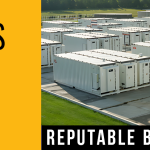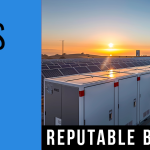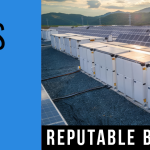
 A week after Tesla announced it had won a tender for the installation of the world’s biggest battery storage system in Australia, Siemens and AES launched a joint venture that focuses exclusively on battery storage systems. The first comments from observers suggest that this joint venture, called Fluence, could turn into stiff competition for Tesla, and there are facts to support this suggestion.
Tesla has 300 MW worth of battery-powered storage systems across 18 countries. AES and Siemens boast a combined 463 MW of such projects across 13 countries. Tesla has a gigafactory and plans to build three more. AES has a decade of experience in energy storage systems, and Siemens has more than a century of experience in all things energy technology as well as an established presence in over 160 countries around the world.
It certainly looks like the energy storage sector just got a lot more exciting. Bloomberg’s Brian Eckhouse quotes AES’ chief executive, Andres Gluski, as saying that energy storage is “the holy grail for renewables.” Gluski is certainly right: the biggest hurdle for the wider adoption of renewable energy in the past has been the lack of reliable energy storage capacity that would solve the pesky intermittency challenge that is inherent in solar and wind power generation.
With battery-based storage, renewable energy will receive a major boost; there’s hardly any doubt about it. According to Bloomberg New Energy Finance, while there was 4 GW of battery-based storage capacity installed by the end of 2016, it is estimated to reach 45 GW by 2024.
There are three drivers to this increased adoption: reliability, sustainability, and affordability, as expressed by Siemens’ head of energy for the U.S. and Canada. This is what led Siemens and AES to join their forces, in fact, or, as Gluski put it to Green Tech Media, “We have to massify this product to continue to bring down costs. On long-duration systems, we think we’re the most competitive in the market, but we’ll be even more competitive if we’re even larger.”
Click Here to Read Full Article
read more Wide-scale storage is currently the Holy Grail of researchers designing energy-storage solutions for clean energy, and scientists at Stanford University have come closer to achieving it with a
  First broad ‘evidence-based’ comparison shows similar capital cost evolution among technologies including lithium-ion and flow batteries
 In this week’s news, utility scale storage is on the up-and-up, led by a new partnership between two AEE members, and Microsoft makes major deals for advanced energy. Both stories exemplify two trends we’re tracking this year: major corporations choosing advanced energy and the rapid growth of the storage market. Any way you slice it, advanced energy is on the rise!
 Sonnen has signed a contract with an Arizona homebuilder to install its energy storage systems along with rooftop solar on each residence in forthcoming developments.
 Korean battery maker Samsung SDI is upbeat on growing demand for energy storage, driven by an increasing number of countries pushing for energy self-sufficiency, along with a drop in battery prices making it economically feasible.
 ST. PAUL — A new report from a Minnesota university shows adding energy storage may be a cost effective way to help meet the state’s electricity demand.
 When it comes to energy storage, some of the most skeptical entities in the power sector are often utilities.
 Utility-scale zinc-iron flow battery maker VIZn Energy claims it can deliver energy storage to pair with solar or wind at a “record low price” of just US$0.04 per kilowatt-hour.