
Eos Energy Storage Providing Zinc Battery System at Greek Oil Refinery

on May 20, 2020

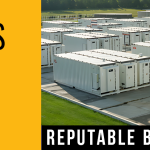
Zinc battery storage manufacturer Eos Energy Storage was awarded contracts for systems providing on-site power resiliency at an oil refinery in Greece.

New Jersey-based Eos has partnered with Motor Oil Hellas and Ingeteam on the two projects. Eos will design, build and deliver a 1-MW/4 MWh behind-the-meter battery system at Motor Oil’s Corinth Refinery in Athens.

“This project is not only our initial entry into the dynamic Greece energy storage market, but it’s also an opportunity to demonstrate the many advantages of our storage technologies including performance, safety, and environmental conditions,” said Joe Mastrangelo, CEO of Eos Energy Storage.

The project with Ingeteam calls for Eos to provide the full AC-integrated system for the INGECON Bseries inverter and miniskid MC solution and EMS plant controller.

The work at the Corinth Refinery is focused on helping lower costs, shaving peak demand and optimizing the site’s grid resiliency. The high temperatures of the Mediterranean climate post challenges for lithium ion chemistries which require HVAC additions, and the Eos’ zinc system does not, according to the release.

Eos will plan, design and commission its patented Znyth storage system. This technology employs a unique zinc-halide oxidation/reduction cycle packaged in a modular, sealed, static-cell, flooded, bipolar battery.

“We consider Eos battery technology as the most competitive and attractive one compared to Li Ion batteries, capable of offering a lot of opportunities in large scale BESS in the future,” said Vassilis Viziryiannakis, Head of Electricity Business of Motor Oil Hellas.

read more
Fractal Energy Storage ConsultantsEos Energy Storage Providing Zinc Battery System at Greek Oil Refinery

UK Energy Storage Maturing From ‘False Sense of Security’ of Contracted Revenues

on May 20, 2020
Energy-Storage-News

Merchant energy storage has become an investable asset class in the UK, a provider of battery optimisation services has said, with the market moving away from an emphasis on contracted revenue streams for supplying grid services.

Dr Ben Irons, co-founder at Habitat Energy, said that “three years or so ago, firm frequency response (FFR) contracts were where 100% of the action was for battery storage in the UK,” as battery storage became eligible to provide the grid-balancing service to transmission system operator (TSO) National Grid.

However, according to Irons, the idea of a contracted revenue stream “gave a false sense of security,” with contracts generally only two years long for FFR, and even the longer contracts award through the UK’s landmark 200MW tender for enhanced frequency response (EFR) were four years and were “quickly snapped up”.

Speaking to Energy-Storage.news following his appearance at last week’s online Energy Storage Digital Series conference – at which he explained instead that merchant opportunities including arbitrage have matured to provide decent revenues for Habitat’s clients – Ben Irons said that those two or even four years contracts were not “nearly enough to cover the investment horizon or reach a payback on capex, without coming back for a series of further contracts later”.

“The problem was there was no guarantee on the price for those subsequent contracts, as many early battery investors learned to their cost when the FFR price dropped from 19 to 5 £/MW/hr in the space of a couple of months,” Ben Irons said.

read more
Fractal Energy Storage ConsultantsUK Energy Storage Maturing From ‘False Sense of Security’ of Contracted Revenues

PG&E Poised to Expand Battery Energy Storage Capacity by More Than 420 Megawatts

on May 20, 2020

SAN FRANCISCO–(BUSINESS WIRE)–Pacific Gas and Electric Company (PG&E) has requested approval of five energy storage projects totaling 423 megawatts (MW), in a filing with the California Public Utilities Commission (CPUC).

The projects are intended to further integrate clean energy from renewable generation sources while ensuring future reliability of the electric system.

“PG&E is deeply committed to the California vision of a sustainable energy future. As we continue to integrate large amounts of intermittent renewable energy, we are now taking advantage of advancements in energy storage technology to ensure that customers continue to receive clean and reliable power from a flexible and dependable electric grid,” said Fong Wan, senior vice president, Energy Policy and Procurement, PG&E.

The agreements for the projects are a result of a competitive request for offers (RFO) PG&E launched in February following a November 2019 CPUC decision that identified potential reliability issues beginning in 2021.

The CPUC authorized utilities and other load-serving entities in California to procure resources that would address those potential future system reliability issues while building progress in meeting the state’s greenhouse gas emissions reduction goals.

PG&E was authorized to procure at least 716.9 MW of system reliability resources to come online between August 1, 2021 and August 1, 2023. The five new battery energy storage projects announced today represent PG&E’s first phase of procuring system reliability resources that need to come online within that timeframe.

PG&E will issue another (phase two) competitive solicitation this summer for resources to come online by August 1, 2022 and August 1, 2023.

read more
Fractal Energy Storage ConsultantsPG&E Poised to Expand Battery Energy Storage Capacity by More Than 420 Megawatts

Energy Storage Poised To Tackle Grid Challenges From Rising EVs as Mobile Chargers Bring New Flexibility

on May 19, 2020
Utility-Dive

“One can expect that the number of EVs in fleets will grow very rapidly over the next ten years,” according to Rhombus’ report. But that means many fleet staging areas will have trouble securing sufficient charging capacity.

“Given the amount of time it takes to add new megawatt-level power feeds in most cities (think years), fleet EVs will run into a significant ‘power crisis’ by 2030,” according to Rhombus.

“Grid power availability will become a significant problem for fleets as they increase the number of electric vehicles they operate,” Rhombus CEO Rick Sander said in a statement. “Integrating energy storage with vehicle-to-grid capable chargers and smart [energy management system] solutions is a quick and effective mitigation strategy for this issue.”

Along with energy storage, Guidehouse says a new, more flexible approach to charger deployment will help meet demand. That means chargers deployed by a van or other mobile stations, and “temporary” chargers that can help fleets expand capacity.

According to Guidehouse, the temporary units “are well positioned to de-risk large investments in stationary charging infrastructure” while also providing charge point networks and service providers “with new capabilities to flexibly supply predictable changes in EV transportation behaviors and demand surges.”

“Mobile charging is a bit of a new area in the EV charging scene. It primarily leverages batteries to make chargers mobile, but it doesn’t necessarily have to,” Guidehouse Senior Research Analyst Scott Shepard told Utility Dive.

“The biggest opportunity is with the temporary charging format,” said Shepard. “The bigger units are meant to be located at a certain site for a period of time. Those units are interesting because they create a little more scale-ability for sites and a little risk mitigation when it comes to investing in a site.”

“Utilities could use temporary chargers as a way to provide more resilient service, using these chargers in line with on-site generation,” Shepard said.

read more
Fractal Energy Storage ConsultantsEnergy Storage Poised To Tackle Grid Challenges From Rising EVs as Mobile Chargers Bring New Flexibility

Energy Storage Digital Summit: Long Duration ‘Essential’ But Needs Appropriate Regulatory Framework

on May 19, 2020
Energy-Storage-News

Long duration energy storage is an “essential” technology to help accelerate renewable deployment, according to the US Department of Energy’s Dr Imre Gyuk, but will require “appropriate regulatory frameworks”.

This is to ensure costs of the technology are covered in a well-regulated way, Gyuk said during a session entitled Making a Business Case for Long Duration as part of the Energy Storage Digital Summit that took place across last week.

Gyuk, who is the director of Energy Storage Research in the Office of Electricity at the DoE, said that across his 20 years of experience in the sector, he’s seen a “real evolution” of energy storage, so much so that is has now become “one of the hottest topics in the energy business”.

Projects in the US are only getting bigger, he said, with southern California to see 700MW of new storage in the ground by August 2021. Most of these are together with solar PV, which Gyuk described as the “essential feature”.

Whilst these are all 4-hour duration and all lithium-ion, eventually there will be a need for longer durations to work with PV for reasons including intermittency of generation and for storing and using energy overnight. This was echoed by fellow panellist Matt Harper, chief commercial officer of the vanadium flow battery provider Invinity Energy Systems – the company recently formed by the merger of redT and Avalon battery, two existing players in vanadium flow – who said that long duration storage would help “accelerate a high solar future”.

However, the interaction between long duration energy storage and solar was not the sole focus of the session. Speaking of the technology in comparison to lithium-ion, Gyuk said “we’re not totally happy with the incumbent lithium-ion”, citing sourcing problems, safety and reliability concerns and “above all” problems surrounding reuse, recycling and disposal.

This was a “very difficult issue” for lithium-ion, Gyuk said, although it is “perhaps not insurmountable”.

read more
Fractal Energy Storage ConsultantsEnergy Storage Digital Summit: Long Duration ‘Essential’ But Needs Appropriate Regulatory Framework

Lithium-ion Storage is Here to Stay With No ‘Post Li-ion’ Era in Sight

on May 19, 2020
PV-Magazine

Researchers from Germany’s Helmholtz Institute Ulm (HIU) and the Technion – Israel Institute of Technology recently convened for a three-day discussion on the future of energy storage with a basic assumption: “The quest for post Li‐ion and lithium battery technologies is incorrect in its essence.”

The groups discussed the kind of storage technologies that might be considered solid alternatives to Li‐ion storage, and their conclusion was unequivocal: There is no end in sight for the “post Li‐ion” era.

“After extensive deliberations, the group concluded that the current vibe [!, ed.] about the need of future technologies after the lithium era and, thus, the quest for which new technologies can replace lithium‐based battery technology, are somewhat inappropriate and misleading (partially incorrect), respectively,” the researchers tried to say.

Instead, they have recommended a “side‐by‐side” approach for all storage technologies. They also identified the technologies that they see as more promising for the future.

Sodium‐ion batteries

Sodium‐ion batteries (Na‐Ion), which rely on the same ion storage principle of lithium-ion technologies, are considered an interesting alternative as they could provide an affordable solution, due to potential shortages of lithium and cobalt, or possible price surges. They are also easy to ship and have strong potential for further raw material cost reduction. “Actually, the cost and environmental friendliness of the layered oxide cathode materials proposed so far, appear to be the major advantages of sodium‐ion batteries,” the group stated.

It added that Na‐ion batteries face similar safety issues as Li‐ion batteries in large-scale applications, but development is still limited and not enough is known about failure modes, mechanisms, and analysis at the full cell level. Their use is recommended for stationary energy storage systems and light‐duty vehicles for short‐range transportation.

read more
Fractal Energy Storage ConsultantsLithium-ion Storage is Here to Stay With No ‘Post Li-ion’ Era in Sight

Asian Development Bank Signs US$7.2m Loan For Thailand Wind-Plus-Battery Project

on May 18, 2020
Energy-Storage-News

The Asian Development Bank (ADB) has signed a loan deal for its first wind energy-plus-battery storage project in Thailand, which is also the country’s first private sector initiative to combine the two technologies at scale.

The ADB told Energy-Storage.news this morning that it will lend THB235.55 million (US$7.2 million) for the construction of the Southern Thailand Wind Power and Battery Energy Storage Project, has added an “integrated” 1.88MWh battery energy storage system (BESS) to an existing 10MW wind turbine power plant. The addition of the BESS is being considered a pilot scheme that could go on to be replicated and scaled-up elsewhere in Southeast Asia. An ADB representative said the project “represents a number of firsts for ADB, particularly related to battery storage”.

While the majority of the turbines’ output will go straight into the local electrical grid, the BESS will store energy at times when the output exceeds the grid’s capacity to take it, increasing the amount of renewables that can go into the grid as well as helping to “ensure the stability and reliability of the renewable energy source,” the ADB said in its press release. The ADB representative confirmed today that the financing followed the project’s completion.

The multilaterally-owned bank has signed the loan deal with Lom Ligor Company Limited, a subsidiary of Thailand-headquartered renewable energy development company BCPG Public Company Limited (BCPG). BCPG purchased Lom Ligor Company in 2018, with Low Ligor the operator of the 10MW project at the time, in Pak Panang, Nakhon Si Thammarat Province. It was BCPG’s first foray into wind energy in Thailand.

The ADB loan includes US$4.75 million in concessional loan financing from the Clean Technology Fund of the international Climate Investment Funds, which has provided financing for development efforts relating to climate. Private Thai banking group Kasikornbank (KBank) will also provide a loan equivalent to US$7.2 million.

read more
Fractal Energy Storage ConsultantsAsian Development Bank Signs US$7.2m Loan For Thailand Wind-Plus-Battery Project

California Utility Is Set to Build Giant 770-MW Energy Battery Storage

on May 18, 2020

Developers are awaiting approval by the California Public Utilities Commission to begin construction on 770 MW of four-hour lithium-ion battery energy storage systems for Southern California Edison in what is seen as one of the the largest such U.S. procurements.

The systems will support new clean energy projects for which the utility has signed contracts with four developers, also subject to regulators approval. These will replace capacity of aging natural gas power plants being retired.

Solar and wind poweradditions will require energy storage to maintain system reliability. The procurement’s cost was not disclosed.

Most of the selected battery projects will be co-located with solar plants to charge the batteries.

“This is just the first part of a two-part process,” says William V. Walsh, SCE vice president of energy procurement and management. The utility expects to procure more capacity over the next six months.

NextEra Energy Resources has three storage system contracts totaling 460 MW, while Southern Power won two totaling 160 MW; LS Power is contracted for 100 MW and TerraGen Power will build 50 MW. All contracts have a commercial online date of Aug. 1, 2021.

“California has a pretty aggressive mandate to have 100% of their electricity coming from renewable-energy sources by 2045,” says Tim Grejtak, analyst for Lux Research Inc., and battery systems are “getting bigger. . . . We’re now getting into the triple-digit-megawatt range for these installations.”

SCE’s procurement represents a huge acceleration in the rate of energy-storage growth in the U.S.

BloombergNEF reports that 293 MW went on line last year across the country. A 300-MW Moss Landing project is due to open this year in central California and the 409-MW Manatee Energy Storage Center in Florida is scheduled to open late next year.

“We believe that asset scales are now at a tipping point,” Grejtak says, and that may make other energy-storage solutions more attractive than lithium-ion. Vanadium redox flow batteries have a different scaling factor and performance variable from lithium-ion, which makes them attractive beyond 100 MW, he adds.

read more
Fractal Energy Storage ConsultantsCalifornia Utility Is Set to Build Giant 770-MW Energy Battery Storage

Fast-Charging Super-Capacitor Technology Unveiled for Clean Energy Storage

on May 18, 2020

Experts from the University of Surrey believe their dream of clean energy storage is a step closer after they unveiled their ground-breaking super-capacitor technology that is able to store and deliver electricity at high power rates, particularly for mobile applications.

In a paper published by the journal Energy and Environmental Materials, researchers from Surrey’s Advanced Technology Institute (ATI) revealed their new technology which has the potential to revolutionize energy use in electric vehicles and reduce renewable based energy loss in the national grid. The team also believe their technology can help push forward the advancement of wind, wave, and solar energy by smoothing out the intermittent nature of the energy sources.

The ATI’s super-capacitor technology is based on a material called Polyaniline (PANI), which stores energy through a mechanism known as “pseudocapacitance.” This cheap polymer material is conductive and can be used as the electrode in a super-capacitor device. The electrode stores charge by trapping ions within the electrode. It does this by exchanging electrons with the ion, which “dopes” the material.

In their paper, the team detail how they developed a new three-layer composite using carbon nanotubes, PANI, and hydrothermal carbon that demonstrates remarkable rate-capability at high energy densities, independent of the power use.

Ash Stott, lead scientist on the project and Ph.D student from the University of Surrey, said: “The future of global energy will depend on consumers and industry using and generating energy more efficiently and super-capacitors have already been proven to be one of the leading technologies for intermittent storage as well as high-power delivery. Our work, has established a baseline for high energy devices that also operate at high power, effectively widening the range of potential applications.”

Professor Ravi Silva, Director of the ATI at the University of Surrey, said: “This highly ambitious and impactful work has the potential to change the way we all live our lives — and it might be what is needed to make the change for an efficient and fast charging solution of harvested energy from the environment. We see this having an impact in all sorts of industries — from all wearable technology to mobile Internet of Things applications that will launch the 5G revolution. The potential for our super-capacitor is limitless.”

read more
Fractal Energy Storage ConsultantsFast-Charging Super-Capacitor Technology Unveiled for Clean Energy Storage

German Research Pinpoints Safety Risk for Lithium-ion Batteries

on May 15, 2020

Sydney, Australia, May 15, 2020 – (ABN Newswire) – Ground breaking research recently completed by a leading German battery technology institute has identified a previously unrecognised contamination and safety risk for lithium-ion batteries – the use of lower purity (grade) alumina in battery cell manufacture.

The Fraunhofer Institute for Ceramic Technologies and Systems IKTS in Dresden Germany, recently completed test work that has the potential to rock the lithium-ion battery industry.

Globally, lithium-ion battery production is rapidly expanding to meet the burgeoning demand from electric vehicles (EV’s) and portable electronic devices. The Fraunhofer ITKS research was triggered because a significant part of the industry, including those that supply EV batteries, are turning to cheaper substitutes such as low grade alumina and boehmite as the coating material on battery separator sheets and composite separators. However, this hot-off-the-press German research brings into question the safety of using lower quality separator coating materials.

A lithium-ion battery stores then releases power by lithium ions moving between the battery cathode and anode, representing the charge and visa-versa discharge cycles. Separating the cathode and anode within the battery is a liquid electrolyte and a thin polymer sheet through which lithium ions pass – a separator sheet. The composition of these polymer separator sheets has evolved over time in parallel with increases in battery energy density and faster charging requirements. Now separator sheets are mostly coated with thin layers of alumina powder to maintain separator integrity under the ever-increasing operating temperatures of modern high-energy lithium-ion batteries.

Wisely it would seem, the lithium-ion battery industry initially adopted high grade 4N alumina (99.99%) as the standard coating material for separator sheets, especially where battery safety was paramount – such as in EV’s. The scientific tests recently completed by the Fraunhofer IKTS plainly vindicate the initial choice of 4N alumina by the battery industry. In its tests, the Institute exposed various commercially available lower grades of alumina / boehmite powders to lithium battery electrolyte solution under controlled battery type conditions. What was observed was extremely concerning – the severe leaching of sodium from the lower grade alumina’s into the organic electrolyte solution, which resulted in significant electrolyte contamination.

Specifically, the research reported that in its test of 3N alumina (99.9% alumina) the sodium content within the electrolyte solution rose from an acceptable 0.5 ppm up to a potentially catastrophic level of 40 ppm (an 80-fold increase). Similar leaching was observed for boehmite (99.7% alumina), where the level of sodium in the electrolyte jumped 20-fold. As a base line, sodium leaching from 4N alumina (99.99%) into the electrolyte is negligible, as there is virtually no sodium present in the 4N product.

Sodium contamination is one of the major no no’s for anywhere within a lithium-ion battery. Sodium can dramatically reduce battery discharge capacity and adversely affect the reactivity of lithium ions. When too much sodium is present in a battery’s organic electrolyte solution, the movement of lithium ions is hindered and the discharge capacity is rapidly reduced; the performance of the battery is compromised. Lithium-ion battery end-users such as EV assemblers or high-end portable electric device manufactures would never accept a battery with an electrolyte solution containing 40ppm sodium – yet it would seem that this is where they are set to end up if 3N alumina / boehmite is adopted by industry as a coating on battery separator sheets.

read more
Fractal Energy Storage ConsultantsGerman Research Pinpoints Safety Risk for Lithium-ion Batteries