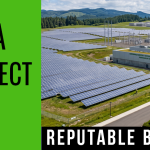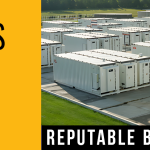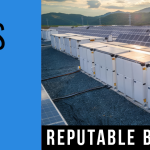
 Microgrids and energy storage can help U.S. states assure energy supply during disasters, according to two papers recently issued by the National Governors Association (NGA).
The papers emerged from an effort NGA undertook last year to identify best energy practices that have emerged from Superstorm Sandy.
A six-state team studied lessons learned from New Jersey after being pummeled by the storm in 2012. The teams, from Hawaii, Maryland, Michigan, North Carolina, Oklahoma and Rhode Island, then went on to create action items to guide their own state efforts.
The action items are described in the paper, “Improving State Coordination for Energy Assurance Planning and Response.”
Among other things, the states are exploring the feasibility of using microgrids and other forms of distributed energy resources, creating robust energy plans, improving utility/government communications, and cataloging critical energy assets.
For example, Rhode Island is working to identify microgrid sites as part of a statewide program, according to the report. The New England state is funding the microgrid effort with a grant from the U.S. Department of Housing and Urban Development and proceeds from the Regional Greenhouse Gas Initiative (RGGI).
The report also noted that as a result of Sandy, NJ Transit is developing a microgrid to power the transit system during outages, NJ Transit, the nation’s third largest provider of bus, rail and light rail transit, is partnering on the project with New Jersey Board of Public Utilities (BPU), the U.S. Department of Energy and the Federal Transit Administration.
Click Here to Read Full Article
read more TUCSON, Ariz.
 We knew the Mercedes-Benz residential battery would be coming to the shores of America
  The optimism in the energy storage industry is based on soaring demand, rapid technological advances, expanding capacity and, for some, what will likely be a scary competitive environment.
 Energy storage systems (ESS) are growing in importance as renewable energy sources like wind power, wave power and solar are being commissioned and connected to the grid at an ever-increasing rate. Energy Storage Systems are needed to help the grid deal with the instability and unpredictability of such power generation systems and match them to equally variable consumer demand.
  Tesla-SolarCity could become an energy equivalent to an Uber or AirBnB, with a merger between the two creating “an integrated sustainable energy company, which does not own any centralised generation assets”, one expert has commented.
 Energy storage company
  Tesla’s
  All grid operators know their job is a balancing act, a case of managing supply and demand as efficiently as possible.