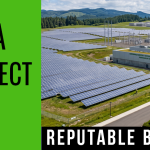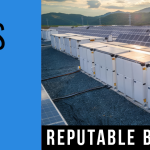
 Battery storage coupled with low-carbon electricity generation could have helped to avoid the power outages experienced in South Australia earlier this year, according to a study by RES and Lloyd’s Register.
RES Australia technical head Jeremy Moon said the power outages, which were caused by severe storms will mean a detailed review of the Australian state’s power system security policy.
He said: “Operators are faced with a huge challenge to protect energy generation supply and demand in extreme weather conditions.
“We understand this requires investment long term and the adoption of new technology and solutions that enable sustainable energy provision now and in the future.”
The two companies said new technology should be planned for now by both government and operators.
Lloyd’s Register energy services manager for the Australian power engineering division Andrew Jones said: “New technology solutions in energy storage can be leveraged to help operators use more cost-effective and locally produced energy.
“This study seeks to open discussions on … how large-scale grid connected battery storage available right now can play a critical role in improving power system events such as those experienced in South Australia.”
Click Here to Read Full Article
read more The largest battery storage system in the world will also be one of the fastest constructed in history.
 Researchers claim new polymeric electrolyte could overcome the main downfall of supercapacitors as energy storage units – their low power density
 NEW YORK–(
 According to the latest edition of GTM Research and ESA’s
  An open fund for solar energy and energy storage in various emerging markets has been launched by Franck Constant, the co-founder of Sonnedix Group and director of Sithe Pacific, Energy-Storage.News’ sister site PV Tech revealed today.
 Powin Energy Corporation announced that the University of Washington has ordered its 30 kW/40 kWh battery energy storage system (BESS) and will use it for research, demonstration, grid simulation and educational purposes.
 Advances in wearable technology requires improvements with energy storage. Wearable devices are increasing in sophisticated and application, and power capacity needs to meet the demand.