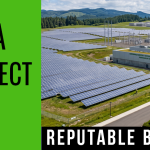
 Amazon plans to deploy of large-scale solar systems on the rooftops of more 15 fulfillment and sortation centers – representing 41 MW of generation – nationwide this year, the Seattle-based company announced on March 2.
In addition, Jeff Bezos’ electronic commerce and media juggernaut will extend the initiative globally by 2020 – to 50 overseas fulfillment and sortation centers.
The initial solar projects planned for completion by the power up facilities in California, New Jersey, Maryland, Nevada, and Delaware.
Depending on the specific project, time of year, and other factors, a solar installation could generate as much as 80 percent of a single fulfillment facility’s annual energy needs, Amazon said. For example, solar panels installed on the rooftop of the Patterson, California, fulfillment center cover more than three-quarters of the 1.1 million- square-foot building’s.
Amazon’s recent renewable energy projects include the company’s largest wind farm to date, located in Texas. In addition, a network of wind and solar farms in Indiana, North Carolina, Ohio and Virginia are delivering energy onto the electric grid that powers Amazon Web Service data centers.
To date, Amazon has announced or commenced construction on projects which will generate a total of 3.6 million MW of renewable energy.
“As our fulfillment network continues to expand, we want to help generate more renewable energy at both existing and new facilities around the world in partnership with community and business leaders,” said Dave Clark, SVP of Worldwide Operations.
“We are putting our scale and inventive culture to work on sustainability—this is good for the environment, our business and our customers,” Clark added. “By diversifying our energy portfolio, we can keep business costs low and pass along further savings to customers. It’s a win-win.”
Click Here to Read Full Article
read more In a white paper released this week, project partners Panasonic, Xcel Energy and Younicos lay out the stream of benefits expected from Peña Station NEXT, a 382-acre, sustainabie transit-oriented “multi-stakeholder ‘portfolio microgrid’ under construction adjacent to Denver International Airport (DEN).
 The residential solar industry is going through a pair of simultaneous changes that could alter the industry as we know it over the next decade.
 DNV GL, an international consultancy group based in Norway, has
  The market for energy storage and ancillary services is expected to total 93.8GW by 2025, according to a new report by Navigant Research.
 The energy storage industry is positioned for some huge growth in the coming decade, but it’s already starting to take off in some surprising places.
 A new model that involves paying customers to host energy storage batteries in front of the meter should help stakeholders to optimise financial gains from storage, according to analysis from Navigant Research.
 Con Edison has filed a project that will bring battery
  Energy storage company Alevo announced an expansion Tuesday of its Concord production plant that will add 200 new jobs over five years and more production lines. Alevo said it will invest $251 million in the facility.