Smart Energy Storage Methods Helping Companies Save Money and Power

on June 29, 2017

Companies are increasingly turning to intelligent energy storage solutions to reduce emissions, increase energy efficiency and enable renewable energy.

According to proudgreenbuilding.com, benefits of intelligent energy storage include:

  • Demand charge reduction – Intelligent energy storage reduces demand for energy from utilities, thus reducing the company’s carbon footprint while saving money. It also allows it to respond automatically to spikes in energy usage without increasing electricity costs.
  • Onsite power generation – Companies can use intelligent energy storage to implement renewable energy sources such as solar and wind power. This offsets energy demand and reduces its carbon footprint. Companies employing this method can sell unused power back to the grid, resulting in an even greater impact to the bottom line.
  • Improved backup control – Blackouts and other power shortage situations can threaten a company’s productivity. However, intelligent energy storage can detect shortages and implement stored power reserves automatically so that a company’s operations are uninterrupted.
  • Intelligent building management – Building automation systems (BAS) and building information management (BIM) increases facilities’ operational efficiency by automatically monitoring building systems. BAS and BIM are supported by intelligent energy storage, which increases the efficiency by which buildings use, generate and store energy.

Hybrid Energy Storage Systems (HESS) — an energy efficient storage alternative — have gained media attention of late. The advantages to deploying an HESS include lower cost, increased system efficiency, increased system lifetime due to optimized operation, and the ability to do more and last longer with less overall storage capacity.

States, as well as companies, are adopting energy efficient energy storage initiatives. Today, the New York legislature announced that it has unanimously passed a bill establishing an energy storage deployment program.  The bill, S. 5190, aims to promote the installation of energy storage systems.

Click Here to Read Full Article

read more

Energy Manager TodaySmart Energy Storage Methods Helping Companies Save Money and Power

GE Is Quietly Building Energy-Storage Innovations

on June 28, 2017

The Motley Fool Energy StorageWhen most people think of energy storage, they probably think of Elon Musk and Tesla‘s (NASDAQ:TSLA) splashy moves with the Powerwall and Powerpack. PanasonicSamsung, and LG Chem are also eyeing the energy-storage market in one form or another, building out capacity that could supply an expected boom in lithium ion battery demand. 

Lost in the shuffle is General Electric (NYSE:GE), a key supplier to the electricity market worldwide. The company builds everything from fossil-fuel power plants to wind turbines and the components that make up the transmission and distribution grid. And it may have some energy-storage solutions other companies just can’t match. 

Hybrid energy storage

Potentially the most meaningful energy-storage product GE released recently is a hybrid battery storage and gas turbine power plant. The product is designed to replace spinning reserves that are required to keep the grid functional as volatile wind and solar assets fluctuate in their output throughout the day. But instead of burning just natural gas to keep those reserves spinning, there’s a battery acting as a buffer. 

When the storage system is called upon, there’s a 10 MW lithium-ion battery that will ramp up power quickly, with up to 50 MW of natural gas generation. GE estimates the system will result in fuel savings, reduce maintenance cost, and lessen greenhouse-gas emissions that are burned keeping spinning reserves available. 

In this case, the battery isn’t a massive energy-storage system the grid can call upon, such as what Tesla or AES Corporation are building. It’s a buffer between the variable resources on the grid and the fossil-fuel plants that need to back up those resources. 

Energy storage for renewables

In the future, it would make sense that either battery energy storage or a hybrid power plant will accompany major renewable-energy power plants. If GE paired a battery with its wind turbines or a hybrid power plant, it could add tremendous value to the grid, reducing the variability that grid operators have to deal with. Eventually, it could even pair these products with inverters it already sells for the booming solar market. 

few weeks ago, when I suggested that GE should buy First Solar (NASDAQ:FSLR), I mentioned that energy storage is the kind of product it could easily fold into its offering to make the solar product more valuable. And with GE trying to grow its inverter business, it would make a lot of sense to vertically integrate its offering with solar and energy storage. 

Click Here to Read Full Article

read more
The Motley FoolGE Is Quietly Building Energy-Storage Innovations

Energy Storage Association Brings On New Leadership

on June 28, 2017

energy storage greentech mediaThe energy storage industry group has beefed up its leadership team as it prepares for a rapid scale-up of the companies it represents.
The Energy Storage Association hired Kelly Speakes-Backman as its first CEO, starting July 1. Executive Director Matt Roberts is moving to a new role as vice president for external affairs, where he will focus on messaging and strategic planning. Nitzan Goldberger also joined the leadership team as state policy director, coming from the policy shop at Borrego Solar. 

The expansion comes shortly after Roberts announced an ambitious goal for the energy storage companies he represents: to deploy 35 gigawatts by 2025. The industry itself has posted rapid progress — the 234 megawatt-hours of capacity deployed in the first quarter of 2017 marked a 945 percent increase from the first quarter of 2016. Now the diminutive industry group is growing its infrastructure to follow suit.

Speakes-Backman jumps into the fray armed with experience as an energy regulator, as well as in private industry.

She served as the director of clean energy for the Maryland Energy Administration under Governor Martin O’Malley, before becoming a commissioner at the Maryland Public Service Commission. That particular PSC keeps popping up as a key player in clean energy leadership — other alums include Anne Hoskins, now chief policy officer at Sunrun, and Abby Hopper, CEO of the Solar Energy Industries Association.

Prior to the government postings, Speakes-Backman worked as marketing director in the early days of SunEdison, and at several other energy companies, including Wartsila. She came to ESA from the Alliance to Save Energy, the energy-efficiency trade group, where she directed policy work.

That cross-cutting experience with solar, efficiency and conventional energy colors Speakes-Backman’s approach to storage.

“Energy storage is the hub of all of these clean energy technologies that can help catapult us into a more modern, cleaner, more efficient grid,” she said in an interview. “I want to figure out how to get to this 35 gigawatts through practical implementation. Who do we need to coordinate with?”

That practical implementation will focus on two major hurdles: market access and recognition of value streams, Speakes-Backman said.

Click Here to Read Full Article

read more
GreenTech MediaEnergy Storage Association Brings On New Leadership

CSP Eyes Strong Growth with Thermal Energy Storage to Compete Against PV

on June 28, 2017

energy storageConcentrating solar power (CSP) has existed since 1866, but for the last couple of decades, photovoltaic (PV) has been the dominant solar technology. Now with technological advancements and energy storage, CSP is poised to make a significant comeback. Cleanergy AB, a Stirling CSP technology provider based in Sweden, has signed an agreement to deploy a 200-MW CSP project in China. Datang Holdings New Energy Technologies Ltd in China will secure government approvals and financing for this CSP project.

The project will be built in two phases: 50 MW in 2018 and 150 MW with latent heat storage. There are three forms to store heat: latent, sensible, and thermochemical. The latent heat storage uses the process of melting or crystallizing a material known as Phase Change Material (PCM). Cleanergy believes that it will be essential for all renewable technologies to be equipped with energy storage as penetration of renewable energy increases in the grid. “For CSP specifically, the competitiveness against PV hinges on a more efficient solution for delivery of dispatched energy,” commented Jonas Eklind, president and CEO of Cleanergy.

Aalborg CSP, another CSP provider, made a joint development agreement with SaltX Technology to offer cost-effective, fully-scalable, and dispatchable renewable energy solutions. Based in Sweden, SaltX has invented a patented technology to store thermal energy with salt.

“EnerStore, SaltX’s large-scale storage, is a thermochemical storage, which chemically holds the thermal energy in the salt so that the temperature 500 degree Celsius can be taken out at the same level without maintenance heating and with no or marginal heat losses,” explained Karl Bohman, CEO of SaltX Technology. “In addition, the EnerStore material, with the nano-coating, does not corrode as opposed to molten salt. It is non-toxic and can be recycled at the end of its life cycle.”

Eklind’s comment echoed this. “In order to compete with PV, the storage component in CSP is critical,” he said.

Click Here to Read Full Article

read more
Renewable Energy WorldCSP Eyes Strong Growth with Thermal Energy Storage to Compete Against PV

Stem energy storage network delivers power grid relief in California

on June 27, 2017

Stem Inc. activated several of its virtual power plants, networks of energy storage systems located at business and institutions throughout the state, multiple times during a heat wave last week, automatically dispatching stored energy to provide emergency demand response services to the California System Independent System Operator (California ISO) and three power utilities.

As a heat wave approached California on June 19, 2017, energy prices in the day-ahead wholesale market rose, signaling a need for resources that could act quickly to increase energy supply or reduce demand to prevent widespread blackouts. Having regularly offered stored energy from its network into the California ISO markets since 2015, Stem’s latest bids started to clear.

Stem first committed to reduce energy demand for Pacific Gas & Electric (PG&E) and Southern California Edison at 5 pm PT on June 20 through the Day-Ahead settlement process the night before. Then at 5:15 pm on June 20, while already dispatching in four areas within the PG&E and SCE service territories, additional Stem offers to provide energy with less than five minutes’ notice were accepted further south in three parts of San Diego Gas & Electric’s (SDG&E) service territory. Stem stepped up, dispatching energy storage systems at customer locations across seven utility zones to deliver on-time and more than promised.

In this one hour, Stem delivered stored energy from its customer network to seven strained areas of the CA grid simultaneously at the height of a heat wave. Acting as virtual power plants, aggregations within the Stem network automatically responded to rising wholesale prices in as little as five minutes to dispatch 1.6 MW of targeted relief, 21 percent more than committed. Stem’s network similarly dispatched fast, on-demand power 10 more times across the three utilities’ service territories in the remainder of the week as the heat continued.

In California, Stem uses the CAISO Proxy Demand Response (PDR) mechanism to aggregate DERs, and has been a very active participant in their wholesale market over the last three years. CAISO prices have cleared higher than the bids of storage-based demand response providers more frequently than expected in 2017. For example, Stem’s network responded to 150 “real-time,” or five-minute dispatch events for SDG&E from January to May of 2017. Stem is the leader in bidding aggregated distributed energy resources (DERs) into wholesale markets in California and across the U.S.

Click Here to Read Full Article

read more
Electric Light and PowerStem energy storage network delivers power grid relief in California

Transportation and Stationary Energy Storage Will Overtake Consumer Electronics as the Largest Markets for Energy Storage by 2018, Says Lux Research

on June 27, 2017

nasdaqBoston, MA, June 27, 2017 (GLOBE NEWSWIRE) — Consumer electronics like smartphones and laptops have traditionally driven the most demand for energy storage devices such as lithium-ion batteries, but clean energy advances mean that transportation and stationary energy storage will soon become the largest energy storage markets, according to Lux Research, a leading provider of intelligence services, helping clients drive growth through technology innovation.

While consumer electronics make up the majority of revenue today, increased adoption of electric vehicles and hybrids drive transportation to dominate the energy storage industry with a $69 billion market in 2025. Transformations in the electricity grid mean that stationary storage has the highest growth rates and will reach $19 billion in 2025. This growth will have profound implications, ranging from how whole economies are powered to how populations and products move around.

“From electric cars to consumer electronics, we’ve already seen the importance of improved energy storage to enable better performance,” said Christopher Robinson Lux Research analyst and a lead author of the report, Quantifying Growth Opportunities in the $105 Billion Energy Storage Market. “The emergence of plug-in vehicles from Tesla and its competitors will reshape the energy storage market, while increasing renewable deployments will make stationary storage energy another source of growth.”

Lux analysts studied more than a dozen energy storage applications to quantify the opportunity in this rapidly growing market, finding that:

  • Transportation is the clear long-term driver of energy storage demand. Transportation applications are now the largest source of energy storage demand – expected to reach 46 GWh in 2017 compared to just 27 GWh from consumer electronics. Although energy storage volume in consumer electronics will grow at six percent compound annual growth rate (CAGR) through 2025, falling battery prices mean the market size will remain relatively flat.
  • Electric vehicles (EVs) are the largest opportunity for growth. Within the transportation market, the applications that will drive the highest revenues are those using the largest packs: electric buses and passenger EVs. Passenger EVs make up the biggest opportunity, worth $32 billion in 2025 – 46 percent of the market for energy storage in transportation. Electric buses will see a faster rate of adoption compared to EVs, but with fewer total vehicles sold, they remain the second largest opportunity, growing at 22 percent annually to a $9.7 billion opportunity in 2025.
  • China and India lead stationary energy storage growth. Stationary energy storage will be a 34 GWh market worth $19 billion in 2025, largely driven by the emerging long-duration market. The need for long-duration storage in uses like peak power shifting or renewables integration will expand significantly, with the emerging markets of China and India driving the most growth.

The report titled, Quantifying Growth Opportunities in the $105 Billion Energy Storage Market, is part of the Lux Research Energy Storage intelligence service.

Click Here to Read Full Article

read more
NasdaqTransportation and Stationary Energy Storage Will Overtake Consumer Electronics as the Largest Markets for Energy Storage by 2018, Says Lux Research

At Enel and AGL, utilities beyond the U.S. embrace low-carbon future

on June 27, 2017

GreenBizThe list of huge multinational companies seeking to source 100 percent of their energy from renewable generating sources seems to grow on a monthly basis — 63 percent of the organizations on last year’s Fortune 100 list have made a proclamation of this sort.

While many have turned to the U.S. market first to start delivering on those promises, the reality is that they’ll need to look far beyond America’s borders to reach them.

They won’t need to search for long, as evidenced by ongoing investments in clean energy that totaled more than $53 billion during the first quarter of 2017, according to data from Bloomberg New Energy Finance. While that was a relatively quiet period compared with past years, it still brought one of the largest solar projects: Italian energy powerhouse Enel’s 754 megawatt photovoltaic installation in Mexico.

And make no mistake, investments in clean energy aren’t simply altruistic.

While the concerns of each region and market are unique, common themes drive the worldwide transition away from coal-fired power plants to other generating sources and motivating energy companies such as Enel. The utility has set a goal of becoming a carbon-neutral generator by 2050, and it is far less grounded in emotions than economics. 

The reality is that it makes sense to avoid huge capital investments in massive new power plants that will become obsolete before they come online. Instead, companies such as Enel and another market disruptor — Australia’s AGL Energy, which is in the process of closing all its coal plants — are prioritizing investments in digital technologies.

In particular, their focus is on software and hardware that help make intermittent generating sources, such as solar and wind, more reliable. Extending the life of legacy plants during the transition is another priority. These energy companies also are keenly interested in applications and services that help them sense and respond much more quickly to the concerns (and buying habits) of commercial and retail customers.

“There are two major mistakes that this industry has made over and over again, in the past two decades,” said Francesco Starace, chief executive of Enel. “One is to build huge plants that will take years and years to be completed. When I say years and years, I mean more than three years. And second, build generating plants without visibility into whom to sell the energy to, for what price and how long, which is called merchant exposure in the industry. We said, ‘We think that this is one of the worst possible times to [keep making] this mistake.'”

Click Here to Read Full Article

read more
GreenBizAt Enel and AGL, utilities beyond the U.S. embrace low-carbon future

Inside The Rivalry to Invent The Utility-Scale Battery Storage of Tomorrow

on June 26, 2017

WSJThere’s the battery in your watch. There’s the battery in your mobile phone. And then there’s the battery at Green Mountain Power’s Stafford Hills solar farm in Rutland, Vt.

The lithium-ion gargantuan is housed in two trailer-truck-size green metal containers. It sits atop a 10-acre former landfill and captures electricity from 7,722 nearby solar panels—enough to power 2,000 homes on a sunny day. What’s revolutionary about this system isn’t the solar farm; it’s the size and purpose of the battery, which offers 3.4 megawatt-hours of storage, enough to supply backup power to about 170 homes for a day, if needed.

The rap on solar and wind is intermittence—they don’t produce power when the sun isn’t shining or the wind isn’t blowing, making them unreliable as the primary source for power grids. But if vast amounts of renewable energy—say, enough to power entire cities—could be captured and stored in giant batteries and deployed when needed, that downside would fade away.

‘Missing piece’

This has been the “missing piece” in the renewable-energy revolution, says Venkat Srinivasan, director of the Energy Department’s Argonne Collaborative Center for Energy Storage Science. But it’s starting to come into view, thanks to the scale and progress of current research and real-world applications such as Green Mountain Power’s.

Green Mountain’s project puts it in the vanguard of power companies that are showing that utility-scale battery storage can be technologically and economically viable—depending on the scale and how it is used.

Like all utilities, Green Mountain faces issues meeting “peak demand,” the high-use period, typically in the early evening, when people return from work and school and crank up air conditioners and energy-hungry appliances.

Many U.S. utilities fire up natural-gas-powered generators to help their baseload plants meet peaks, often imposing hefty surcharges on customers to offset the extra generating costs. Green Mountain instead stores energy from its solar-and-battery combination to meet peaks—shaving as much as $200,000 an hour off demand charges for its 265,000 residential customers, according to the utility. Green Mountain, which says it invested $12.5 million in the project and received a $285,000 government grant, benefits in that it doesn’t have to build additional plants to meet peak demand and gets a public-relations boost among its green-leaning customer base.

Click Here to Read Full Article


read more
Wall Street JournalInside The Rivalry to Invent The Utility-Scale Battery Storage of Tomorrow

NY Bill Sets Stage for Storage Targets

on June 26, 2017

ALBANY, N.Y. — New York lawmakers last week unanimously passed a measure requiring the state’s Public Service Commission to set targets to increase the adoption of energy storage in the state through 2030.
The new law requires the commission to work with the New York State Energy and Research Development Agency (NYSERDA) and the Long Island Power Authority to set targets and develop a storage deployment program.

“This newly passed bill gives New York’s PSC clear direction: set a storage target and design a deployment program by the end of 2017,” said Anne Reynolds, director of the Alliance for Clean Energy New York. “This is a great signal to the storage industry that New York will be a promising place to invest. But first we need Gov. [Andrew] Cuomo to sign it into law.”

The Energy Storage Deployment Program bill combined Assembly and Senate measures sponsored by Assemblywoman Amy Paulin and Sen. Joseph Griffo.

Both sponsors of the legislation pointed to enhanced reliability of the electric grid as a top benefit of increased use of energy storage, as well as the jobs expected to be created.

A NYSERDA study earlier this year found that about 4,000 workers were employed in the state’s energy storage industry by the end of 2015, up 30% since 2012. The study projected the state’s industry could grow from about $1 billion in revenue to up to $8.7 billion in 2030, with the number of jobs possibly exceeding 25,000.

“Storage also increases the resiliency of the electric grid by supplying power in the event of an electrical outage. The creation of an energy storage deployment program will increase the installation of energy storage systems throughout the state and accelerate these benefits,” Paulin said in a statement after the bill’s passage.

Setting Targets

Because energy storage is applicable to so many electricity grid functions, a narrow focus on one area fails to capture the complete value of the technology, according to Dr. William Acker, director of the New York Battery and Energy Storage Technology Consortium.

“By analyzing the system as a whole and setting targets, you’re able to create a situation where the energy storage can be adapted into a variety of different applications,” Acker said. “That will open up the markets and lead to penetrations that are far greater than the targets that will have been set. The energy storage industry has made rapid technological advancement over the past few year, but equally important, the costs have dropped dramatically in terms of both the technology and the scale of production.” (See Storage Technology Still Outracing RTO Metrics, Rules.)

Click Here to Read Full Article

read more
RTO InsiderNY Bill Sets Stage for Storage Targets

New York Offers Millions In Funding For Energy Storage Tech

on June 24, 2017

The New York State Energy Research and Development Authority (NYSERDA) has announced that up to $6.3 million is now available for emerging energy storage technologies that have not yet been commercialized but could support renewable power sources in the state.
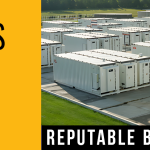
NYSREDA says the funding is part of the state’s long-term investment in the energy storage sector and supports Gov. Andrew M. Cuomo’s Reforming the Energy Vision (REV) strategy to build a cleaner, more resilient and affordable energy system for all New Yorkers.

Janet Joseph, acting president and CEO of NYSERDA, comments, “New York continues to lead the nation in finding innovative technologies to build a resilient and efficient electric grid. Energy storage will play a critical role in Governor Cuomo’s fight against climate change as we continue to add renewable energy resources throughout the state making our power cleaner.”

As the agency explains, energy storage can save power generated from clean energy systems such as solar, wind, and combined heat and power for later use, enabling buildings to reduce their reliance on the electric power grid during peak demand periods when electricity costs are highest. The ability to store energy also can make it possible for buildings and other critical facilities to continue to function in the event of disruptions on the power grid.

NYSERDA will accept concept papers during the first round of this solicitation through July 20. Papers should focus on advancing, developing and field testing of energy storage technologies that will address cost, performance and integration opportunities in New York. They should also identify how the technology will advance the state’s goal to have 50% of its electricity come from renewable resources by 2030. Through a competitive process, NYSERDA will request the best concept papers to submit follow-up proposals. The proposals selected will receive funding to move forward with their projects.

Click Here to Read Full Article

read more
North American Wind PowerNew York Offers Millions In Funding For Energy Storage Tech