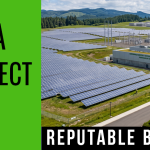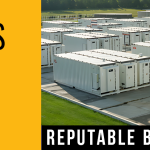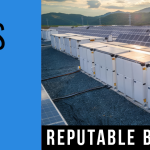
 An agreement to construct a 20MW lithium-ion battery energy storage system (BESS) has been approved by the Los Angeles Department of Water and Power (LADWP), which would reduce reliance on natural gas generation.
Last week, LADWP’s board of water and power commissioners voted to approve the agreement with Doosan GridTech, which says it primarily executes energy storage projects for utilities to help integrate more renewables on their networks. LADWP serves over four million customers with water and power, making it by some measures the largest municipal utility in the US.
In addition to reducing the usage of natural gas-fired plants, it is hoped that the proposed Beacon Energy Storage System, located near Beacon Solar Plant in the Mojave Desert, will allow better utilisation of the 600MW of solar PV installed in the area, as well as some 135MW of wind generation.
The plant should be completed and connected by March 2018, a date which LADWP brought forward from a 2020 targeted completion date, due to capacity shortfall fears brought to light in the past two years since the Aliso Canyon gas leak which has already led to the fast-tracked development of around 100MWh of energy storage projects by various utilities, developers and system integrators in California.
Strategic location
A presentation on energy storage in LADWP’s service area, its potential and proposed projects including Beacon Ridge said that the project will cost around US$19.2 million, would add flexible reserve and system balancing to the local grid and mitigate for the variable nature of renewable energy generation output.
 The U.S. arm of Alevo, the cash-strapped Swiss battery maker with a high-profile Russian investor, said Friday it was filing for Chapter 11 bankruptcy protection and laying off its 290 workers in Concord, in a blow to efforts to redevelop a former Philip Morris cigarette factory.
 If the temporary blotting out of the sun next week magnifies an inherent weakness of solar power, it also plays to the strengths of energy storage.
 We are pleased to share our Energy Storage interview with Bono Ge, Senior Sales Manager, BYD Energy Storage in Europe.
 The rules for New Mexico’s IRP only state that investor-owned electric and gas utilities’ resource planning processes have to evaluate all feasible “supply side” and “demand side” resources on a “comparable and consistent basis.” The rules were written before energy storage was a commercially feasible alternative to supply-side and demand-side resources.
 The potentially industry crippling home battery installation safety guideline proposed by Standards Australia has again been slammed by the industry, as fundamentally flawed and – if passed – certain to throw the energy storage industry into chaos, both in Australia and overseas.
 TAIPEI — The Taiwanese government is planning to approach Tesla to discuss the feasibility of setting up lithium ion battery facilities for storing renewable energy on the island, in line with a project the U.S. technology company recently launched in Australia, a top official said on Thursday following a mass power blackout earlier in the week.