
The Future of Electrical Energy Storage Solutions – No Lithium Supremacy

on September 8, 2017

the-huffington-postThe global market for electrical energy storage is dynamic, urgent and at nearly a gigawatt, rapidly growing. The world is experiencing a surge in intermittent power generation facilities such as renewables, but great challenges remain.

Renewables facilities, for instance, require ever-more backup capacity. In addition, utility companies have to balance demand and supply by building up huge reserves the like of which have never been seen before.

Moreover, regulators are introducing new rules; energy bidding is becoming more sophisticated and electrical energy prices more volatile. On top of this, electrical grid stability and frequency control are far more complicated than in the past.

Currently, there is great hype about the capabilities of lithium batteries. The main application where lithium excels is mobility, due to its good power density and relatively small size. Major companies such as Tesla, LG and BYD advocate this technology as the best and brightest solution for global electrical energy storage needs. Many believe that lithium will become the new oil and some countries, like China, are heavily subsidizing the industry in order to gain political leverage and market share.

Lithium batteries, however, are not the magical one-solution-fits-all for energy storage requirements. Indeed, lithium has recently experienced a significant drop in price, and huge over-production capacities have been built up. Driving this downward trend are above all Tesla, which is building a “Giga Factory” in Nevada, and China, which actively plans to increase lithium battery manufacturing.

But despite the hype from these major players, the fact is that lithium has many downsides compared, for example, to flow batteries and other emerging battery technologies. The extensively covered cases of exploding Samsung smartphones caused by their lithium batteries have raised grave safety and reliability concerns.

Click Here to Read Full Article

read more
The Huffington PostThe Future of Electrical Energy Storage Solutions – No Lithium Supremacy

A Record-Breaking Quarter for America’s Behind-the-Meter Energy Storage Market

on September 8, 2017

energy storage greentech mediaIn the second quarter of 2017, 443 residential and commercial energy systems were deployed across the United States, representing 32 megawatt-hours of capacity.
According to GTM Research and the Energy Storage Association’s (ESA) U.S. Energy Storage Monitor, this is the most grid-interactive behind-the-meter energy storage ever deployed in a single quarter.

Much of the residential growth resulted from projects in California and Hawaii. In particular, 71 percent of Hawaii’s second quarter deployments came directly from the Customer Self-Supply program, which is seeing an increase in activity after several quarters of sluggishness.

“California held the lead in behind-the-meter deployments as the Self-Generation Incentive Program (SGIP) queue continues to clear,” said Brett Simon, an energy storage analyst at GTM Research, and one of the report’s authors.

“Toward the end of this year, we expect to see more SGIP-related deployment activity as the first deployments from the modified program, which opened in May, start to be interconnected. Furthermore, we expect to see greater growth from California’s residential segment in the next few years given the residential carve-out under the latest version of SGIP and changes to TOU rates for solar customers.”


Led by deployments in California and New York, the non-residential market, which includes commercial, industrial, religious, military, and non-profit behind-the-meter deployments, rose to 27.3 megawatt-hours in Q2 2017, growing 151 percent over the first quarter of 2017.

“New York experienced an uptick in non-residential deployments this quarter, though challenges around lithium-ion system permitting in New York City have slowed the market despite a massive opportunity identified by developers,” Simon added.

The front-of-meter segment — which typically represents the bulk of deployments — fell after two consecutive quarters in which more than 200 megawatt-hours were deployed. There were 18.5 megawatt-hours deployed this past quarter. Most of the Aliso Canyon projects came on-line in prior quarters, and concluding the entire expedited obligation set by the California Public Utilities Commission.

Despite the down quarter for the segment, several states including Arizona, Nevada, New Jersey, New Mexico and Virginia made progress on policies and proceedings that encourage utilities to accommodate storage in distribution planning and renewable integration efforts.

Click Here to Read Full Article

read more
GreenTech MediaA Record-Breaking Quarter for America’s Behind-the-Meter Energy Storage Market

Wind turbine manufacturers are dipping toes into energy storage projects

on September 7, 2017

arstechnicaDanish company Vestas Wind Systems is one of the biggest makers of wind turbines in the world, recently surpassing GE’s market share in the US. But as the wind industry becomes more competitive, Vestas appears to be looking for ways to solidify its lead by offering something different. Now, the company says it’s looking into building wind turbines with battery storage onsite.

According to a Bloomberg report, Vestas is working on 10 projects that will add storage to wind installations, and Tesla is collaborating on at least one of those projects. Vestas says the cooperation between the two companies isn’t a formal partnership, and Tesla hasn’t commented on the nature of its work with Vestas. But the efforts to combine wind turbines with battery storage offer a glimpse into how the wind industry might change in the future.

The news about Vestas is just one datapoint in a summer of news about wind and storage projects. In August, offshore wind developer Deepwater Wind announced that it would pair a 144MW offshore wind farm planned for the coast of New Bedford, Massachusetts, with a 40MWh battery storage system from Tesla. Construction on that project is set to end sometime in 2022. According to GreenTechMedia, Spanish wind power company Acciona recently connected two Samsung lithium-ion batteries to a 3-megawatt turbine in Spain, Dong installed a battery on the UK coastline in June to store some offshore wind energy, and Statoil will include a 1MWh lithium-ion battery in its designs for a floating offshore wind farm that will be completed in late 2018.

The idea of onsite batteries isn’t new—GE’s renewables arm introduced short-term batteries integrated with wind turbines in 2013, and Vestas itself experimented with tying storage to wind turbines in 2012. But turbine manufacturers seem to be more willing to branch out of their wheelhouse lately and contact battery specialists instead of pushing to build batteries on their own.

Click Here to Read Full Article

read more
Ars TechnicaWind turbine manufacturers are dipping toes into energy storage projects

Market Leader AES Energy Storage Projects Strong Future Growth

on September 7, 2017

forbesIn early August, I spent three days at the Energy Storage North America (ESNA) conference in San Diego. One key take-away was from the keynote delivered by Ronald Nichols, President of Southern California Electric. At one point he flatly asserted that for every utility represented by an attendee in the crowd, there is a viable and cost-effective storage opportunity somewhere on their grid today. That is a revolutionary statement, and something that would have surprised most industry observers just a few years ago.

However, that statement probably would not have surprised the leaders of AES Energy Storage. Those of us with long memories will recall that AES has been delivering utility-scale storage projects for over a decade, with projects deployed, under construction or in development in seven countries. The company currently boasts the largest lithium-ion battery-based energy storage project in the world (30 megawatts and 120 megawatthours) – built in partnership with San Diego Gas and Electric (SDG&E), to help meet peak electricity demand within its service territory in southern California. AES Energy Storage also indicates it has delivered over four million megawatt-hours of service to date. No other competitor in the battery storage space has a track record remotely close to that.

Given its heft in the market, AES Energy Storage is still surprisingly small, consisting of approximately 70 core team employees who focus on the development of storage solutions platforms. AES sells its Advancion energy storage platform and related services to multiple customers, including utilities and regional business units of the AES Corporation (AES Energy Storage’s parent company) in 17 countries, utilities like SDG&E and Arizona Public Service, and other entities who undertake power project development.

Click Here to Read Full Article

read more
ForbesMarket Leader AES Energy Storage Projects Strong Future Growth

Big Energy Backs Hydrogen Power Storage

on September 7, 2017

bloombergThe secret to switching the global energy system entirely to renewables may lay in the universe’s most abundant substance.

Hydrogen has drawn backing from big energy companies from Royal Dutch Shell Plc to Uniper SE in addition to carmakers BMW AG and Audi AG. They’re supporting research into how the element can be used to store energy for weeks or even months beyond what lithium-ion batteries can manage.

While industry’s investment in hydrogen is small at just $2.5 billion over the last decade, the work offers an answer to the elusive question of how electricity could be kept for use in the future. Batteries increasingly are shifting power from day to night, but they tend to go flat after a few weeks. Hydrogen can be kept indefinitely in tanks. That would allow, for example, voltage collected from solar panels in the summer to be used in winter.

“The years 2020 to 2030 will be for hydrogen what the 1990s were for solar and wind,” said Pierre-Etienne Franc and vice president of advanced business and technologies at the French industrial gas maker Air Liquide SA and initiative secretary of the Hydrogen Council, a trade group promoting the work. “It’s a real strategic shift.”

The technology to use hydrogen as energy storage is well known, although not yet demonstrated in a commercial setting.

Excess power from wind or photovoltaics would drive electrolysis, separating water into its component hydrogen and oxygen elements. The hydrogen captured by that process could, whenever needed, feed natural gas power plants or fuel cells to make electricity. Industrial plants like oil refineries can also use hydrogen for chemical processes.

Click Here to Read Full Article

read more
BloombergBig Energy Backs Hydrogen Power Storage

Grand opening held for Kodak’s New York energy storage advancement centre

on September 6, 2017

Energy Storage NewsKodak, the tech company best known for producing photographic film and imaging equipment, has inaugurated the Kodak Cell Assembly Center, a new facility aimed at accelerating development and scale-up of advanced batteries for energy storage.   

A grand opening was held at the centre, which is at Eastman Business Park, Rochester, New York. The event was attended by officials from Kodak, formally trading as Eastman Kodak Company, with local and state representatives.

Also in attendance were representatives from New York’s public benefit economic development group, Empire State Development Corporation, which through a grant has funded US$1.2 million of the centre’s total cost of around US$5.9 million. The centre’s launch was announced at the beginning of this year.

Empire State Development CEO and Commissioner Howard Zimsky said the Assembly Center “further establishes New York as a world-class hub for energy storage and technology”.

Collaboration with NY BEST and DNV GL

Kodak has collaborated with trade group and technical development association NY BEST on the creation of the battery centre. NY BEST, in addition to being a trade association advocating for the views of its stakeholder members across the industry, is also heavily involved in technology commercialisation initiatives and has its own battery testing facilities.

Previously, the group has hailed the efforts of New York and in particular the administration of Governor Cuomo, who initiated New York REV, a wide-ranging grid modernisation and clean energy transition plan for the state. In a 2015 interview, NY BEST chief William Acker said REV (‘Reforming the Energy Vision’) could be a “valuable lesson” for the rest of the world, while the trade group has said that the state needs 2GW of multi-hour energy storage by 2025 and 4GW by 2030 to achieve its renewable energy target of 50% renewables by the latter of those two years.

Click Here to Read Full Article

read more
Energy Storage NewsGrand opening held for Kodak’s New York energy storage advancement centre

How Customer-Sited Energy Storage Can Reduce California’s Greenhouse Gas Emissions

on September 6, 2017

energy storage greentech mediaCalifornia will soon release an updated evaluation of greenhouse gas emissions from storage systems participating in the Self-Generation Incentive Program. Unfortunately, due to incomplete policies and methodology, the state may again reinforce the erroneous narrative that customer-sited storage drives up emissions.

There’s a better approach for customer-sited storage designs and applications to be applied to the greatest benefit of the state, and to prevent storage from being artificially constrained from helping California reach its GHG goals. As it has done with programs, tariffs and incentives to encourage customers to reduce energy consumption or peak demand, or to shift consumption to better utilize resources and reduce costs, the state should apply the same approach to enable storage to maximize GHG emissions reductions.

Customer-sited or behind-the-meter (BTM) storage, sited anywhere on the grid, can enable higher penetrations of renewables, and in doing so, reduce systemwide GHG emissions. Furthermore, when energy storage is charging during the duck belly, it absorbs and shifts power to the ramp “neck,” helping to reduce greenhouse gas emissions by avoiding fossil ramping assets. These benefits should be recognized.

California must develop an accurate methodology based on a GHG signal

The California Public Utilities Commission (CPUC) issued a Decision in 2015 on Self-Generation Incentive Program GHG evaluation approaches (D.15-11-027) that acknowledged the need to improve the storage GHG methodology. Others agree: A Carnegie Mellon December 2016 study criticized the SGIP methodology’s operating assumptions and inattention to retail tariffs and load profiles, and suggested a shift to production cost modeling.  

The CPUC methodology mistakenly assumes all BTM storage charging is done “off-peak,” that 100 percent of off-peak electrons are generated from combined-cycle gas turbines, and that all discharging is “on-peak” to offset combustion turbine peaker plants. Like most related studies, these assumptions are flawed in their failure to understand the economic market signals that determine storage behavior.

Click Here to Read Full Article

read more
GreenTech MediaHow Customer-Sited Energy Storage Can Reduce California’s Greenhouse Gas Emissions

US electric cooperative awarded rural solar-plus-storage project in Liberia

on September 5, 2017

Energy Storage NewsA not-for-profit utility cooperative from Texas has been awarded a contract to electrify a community in Liberia with a solar-plus-storage microgrid, to benefit around 400 homes and businesses.

Bandera Electric Cooperative, based around 50km from San Antonio, has been awarded the project in Totota in eastern Liberia by the National Rural Electric Cooperative Association (NRECA). NRECA is the overseeing body for all of the US’ not-for-profit utility cooperatives, which are generally run at community level.

In addition to the 42 million cooperative customers across 47 states of the US, the association is involved with programmes to develop better access to electricity for rural communities in emerging economies around the world. Claiming to have already helped 110 million people across 43 countries, NRECA has worked in countries including Bangladesh, Ghana, Guatemala, Philippines, Bolivia, Uganda and South Sudan.

NRECA International has been involved in programmes in Liberia since 2014, when the United States Agency for International Development (USAID) began supporting the country’s Rural and Renewable Energy Agency (RREA) through a US$178 million investment programme for off-grid projects, Beyond the Grid. This has led to the development of a small (24kW) pilot PV project in 2015, a biomass project a year later and an ongoing 1MW run-of-river hydroelectric project.

Click Here to Read Full Article

read more
PR NewswireUS electric cooperative awarded rural solar-plus-storage project in Liberia

Solar Global Selects Alfen to Supply Mega Energy Storage System

on September 5, 2017

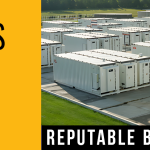
PR-NewswireSolar Global develops and services solar photovoltaic (PV) farms and rooftop PV installations, and currently has some 100 MW capacity under service. As Solar Global wants to play an important role at the forefront of the energy transition, it is investing in an innovative energy storage solution that initially will be used for energy trading. As the local market further develops, the system is also ready for other applications, such as providing grid stability services. This project is supported by EU Regional Development Fund.

František Smolka, CEO of Solar Global comments: “Energy storage will play a crucial role in the large scale roll-out of renewable energy. With this project we prepare ourselves for the future, and I expect to implement many more of these systems in the region.”

Andreas Plenk, global sales director energy storage at Alfen, adds: “In close cooperation with Solar Global we assessed the most optimal configuration of the system for the local situation. Our modular and standardized storage system makes it possible to deliver and implement our solution in the Czech Republic within a short timeframe.”

Implementing innovative solutions 

Smolka explains why Solar Global selected Alfen for this project: “Alfen’s proven technology and multiyear experience with utilities throughout Europe ensures that we are implementing the most innovative and reliable system in the market. We look forward to leverage Alfen´s vast experience with state-of-the-art applications for our business.”

Plenk adds: “We have experience with many types of storage applications, ranging from smoothening large scale renewable energy sources to load balancing for the charging of electric vehicles. Combining renewables with energy storage is gaining momentum throughout Europe. Parties such as Solar Global are realizing that storage will enhance the return-of-investment of solar PV and wind farms. And we’re only at the beginning of this trend.”

Click Here to Read Full Article

read more
Energy Storage NewsSolar Global Selects Alfen to Supply Mega Energy Storage System

SimpliPhi supplying energy storage to 1.4MWh of solar air-conditioning at Hawaii schools

on September 5, 2017

Energy Storage NewsUS energy storage designer and manufacturer SimpliPhi Energy has installed a combination of solar PV and batteries to power air-conditioning units at a school in Hawaii, with a further 1.4MWh of such projects in the pipeline.

In May 2016, Hawaii State’s Department of Education (HIDOE) brought into legislature a commitment to add air-conditioning to 1,000 classrooms across Hawaii, with the US$100 million Heat Abatement Program for public schools created to fast-track projects. The 1,000 classroom goal was reached in August, but the programme continues to add new units.

According to HIDOE, many of its schools are more than 50 years old and were never designed with the kind of electrical load needed to run air-conditioning in mind. A HIDOE fact sheet on the Heat Abatement Program says that the department annually spends US$48 million on electricity and cited the example of one school’s new AC-unit and said that it doubled power costs at Pohakea Elementary School.

Solar-plus-storage has now been put forward as an economical solution to power those air-conditioning units, allowing schools to control the long-term costs of their energy. Waialua High and Intermediate School, on the island of Oahu, is now being fitted with a system designed by Ameresco Solar, a developer and designer of PV systems headquartered in Arizona. Ameresco and SimpliPhi worked with local solar system integrator Haleakala Solar to execute the project.

“Bringing sustainable cooling relief to students in Hawaii was a problem we knew required innovation on several levels, including how to manage the up front and long-term costs of these systems and how to work with the limited electrical infrastructure on these campuses,” Ameresco senior account executive Richard Dean said.

Click Here to Read Full Article

read more
Energy Storage NewsSimpliPhi supplying energy storage to 1.4MWh of solar air-conditioning at Hawaii schools