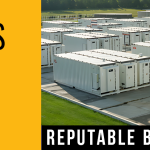

A big 48 MWh Tesla Powerpack system will power the island of Nantucket

on November 9, 2017

electrekNational Grid announced this week that its project for a 48 megawatt-hour battery energy storage system on the island of Nantucket has been greenlit and Tesla has been selected to provide the batteries.

Nantucket is a small island of about 10,000 permanent residents about 30 miles off the Massachusetts coast, but it’s also a very popular touristic location.

The island’s electricity is currently supplied via two submarine cables that connect to the mainland transmission system on Cape Cod.

It results in a critical failure point, but the island’s power is still secured with two six-megawatt diesel generators acting as backup power.

Now National Grid explains that those two generators are reaching the end of their useful life and need to be replaced.

The company is looking ahead and sees that the island’s electricity demand is increasing and they would likely need to add a third submarine cable within the next decade or so.

Therefore, they instead suggested the 6 MW/48 MWh battery energy storage system with only one new generator. This way, the battery system can act as backup for short interruptions in power and the generator can kick in to recharge the batteries if needed.

But maybe more importantly, the battery system will also serve to reduce peak demand from the island and stabilize the grid.

With this system, National Grid believes that they can delay adding a third submarine transmission line by at least another decade.

Rudy Wynter, president and COO of National Grid’s FERC-regulated Businesses, commented on the announcement yesterday:

“The BESS provides a very efficient and effective solution to two major energy challenges facing the island. Our customers, communities, and policymakers look to us to deliver innovative solutions like this to help advance our clean energy future.”

Click Here to Read Full Article

read more

ElectrekA big 48 MWh Tesla Powerpack system will power the island of Nantucket

Lamborghini’s New Concept Electric Car is Energy Storage On Wheels

on November 9, 2017

FuturismAt Massachusetts Institute of Technology’s (MIT) EmTech conference last week, Italian luxury car manufacturer Lamborghini unveiled a new concept electric supercar — and they weren’t kidding when they called it “the future of sports cars.”

The Lamborghini Terzo Millennio (which is Italian for the “third millennium”) certainly does look like it belongs to a future era. The product of a unique collaboration between MIT and Lamborghini, the Terzo Millennio doesn’t just lookthe part of a futuristic car, it’s  packed with next generation technology.

One of the highlights is its energy storage capacity. According to Road Show, the Terzo Millennio uses supercapacitors instead of regular batteries. Coupled with high storage capabilities, supercapacitors are also capable of receiving and delivering a charge faster than standard batteries. Plus, it carries more charge cycles than most batteries, which can supply power to the supercar’s four electric motors — one for each wheel.

Its energy storage capabilities don’t end there, though. The car’s carbon fiber body allows the entire vehicle to work as one big energy storage medium — almost like a battery on wheels.

“If I have a super sports car and I want to go the [race track], I want to go one, two, three laps without having to stop and recharge after every lap,” Mauricio Reggiani, head of R&D at Lamborghini, told CNN. 

Click Here to Read Full Article

read more
Fractal Energy Storage ConsultantsLamborghini’s New Concept Electric Car is Energy Storage On Wheels

Energy storage gets a bigger seat at the utility planning table

on November 8, 2017

energy storage utility diveUtilility Integrated Resource Plans (IRPs) are beginning to catch up with the growth of energy storage.

Utilities across the country from Duke Energy Carolinas to Southern California Edison have implemented energy storage projects for a variety of reasons, but until now few have included energy storage in their IRPs. Now, utilities in states ranging from Indiana and North Carolina to Arizona, New Mexico and Oregon have included energy storage in their long term planning processes.

Portland General Electric’s 2017 IRP proposes five storage projects in a range of sizes and applications. The utility’s IRP is, in part, a response to a state law passed in 2015, HB 2193, that required PGE to procure at least 5 MWh of energy storage and up to 1% of 2014 peak load (38.7 MW) by 2020.

PGE’s rationale for including storage in its planning process is the need to support grid flexibility as its use of variable renewable resources grows. Last year more than 40% of the energy PGE delivered was from carbon-free sources. The state’s renewable portfolio standard mandates that 50% of electricity sales come from renewable sources by 2040. PGE says that if hydropower resources are included, it will hit 70% carbon-free energy by 2040.

In its 2017 IRP, PGE says it plans to install a microgrid battery storage pilot project at existing solar and biomass facilities to improve resilience; a battery at a substation to provide energy and capacity and other ancillary services; a storage asset at the existing 1.75 MW Baldock solar facility; up to 500 residential behind-the-meter batteries that would be controlled by PGE to pilot the development of a residential storage program; and a 4 MW to 6 MW transmission-connected storage device that would create a hybrid plant at PGE’s Port Westward 2 facility.

Despite the fact that some of the projects are called “pilots,” they will all be commercial scale, PGE spokesman Steve Corson told Utility Dive. An explicit part of PGE’s strategy, he said, is “to explore a diverse range of technologies in a diverse range of applications and sites so we can learn in addition to having the assets themselves.”

Click Here to Read Full Article

read more
Fractal Energy Storage ConsultantsEnergy storage gets a bigger seat at the utility planning table

Getting The U.S. To 35 GW Of Energy Storage By 2025

on November 8, 2017

forbesThis morning, the Energy Storage Association released its whitepaper “35 X 25: A Vision For Energy Storage,” which lays out a plan for deploying 35 gigawatts (GW – a gigawatt equals 1,000 megawatts) of storage by 2025. The report – developed in collaboration with Navigant Research – outlines a number of developments that argue in favor of energy storage, including:
  • a growing need for grid reliability and resiliency, especially as more critical networks like transportation, HVAC, manufacturing, and data become increasingly electrified and demanding on our aging infrastructure;
  • an economy that is becoming more dependent on sophisticated computer networks and society becomes increasingly automated and interconnected;
  • a rapid increase in deployment of cost-effective renewable resources, which will benefit from having storage as a dance partner;
  • an increasing need for a more flexible and adaptable power grid that will benefit from storage resources that are modular and require short development lead times;
  • a dynamic of continuing improvements in storage technologies; and
  • a steady and rapid decline in costs – especially for lithium ion batteries, which are expected to shoulder much of the burden

A view from the bridge

It is by ESA’s own admission, an ambitious plan. However, in a conversation prior to the report’s release, ESA CEO Kelly Speakes-Backman expressed confidence that these trends are aligning to help realize this vision. A large infusion of storage can add tremendous value to the grid and to society.

Speakes-Backman noted that while the storage addressed in the report includes all energy storage technologies, many stationary storage deployments will utilize lithium-ion technologies, and that associated costs are dropping steadily, benefiting from economies of scale resulting from their use in consumer electronics and electric vehicles. Over time, she observed, supply chains will continue to become more efficient, further driving down battery costs. And – similar to the experience in the solar industry – affiliated costs, ranging from customer acquisition and financing to inverters and balance of system, will plummet as well.

Click Here to Read Full Article

read more
Fractal Energy Storage ConsultantsGetting The U.S. To 35 GW Of Energy Storage By 2025

Taking Charge: Which Emerging Battery Technology Will Be The Future of Stationary Energy Storage?

on November 8, 2017

Energy Storage ForumAs an increasingly high proportion of energy grids are fed by renewable energy, developing storage solutions that can deal with intermittency in sustainably, safely and cost-effectively is key.

Lithium-ion batteries are still the frontrunner technology for large-scale energy storage, and their benefits are clear — high energy densities, relatively low maintenance and a rapidly dropping cost per kWh. But their drawbacks of limited lifespans, explosive failure modes and potentially precarious chains of component supply are equally well publicized.

What battery technologies and chemistries are making waves for stationary storage applications?

All-Iron Flow Batteries (RFB)
Redox Flow Batteries (RFBs) are hardly a new technology, but have received renewed interest in the past few years as grid energy storage solutions. Benefits include long lifespans, theoretically limitless scalability and long discharge times, however, they have been held back by their drawbacks including low energy densities, expensive component costs and in some cases toxic or dangerous electrolyte materials.

Energy Storage Solutions (ESS) have been working on developing and proving the commercial case for their all-iron flow battery which aims to solve several of these issues. In contrast to Vanadium flow batteries, the electrolyte materials are selected for their abundance, safety and low-cost — salt, iron and water. The battery can be transported “dry” and hydrated on site, also lowering logistics costs and improving mobility.

The non-corrosive electrolyte also allows for cheaper materials to be used for the power stack and other battery components. With a mild electrolyte pH (1 to 4) electrode reaction potential lower than the 0.8V carbon corrosion potential, all-iron flow batteries experience little electrode degradation — ESS’s modules experience minimal performance loss over 20 000+ cycles with approximately 70% peak round trip efficiency.

ESS are testing the business case under a contract with the U.S Army Corps of Engineers, with initial cost estimates at have set an estimated cost for their battery at $500/kWh. At this relatively early stage of development, the cost is certainly not attractive enough to compete with Li-on or even Vanadium flow on a wide scale but could be an ideal solution for smaller and/or remote grids.

Aqueous soluble ferrocenes (RFB)
Researchers from Harvard John A. Paulson School of Engineering and Applied Sciences (SEAS) have made great strides in developing flow batteries using aqueous soluble organic electrolytes. These have the advantage of being non-corrosive and non-toxic — not only are they safer, but the component parts can be made of cheaper, less durable materials.

Click Here to Read Full Article

read more
Energy Storage ForumTaking Charge: Which Emerging Battery Technology Will Be The Future of Stationary Energy Storage?

Singapore’s first grid-scale lithium and redox flow energy storage tests awarded to local

on November 7, 2017

Energy Storage NewsUpdated: Singapore’s Energy Market Authority (EMA) will trial the use of lithium batteries and redox flow energy storage to help integrate renewable energy onto its grid, delivering services both in-front and behind-the-meter.

EMA is the city state’s statutory body for operating power systems, proactively developing the energy industry and regulating energy markets. The body currently has an ongoing SG$25 million (US$18.34 million) programme to develop and test energy storage solutions that could enhance overall stability and resilience in Singapore’s power grids. In late 2016, US organisation Sandia National Laboratories signed an agreement with EMA to cooperate on R&D for various storage applications on the grid.

The intention is to support and enable Singapore’s goal of deploying 1GWp of solar PV generation capacity by 2020. In partnership with utility SP Group (Singapore Power), EMA has awarded contracts to two consortiums to trial a total of 4.4MWh of energy storage system resources. Key to the testing will be the ability of energy storage systems to cope with the hot and humid weather conditions Singapore experiences.

Engineering company CW Group will lead the lithium battery trial, while power engineering company Red Dot Power leads the flow battery programme. Both companies are Singapore-headquartered and together will receive around SGD$17.8 million in grants for the test bed projects.  

A test bed will be established for three years in two sites in north and north-eastern Singapore. The CW Group-led lithium-ion trial will test-bed 2.4MW / 2.4MWh of energy storage for delivering high power applications such as frequency regulation and other ancillary services, also being tested for its ability to provide energy reserves and in reducing peak demand. Nanyang Technological University will be involved with the tests.

CW Group has awarded the design, construction and installation of that lithium project to Nasdaq Helsinki-listed power company Wärtsilä and its recently acquired subsidiary, Greensmith Energy, a system integrator which specialises in software and control systems. The project will use Greensmith’s GEMS energy storage control software platform and will be Wärtsilä / Greensmith’s first project in Asia, although just this month Wärtsilä announced its intent to enter India’s energy storage market, describing the technology as the “only answer” to looming grid congestion problems in the country. 

Click Here to Read Full Article

read more
Energy Storage NewsSingapore’s first grid-scale lithium and redox flow energy storage tests awarded to local

Energy Storage: Can Market Regulation Keep Up With The Pace of Innovation?

on November 7, 2017

Energy Storage ForumAs renewable energy becomes a more prominent participant in grid energy generation, it is clear that the regulatory frameworks in place, in the EU as in the world, are currently unable to adequately address the question of energy storage.

The current framework, which has decades of history with few significant structural changes, was designed when energy storage was negligible compared to generation and transmission — so negligible it was largely ignored.

With large scale energy storage emerging as key to secure, flexible renewable power grids, overhauling these regulations is now a priority. Most significantly, the EU’s 2016 Clean Energy For all Europeans Directive (Winter Package) identifies the significance of energy storage as part of the wider green energy environment and addresses several regulatory challenges.

Defining Energy Storage

One key issue within the regulatory frameworks is that energy storage did not have a clear definition. As a previously negligible component of the energy grid — barring pumped hydro, which would generally be lumped into generation rather than storage —, it was easy to ignore. Now, across the member EU states, there is no consistent treatment of energy storage and even differing definitions of what energy storage means — or no definition at all.

This definition issue causes inconsistency across member states and difficulty in determining when fees and tariffs are applied. For example, energy storage resources can unfairly face double distribution costs for both charging and discharging.

To keep pace with developments in the field, the European Parliament’s committee for industry, research and energy (ITRE) proposed amendments to the Winter Package encouraging a technology neutral definition of energy storage as a “separate asset category”, allowing for developed technologies such as lithium-ion or flow batteries along with new innovations that may emerge. Describing energy storage using its functional characteristics (power, capacity, response time) rather than its technology allows space in the framework for future improvements.

The Winter Package addresses the question of defining energy storage, however, it does not go as far as classifying energy storage as a separate asset category within the energy market.

Click Here to Read Full Article

read more
Energy Storage ForumEnergy Storage: Can Market Regulation Keep Up With The Pace of Innovation?

Powin’s Latest Deal Hints at Maturation for Energy Storage Project Financing

on November 7, 2017

energy storage greentech mediaPowin Energy, the Oregon-based energy storage developer, is expecting to see an uptick in non-recourse financing following a landmark project this month.

The company secured construction financing for an 8.8-megawatt/40.8-megawatt-hour battery plant in Stratford, Ontario, from Brookfield Renewable Partners, one of the largest independent renewable energy businesses in the world. 

“Securing non-recourse financing is a critical step for energy storage assets themselves, as well as the broader market,” said Geoffrey Brown, Powin Energy president, in a press release. “We believe that closing a deal of this nature with a well-respected group like Brookfield is indicative of market maturation and Powin’s future prospects.”

While the non-recourse funding model is commonplace in most renewable energy markets, the track record is more limited in energy storage. Only a handful of deals have made headlines.

Last year, for example, another Ontario project based on flywheels and lithium-ion batteries and built by Convergent Energy and Power was funded through a non-recourse finance package from CJF Capital and SUSI Partners’ Energy Storage Fund I.

“The facility reflects a non-recourse, third-party project financing structure for energy storage assets in a sector dominated by on-balance-sheet financing,” noted Convergent in a press statement.

Previously, non-recourse finance had helped fund Australia’s first utility-scale integrated solar and battery project, built by Conergy with backing from Norddeutsche Landesbank Girozentrale.

And in 2015, half the money for the Jake and Elwood battery storage projects developed by Renewable Energy Systems Americas came from non-recourse senior secured project financing debt.

Brown said he thought many energy storage projects since had been difficult to fund through non-recourse debt because of the nature of their contracts.

Click Here to Read Full Article

read more
GreenTech MediaPowin’s Latest Deal Hints at Maturation for Energy Storage Project Financing

The First Modularized and Pre-installed Battery Energy Storage Power Plant in China has been Put Into Operation

on November 6, 2017

PR-NewswireHANGZHOU, ChinaNov. 2, 2017 /PRNewswire/ — The Modularized and Pre-installed Battery Energy Storage Power Plant of Four Seas (Suzhou) Food Co., Ltdmade by Narada has been put into operation recently. This is the first modular pre-installed energy storage station in China.

This Modularized and Pre-installed Battery Energy Storage Power Plant is located inside the factory of Four Seas in Suzhou, and the scale of the project is 250KW/1MWH, which covers 45m2, and the expected life is 10 years.

Narada has been constantly exploring new models of energy storage power station construction, this modular pre-assemble energy storage station filled the gap at home and abroad. This Power Plant consists of prefabricated foundation module and prefabricated standard container. Some advantages of this Power Plant are short construction period, controllable construction quality, saving the required area and cost, high reliability, expandability, less service interface and being in harmony with environment.

The commissioning work have already been done in the factory. It can be operated while it is connected to the grid.

The 20ft prefabricated standard container and prefabricated foundation module wasfor the first time, carried out by the modularized and Pre-installed Battery Energy Storage Power Plant. After completing the design of the power plant, the factory started simultaneous installation of prefabricated foundation module and construction of prefabricated standard containerThe whole construction period, from the installation of pre-fabricated foundation to positioning and hoisting the container, is no more than a week.

The Modularized and Pre-installed Battery Energy Storage Power Plant reduces the load of the main power network by discharging at peak periods and increasing power utilization rate at non-peak period through charging the system.

This Power Plant can improve power quality and be used as an emergency power back up to improve the reliability of power supply.

Click Here to Read Full Article

read more
PR NewswireThe First Modularized and Pre-installed Battery Energy Storage Power Plant in China has been Put Into Operation

Hot rocks offer solution to grid-scale energy storage

on November 6, 2017

The-Engineer-LogoThe new National Facility for Pumped Heat Energy Storage will bring together the former Isentropic facility and Newcastle University’s Sir Joseph Swan Centre for Energy Research to create the world’s first grid-scale demonstration of pumped heat storage.

Coupled to the electricity grid, the demonstration facility is said to include a 150kW heat pump and uses a reversible heat pump engine which converts electrical energy to heat.

Taking excess electricity from the grid, the system turns the heat pump converting electricity to thermal energy.

On the hot side, a working argon gas is compressed until it reaches 500ºC. On the cold side, argon gas is allowed to expand until its temperature falls to -160ºC.

In both cases, the gas is then passed through so-called ‘thermal batteries’ – chambers containing rocks – and gives up its energy to the storage material. The gas then leaves the store at ambient temperature.  What is left behind is a ‘hot rock battery’ and a ‘cryogenic cold battery’, both of which are able to store their energy for up to eight hours.

According to Newcastle University, to release the energy stored in the rocks, the process is reversed; the argon gas flows in the opposite direction, providing heating or cooling, or it is used to generate electricity that can be returned to the grid.

Based in Fareham, Hampshire, the £15m facility is set to become a testbed for future energy solutions and sustainable development.

Dr Andrew Smallbone, based at Newcastle University’s Sir Joseph Swan Centre for Energy Research and leading the project, said: “There are lots of people around the world talking about…energy storage systems but ours will be the world’s first grid-scale demonstration of pumped heat energy storage.

“This technology works much like a battery but at grid-scale. It is much cheaper, more sustainable and more efficient than the chemical systems that are currently planned. It also does away with the need for the hazardous and scarce materials associated with most battery technologies.

“Additionally, heat and cold are what we use most of our energy for anyway, so users get to choose the form of the energy released from the battery depending on their needs.

“The next few months will be spent plugging it into the National Grid to demonstrate how a system like this could work in the real world.”

Click Here to Read Full Article

read more
The Engineer UKHot rocks offer solution to grid-scale energy storage