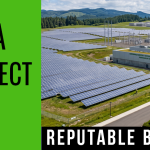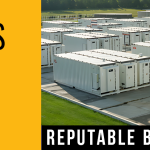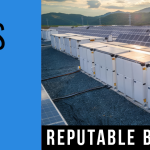
 Energy storage firm RedT has connected a 1MWh flow machine to the grid as part of its project with Centrica in North Cornwall.
The company uses vanadium redox flow technology, which it claims can deliver longer duration energy storage as opposed to the shorter burst power storage provided by battery technologies and chemistries such as lithium and lead acid.
CEO Scott McGregor believes longer duration storage assets will be required by energy systems in the UK and around the world as the penetration of renewable generation increases.
The project with Centrica is at The Olde House, a 600 acre farm and holiday retreat. It is enabling the farm to store solar energy from its 250kW PV array to use later in the day, which is when guests are returning to the holiday cottages.
The set up means the farm can harness significantly more of its renewable solar onsite generation, with RedT suggesting that that the project’s rate of return is in the “mid teens”, or roughly seven to eight years.
Centrica’s Local Energy Market trial is a £19m innovation project that also involves Western Power Distribution, The University of Exeter and National Grid. It is designed to show the role flexibility and storage can play in driving down the cost of energy across local and national systems.
RedT believes timeshifting the solar for use at peak times could save The Olde House up to 50% on grid imports during peak times.
It will also create revenue by tracking and dynamically responding to changes in grid frequency (frequency response) and providing grid services such as; Short Term Operating Reserve (STOR), participation in the Capacity Market and Demand Turn Up.
Click Here to Read Full Article
read more VANCOUVER (miningweekly.com) – The Chinese government has awarded a major contract to privately held clean technology innovator Pu Neng Energy for the construction of a 12 MWh vanadium-flow battery, as Phase 1 of a larger 40 MWh energy storage project, in Hubei province.
 With Tesla adding its Powerwalls and Powerpacks to houses, businesses, and the grid itself, one might think that Li-ion batteries are the ultimate in energy storage systems. That theory doesn’t hold water – but what does hold water is the world’s tallest wind turbine: a 3.4 megawatt
  The energy storage market is growing exponentially, however, as a percentage of total grid capacity it still only makes up a tiny fraction of the whole. Even among energy storage applications, pumped hydropower still retains a 95% market share. The major factor inhibiting further uptake — cost.
 Toshiba and NRG Energy have completed a new battery energy storage system that will benefit the Electric Reliability Council of Texas (ERCOT) grid.
 Renewable energy is, undeniably, on the rise: solar and wind farms are popping up in the U.S., Europe, China, and Australia, while many
  Indian state-owned company Energy Efficiency Services Limited (EESL) has invested $12m in the 28MW Basin 1 and 2 battery storage project in the Canadian province of Ontario.
 Energy storage is hot, but some new entrants into storage struggle financially. However companies, like CALMAC and Ice Energy that use