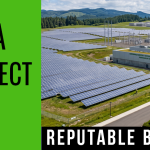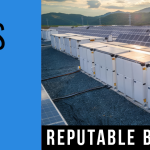
 SAN FRANCISCO–(BUSINESS WIRE)–Pacific Gas and Electric Company (PG&E) strengthened its commitment to a clean energy future with the presentation of six energy storage contracts totaling 165 megawatts (MW) to the California Public Utilities Commission for review and approval on December 1. California’s Energy Storage Decision requires investor-owned utilities to procure 1,325MW of storage by 2020. PG&E’s share is 580MW. Since 2015, PG&E has signed contracts for 79MW of new energy storage capability.
Storage plays an increasingly important role for California energy companies as they work to achieve the state’s ambitious clean energy goals. By the end of 2017, PG&E forecasts that about 33 percent of its retail electric deliveries will come from renewable sources. Energy storage will help integrate many of those resources, such as wind and solar, which are intermittent or provide peak output during times of low demand.
Energy storage has been a part of PG&E’s power mix for decades, starting with the Helm’s Hydro-electric Facility and continuing with pilot projects such as the 2MW Battery Storage Pilot at the Vacaville Substation and the 4MW Yerba Buena Battery Energy Storage System located on the property of Silicon Valley storage technology company HGST.
On December 1, 2016, PG&E issued a request for offers (RFO) to solicit proposals for energy storage projects. The projects were required to be between 1MW and 50MW, and needed to be operational no later than the end of 2024.
In addition to third-party owned storage offers, PG&E identified a distribution substation where it would like to consider energy storage projects on distribution circuits to defer distribution investments. PG&E also identified three sites where it owns and operates solar photovoltaic facilities where energy storage could be added.
Martin Wyspianski , PG&E senior director for Energy Portfolio Procurement and Policy, said he was pleased with the progress PG&E has made toward meeting California’s renewable energy and storage goals.
“As our clean energy portfolio grows, so does the importance of storage technology. These contracts and the storage capacity they represent will help us better integrate our growing renewable generation sources, and bring increased reliability to the grid. They are an important milestone in our progress toward a clean energy future,” Wyspianski said.
Click Here to Read Full Article
read more New York Governor Andrew Cuomo signed a
  Norwegian oil and gas company Statoil’s Batwind project in Scotland, combining wind turbines with energy storage, will have a battery system installed by system integrator Younicos.
 Hawaiian Electric on Thursday said it started installing a flywheel energy storage system at its Campbell Industrial Park generating station in West Oahu to test the device’s capabilities.
 By 31 December, a half-dozen 1-megawatt lithium-ion batteries could be in place, helping to support Puerto Rico’s electric power grid, which was almost entirely destroyed by Hurricane Maria.
 Lithium and
  Under the environmental concerns such as pollution and greenhouse effect, environment-friendly energy storage applications such as fuel cells, ammonia production and lithium-air batteries are proposed to replace fossil resources. However, the high overpotential is one of the most urgent issues for practical applications, and electrocatalysts are applied as a solution. Designing high-activity catalysts for electrochemical conversions is challenging. Scientists from the Chinese Academy of Sciences, Shanghai, China, and Shanghai University, Shanghai, China, reviewed some representative activity descriptors to screen high-activity catalysts in future high-throughput calculations and experiments. This work, titled “Adsorption-Energy-Based Activity Descriptors for Electrocatalysts in Energy Storage Applications,” was published in National Science Review.