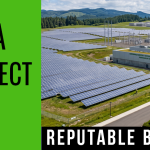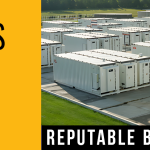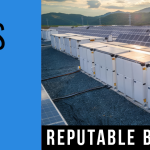
 Adding energy storage gives solar developers and the industry in general the ability to “keep going”, while offering both lithium and flow battery systems covers a “wide-range of use cases”, NEXTracker CEO Dan Shugar has said.
The US’ leading provider of single-axis trackers, mainly for large-scale solar PV installations, NEXTracker was bought up by multinational technology manufacturer Flextronics for over US$300 million back in 2015. The company has recently touted such milestones as reaching 10GW of global sales, including a gigawatt of sales into India, a market which NEXTracker only really began prioritising last year.
NEXTracker has launched two energy storage products that sit alongside the trackers at customer’s sites. NX Fusion Plus, a package that included NX Horizon tracker, inverter, battery and software components, was made available from late 2016, using flow batteries from manufacturer Avalon. Company sales director Ralph Fallant had told Energy-Storage.News a few months later that NEXTracker was aiming to shift around 15MW of those units per week, worldwide.
Then, late last year, the company relaunched the flow product as NX Flow and also released NX Drive, an integrated energy storage solution using lithium batteries.
“For us it’s really just that the needs now have landed there foursquare [in the] mainstream for the market,” Dan Shugar told Energy-Storage.News, about the decision to diversify the product offering to include not only energy storage but two types of battery solution.
Click Here to Read Full Article
read more You purchased that spiffy new rooftop solar array and waited patiently in the queue to get interconnected to the grid. Now that you’re generating kilowatt-hours, you’ve decided to invest in a residential energy storage system to maximize your ability to avoid paying for peak-priced power. There’s one hiccup, though: What do your state’s interconnection rules mean for connecting your new battery to the grid?
  Energy storage has been called a “swiss army knife” because it’s highly versatile, adaptable and can provide many different benefits to the grid. This flexibility can be financially rewarding. For example, when storage is deployed in behind-the-meter applications, it can be programmed to target different value streams like peak-demand shaving, time-of-use arbitrage or self-consumption. These value streams are effectively different ways for an energy storage system (ESS) to make money by reducing a customer’s utility bill.
 U.S. energy storage increases 46% in 3rd Quarter. Hawaii, California, Massachusetts aim to be powered by 100% renewable energy by 2045.
 Most of the focus on energy storage safety has been on mobile applications, given the spate of exploding laptop and phone batteries.
 On January 3rd, New York governor Andrew Cuomo delivered a state energy storage target of 1500MW via the private market by 2025 and has put up $260 million in state money to help drive the investment.
 The project to build one of the world’s largest lithium-ion battery storage systems started out as a bet—on Twitter. Last March, Tesla CEO Elon Musk tweeted to Australian billionaire Mike Cannon-Brookes, CEO of software company Atlassian, that Tesla could get a massive 100-MW/129-MWh energy storage system installed and working in 100 days, and he did.