
Panasonic Ramps Up Solar Cell Production as Tesla Starts Making Solar Roofs at Gigafactory 2

on January 20, 2018

energy storage greentech mediaIn December 2016, Panasonic and Tesla finalized an agreement to begin manufacturing solar PV cells and modules at the “Gigafactory 2” in Buffalo, New York.

Under the arrangement, Panasonic agreed to cover the capital costs associated with the factory and Tesla agreed to purchase Panasonic’s custom-manufactured solar products.

“These high-efficiency PV cells and modules will be used to produce solar panels in the non-solar roof products,” according to Tesla’s statement. “When production of the solar roof begins, Tesla will also incorporate Panasonic’s cells into the many kinds of solar glass tile roofs that Tesla will be manufacturing.”

Production of Tesla’s Solar Roof product did not begin for months after the initial announcement. But one year later — following delays and a brief trial run — Panasonic reports that cell manufacturing for the solar roof is now officially underway.

“Panasonic is already inside that factory making solar panels. That started in October of last year,” said Peter Fannon, vice president of technology policy at Panasonic Corporation of North America, in an interview at CES. “Also, we are just now beginning to manufacture cells.”

The Japanese multinational made an initial $260 million investment in the Buffalo facility, where it makes HIT (heterojunction with intrinsic thin layer) solar cells for Tesla. With the plant now up and running, Panasonic is prepared to invest more.

“We expect that investment, along with Tesla, as it grows, will grow with it,” Fannon said.

But it’s unclear how much growing is going on. 

Tesla completed the first solar roof installations on the homes of executives and employees in August. Little was heard about the solar roof after that, save for reports of several more installations for employees. The tiles were initially produced at small scale at the former SolarCity pilot production line in Fremont, California.

Last summer, Tesla CTO JB Straubel said solar roof production at Gigafactory 2 would ramp up “in a substantial way” by the end of 2017, and increased the company’s goal to achieve 2 gigawatts of solar panel capacity per year. But as the new year arrived, the status of Tesla’s solar tile production was still murky.

Tesla confirmed today, however, that solar roof manufacturing began in Buffalo in December. The company also said that it is now starting Solar Roof Textured and Smooth installations for non-employee homeowners.

Click Here to Read Full Article

read more

GreenTech MediaPanasonic Ramps Up Solar Cell Production as Tesla Starts Making Solar Roofs at Gigafactory 2

California regulators broaden rules for energy storage

on January 19, 2018

energy storage utility diveEnergy storage’s unique operating characteristics — it can be load or supply — have made market participation a complicated problem. But California now has interim rules designed to address some of the difficulties and to ensure storage resources are providing all the services they can while also being properly valued. 

In the order, the CPUC acknowledged that current market rules, including utility standard contracts and program tariffs, fail to support the ability of an energy resource to access more than one service. Known as “stacking,” it would include incremental values to the wholesale market, distribution grid, transmission system, resource adequacy requirements and customers.

“As a result, energy storage cannot realize its full economic value to the electricity system even though it may be capable of providing multiple benefits and services,” according to the CPUC order.

The order adopted 11 interim rules, which state that “resources interconnected in the customer domain may provide services in any domain.” Resources interconnected in the distribution domain may provide services in all domains except the customer domain, with the possible exception of community storage resources.

“Resources interconnected in the transmission domain may provide services in all domains except the customer or distribution domains,” the rules continued. Resources interconnected “in any grid domain may provide
resource adequacy, transmission and wholesale market services.”

A report from Brattle Group last year identified regulatory barriers that needed to be addressed to realize the full potential of value stacking. The report, titled Stacked Benefits: Comprehensively Valuing Battery Storage in California, was prepared for Eos Energy Storage with funding from the California Energy Commission.

Click Here to Read Full Article

read more
Utility DiveCalifornia regulators broaden rules for energy storage

The Energy Storage Giant Tesla Should Fear Most

on January 19, 2018

MadisonTesla (NASDAQ: TSLA) has been the biggest global player in the nascent battery energy storage market in everything from residential to utility-scale projects. Its 129-megawatt-hour (MWh) project in Australia, which took less than 100 days to build, is currently the most public example of how energy storage can be deployed and create value in a short amount of time.

Partly because of Tesla’s success, companies from across the energy spectrum are eyeing the energy storage market. One that Tesla should fear is Fluence, the joint venture by Siemens (NASDAQOTH: SIEGY) and AES (NYSE: AES) that has leading energy storage technology and its own financing to build projects around the world.

Fluence launches in a big way

In early January, Fluence was officially launched after getting necessary government approvals. The company laid out its strategy like this: “Fluence combines the engineering, product development, implementation and services capabilities of AES Energy Storage and Siemens’ energy storage team and embarks on an aggressive expansion of the business backed by the financial support of the two parent organizations.”

Fluence already announced that it will build the world’s largest lithium-ion battery storage system, a 100 MW/400 MW-hr project built for AES’ Alamitos power plant in Long Beach, California. In total, the company has 500 MW of projects deployed or awarded in 15 countries.

Siemens said it will use its sales force to sell Fluence platforms for large and small installations. This will give the energy storage company a sales force that spans 160 countries and works with one of the key utility suppliers globally.

Siemens Financial Services will also be providing leasing and other project finance options for some Fluence projects. This could make it easier to build a sales channel, particularly when selling to commercial customers who may not be able to finance energy storage on their own.

Click Here to Read Full Article

read more
MadisonThe Energy Storage Giant Tesla Should Fear Most

Energy storage ‘digital inertia’ could stabilise the grid better than thermal generation

on January 19, 2018

Clean-Energy-NewsOn islanded (or isolated) grids with growing renewable penetrations, grid operators often struggle to maintain system stability. Operators in places as diverse as Ireland, Puerto Rico and Australia frequently rely on inertial response from thermal power plants like coal or gas-fired generators to balance sudden mismatches between supply and demand.

However, recent research from Northern Ireland’s Queens University Belfast (QUB) finds that battery-based energy storage can provide inertial response for system reliability much more efficiently, at a lower cost and with substantially reduced emissions than a much larger quantity of thermal generation.

QUB’s research found that just 360MW of battery-based energy storage could provide the equivalent stabilisation to Ireland’s All-Island electricity system as would normally be provided by 3GW of conventional thermal generation. That shift to batteries could save up to €19 million (~£16.9 million) annually and could achieve approximately 1.4 million tonnes of annual CO2 savings.

Inertia: A blink-of-the-eye grid balancing service

Inertia is a system-wide service that responds to fluctuations in electricity frequency in the first fraction of a second of an imbalance between supply and demand – for example, when a power station suddenly drops offline. Traditionally, this stabilising hand has come from the kinetic energy provided by the spinning mass of (synchronous) generators that produce electricity from fossil fuels.

All this occurs well within the first half a second of an issue – literally, the time it takes a human eye to blink. Traditionally the electric power sector has not thought of it as service. It’s just part of the physics of synchronous generators; and we don’t miss something until it’s gone.

As the proportion of energy from (non-synchronous) wind and solar grows this source of traditional ‘analogue’ inertia is in increasingly short supply. The typical solution to this has been to hold back wind and solar output during such times, but this is growing increasingly costly as renewable penetration grows. Let’s face facts: paying not to use zero-fuel cost and zero carbon renewables isn’t a tenable solution in the long run; and would require a significant overbuild of renewable capacity to achieve the same decarbonisation targets.

Click Here to Read Full Article

read more
Clean Energy UKEnergy storage ‘digital inertia’ could stabilise the grid better than thermal generation

Santander Invests £28.5 Million In Battery Energy Storage Solutions

on January 18, 2018

energy storage cleantechnicaSpanish banking giant Santander has announced this week it will invest £28.5 million into London-based Battery Energy Storage Solutions for the express purpose of building and operating a grid-scale battery storage portfolio of 100 megawatts by the end of the year.

Battery Energy Storage Solutions (BESS), a London-based independent provider of power storage, energy security, and energy flexibility services, owns and operates five operational sites in the UK and boasts a large pipeline of projects for imminent delivery. The company was only formed in March of 2017 by leading energy storage executive experts, and as of the end of 2017 the company owned and operated 14 megawatts (MW) worth of grid-scale battery storage projects, and had a further 49 MW worth of grid-connected batteries to be connected by the end of this month.

Santander UK, the UK subsidiary of Spanish banking giant Santander Bank, N. A., announced last week that it was committing £28.5 million to BESS in an effort to support the company’s plans to become one of the UK’s largest independent owner-operators of battery storage assets and to meet their short-term strategy of building and operating a portfolio of 100 MW worth of grid-scale battery storage assets by the end of 2018.

The timing of Santander’s investment — and that of the creation of BESS itself — stems from efforts to capitalize on the booming energy efficiency and energy storage industries across the UK. Battery storage technologies are also obviously tailor-made to partner with renewable energy technologies, which have similarly exploded in the UK over the last few years, and in 2017 the country broke 13 separate records, including the first 24-hour period without coal-generated power, the first time that wind, nuclear, and solar produced more than coal and gas, and the “greenest summer” with 52% of electricity generated from low-carbon sources.

“The UK’s power system is now the fourth cleanest in Europe,” said Nicholas Beatty, co-founder of Battery Energy Storage Solutions. “However, the pace of transition to a low carbon power system brings with it challenges for the National Grid in balancing the network and ensuring supply and demand is matched on a second by second basis. Such balancing of supply and demand only being possible by the introduction of new technologies like battery storage. We believe our company is uniquely placed to capture that market demand. We value the guidance and support provided by the Santander deal team in this complex transaction.”

“We are delighted to have closed this landmark transaction with a new client in a new niche market segment: project finance for battery storage,” said Howard Whitehead, Head of Infrastructure & Renewable Energy, Santander Corporate & Commercial. “We believe we are one of the first senior debt lenders to close a project finance transaction in this space, a fact which underscores Santander’s desire to be a leader in this fast developing sector.”

Click Here to Read Full Article

read more
CleanTechnicaSantander Invests £28.5 Million In Battery Energy Storage Solutions

There once was an energy storage system on Nantucket

on January 18, 2018

energy storage utility diveSignificant seasonal demand spikes affect a number of areas around the country. Addressing them in a cost effective manner is a priority for those utilities that face large differentials between summer and winter loads.

One of those places, Nantucket, is both an isolated island and a wealthy summer colony whose population swells in the warmest months. It is a growing load area served by National Grid, and to meet that new demand, an expensive new transmission line could be required in the future. With the island’s backup generation aging, it leaves residents and the tourism industry in a precarious spot, should anything go wrong.

In an increasingly prevalent move, the island is turning to energy storage for a solution that illustrates how scalable battery systems can be. But while National Grid plans to avoid a costly transmission upgrade, its storage-based solution won’t be in place until 2019, leaving Nantucket’s residents and businesses vulnerable to potential outages as demand rises this summer.

In some respects, Massachusetts’ Nantucket Island is similar to North Carolina’s Ocracoke — highly seasonal, powered by undersea transmission cables, with some backup generation in place.

Ocracoke lessons

Last summer, Ocracoke Island experienced a week-long partial outage when one of those undersea cables was cut. Tourists had to evacuate and island businesses lost a significant chunk of their seasonal revenues. A microgrid developed on the island managed to keep some power on for residents, but unfortunately its diesel backup generation failed as well.

Nantucket is looking to avoid a similar disaster, and has employed a larger, yet similar approach to resiliency. Each island is looking to diesel backup and energy storage from Tesla, along with demand management, to ensure they can meet summer peak demand.

Ocracoke Island has about 1,000 full-time residents, and so its system is much smaller, including a 3 MW diesel generator, 500 kW/1 MWh Tesla battery and 15 kW of solar.

Click Here to Read Full Article

read more
Utility DiveThere once was an energy storage system on Nantucket

Industry reacts positively to New York’s 1,500MW energy storage target

on January 17, 2018

Energy Storage NewsTrade associations NY BEST and the Energy Storage Association have been quick to applaud New York Governor Andrew Cuomo’s historic setting of a 1,500MW energy storage procurement target for his state.

Energy-Storage.News reported earlier this week that Cuomo, in his annual State of the State address, had set out plans for US$200 million to be invested via New York’s NY Green Bank and US$65 million via NYSERDA in the development and deployment of energy storage projects, while the 1,500MW target should be reached by 2025.

The announcement was made along with a raft of other environmental, energy and sustainability policy measures as Cuomo attempted to set out a “comprehensive agenda to combat climate change”.

These included establishments of energy efficiency targets, moves to cap greenhouse gas emissions and limit pollution from natural gas plants, establish a solar PV programme for 10,000 low-income households and to reconvene a scientific panel on climate change disbanded by the Trump presidential administration.

Energy Storage Association CEO Kelly Speakes-Backman said her group “heartily applauded” the establishment of the target. Meanwhile William Acker at NY BEST, pitched as a regional trade association as well as a technology development group – NY BEST has its own battery testing and research facilities available to its members – said the deployment of 1,500MW by 2025 and the US$265 million investment would help cement New York’s position as a leader in the energy storage industry while contributing strongly to the state’s climate change and sustainability goals.

Click Here to Read Full Article

read more
Energy Storage NewsIndustry reacts positively to New York’s 1,500MW energy storage target

Energy Storage Can Drive Future Tesla Growth, Not Just Autos

on January 16, 2018

Seeking AlphaTesla (NASDAQ:TSLA) is wrongly regarded by some as “just another auto company”. It is true that in the short term its stock price will probably be mainly affected by the progress of Model 3 production. Autos represent 80% of revenue at the moment. In the long term though its energy storage business can become an engine of further organic growth for the company. My article in June last year gave details of Tesla’s strong position in the market compared to competitors. Developments since then have strongly reinforced this perception.

Tesla’s Energy Storage Business.

Tesla bears point to the fact that the energy storage business is on a small scale. This is true in terms of sales, but not in terms of investment or potential. Tesla Management has repeatedly said that they regard energy storage as the greatest growth area for the company.

The Q3 2017 earnings call gives the details on this. “Energy generation and storage revenue” in Q3 increased to US$317.5 million. This was up from US$23.3 million year-on-year, a percentage increase of 1261%

Gross margin was at 25.3%. The margin will improve this year with better capacity utilisation and manufacturing cost reductions at the Gigafactory. It is relevant here that in the results the facility in Nevada was referred to as “Gigafactory 1”. “Gigafactory 2” has since opened in Buffalo and more will follow.

Click Here to Read Full Article

read more
Seeking AlphaEnergy Storage Can Drive Future Tesla Growth, Not Just Autos

New ‘Fluence Energy’ Builds World’s Biggest Storage System In California

on January 16, 2018

GreenMattersTesla will be seeing some competition in the energy storage industry with a team effort by AES and Siemens. They’ve fully launched business operations at a new startup called Fluence Energy at the beginning of the year. A new energy storage project they’ll be working on in Long Beach, California, is hailed to be the biggest in the world.
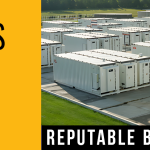
Fluence was first announced back in July and both companies have a 50 percent stake in it. There’s over 10 years of experience already going into the new startup that’s headquartered in Washington, DC. Other offices will be located worldwide, such as Germany. While they’ll run independently from the two companies backing it, it still brings together the AES Advancion and Siemens Siestorage technology platforms.

Looking at the experience, both companies combine for a capacity of 485 megawatts of battery storage in 15 different countries. That’s among 56 different projects that’s either been deployed or awarded to the company. Among those is the world’s largest battery backup system that will be located at Long Beach, California.

AES was awarded the Southern California Edison project back in 2014. With a capacity of 100 megawatts and 400 megawatt-hours, it would beat out Tesla’s battery facility in South Australia that features 129 megawatt-hours. AES had the previous record with their system in Escondido, California.

“As the energy storage market expands, customers face the challenge of finding a trusted technology partner with an appropriate portfolio and a profound knowledge of the power sector,” Ralf Christian, CEO of Siemens’ Energy Management division said in a press release. “Fluence will fill this major gap in the market.”

While competition between Fluence and Tesla could increase battery storage sizes in the future, it’s not likely that we’ll go too far higher than 100 megawatts. The company’s COO, John Zahurancik, tells Greentech Media that smaller storage facilities could “be a better benefit” than having a large, centralized system.

Click Here to Read Full Article

read more
Green MattersNew ‘Fluence Energy’ Builds World’s Biggest Storage System In California

New Energy Storage Breakthroughs Sweeten Outlook For EV Market

on January 16, 2018

energy storage cleantechnicaA new survey of automakers from the leading research group KPMG points to a gloomy future ahead for the electric vehicle market, but the naysayers don’t appear to be taking energy storage breakthroughs into account. In the latest development, new research headed up by Brookhaven National Laboratory points the way to reducing battery charging times, a key obstacle cited by auto industry executives in the survey.

Auto Execs Still Not Sure About Electric Vehicles…

On the surface, the new KPMG electric vehicle survey paints a sad face on the electric vehicle market. Under the title, “2018 KPMG Global Automotive Executive Survey,” the research firm presents this finding from the responses of about 1,000 executives:

Despite the hype and massive automotive OEM investment in battery electric vehicles (BEVs), more than half (54%) of global auto executives say they believe these vehicles will fail commercially due to infrastructure challenges while 60 percent say excessive recharging times will do them in…

Ouch!

90 of the respondents are based in the US. Not surprisingly, the survey finds the US group to be “far more skeptical than their global counterparts.”

It also appears that automakers are having a tough time convincing the general public that all-electric transport is the way to go. KPMG surveyed 2,100 consumers in 42 countries including the US:

Only 13% of consumer respondents outside the United States and 5% in the U.S., said they would buy a pure battery electric vehicle over the next five years.

The relatively low interest among US consumers is not surprising, either. The disparity between US and global attitudes comes into even sharper focus when consumers are asked about buying hybrid EVs:

…50% of consumers outside of the United States indicate they would opt for a hybrid — hybrid electric (33%) or plug-in hybrid electric (17%) vehicles — over the next five years, or internal combustion engine (18%). U.S. consumers, on the other hand, say they’ll stick with ICE vehicles (54%), followed by hybrid electric (24%).

Click Here to Read Full Article

read more
CleanTechnicaNew Energy Storage Breakthroughs Sweeten Outlook For EV Market