
Energy Storage Markets Forecast To Double With Falling Prices And Favorable Policies

on March 16, 2018

Energy storage is a tough concept to grasp. And until now, it’s been an even tougher technology to deploy. But the market for such technology is forecast to exceed the previous four years in this year alone because of falling prices and favorable policies.

Most people envision energy storage as a system that siphons power from the grid at night and harnesses that electricity inside of a device. It is then released during the day at peak demand. That’s coming — and the evidence is starting to mount. The more immediate application, though, is infusing the grid with electrons if the lights start to flicker out.

What’s the proof that the energy storage market is getting past its infancy? GTM Research and the Energy Storage Association have just released the U.S. Energy Storage Monitor 2017 Year-in-Review, which says that 1,000 megawatt-hours were deployed between 2013 and 2017 and which predicts that more than 1,200 megawatt-hours of energy storage will get deployed in 2018 alone; last year, it was 431 megawatt-hours. Altogether, GTM estimates that the annual value of the U.S. energy storage market will exceed $1.2 billion in 2019.

Moreover, the Federal Energy Regulatory Commission voted in mid February to allow grid managers to compensate energy storage in the same way they do traditional power generators. Energy storage would thus graduate beyond the injection of electrons to prevent lights from flickering out and into the wholesale energy markets.

The regional transmission organizations and independent system operators are required to present their plans on how to achieve the commission’s goals later this year. The PJM Interconnection has delivered about 250 megawatts of cumulative energy storage power since 2013. California’s Independent System Operator is also actively trying to incorporate energy storage into mix of generation assets, as PG&E Corp., Sempra Energy and Edison International must collectively buy 1,325 megawatts of energy storage by 2020.

read more

Fractal Energy Storage ConsultantsEnergy Storage Markets Forecast To Double With Falling Prices And Favorable Policies

San Diego County Water Authority Enhances Solar With Battery Storage

on March 16, 2018

solar-industryThe San Diego County Water Authority is expecting to save approximately $100,000 per year with commercial-scale batteries installed at the agency’s solar-powered Twin Oaks Valley Water Treatment Plant near San Marcos.

The energy storage system is designed to reduce operational costs at the facility by storing low-cost energy for use during high-demand periods when energy prices increase.

The batteries were installed at no charge to the agency as part of an agreement with Santa Clara-based ENGIE Storage, formerly known as Green Charge.

The system charges from either the grid or on-site solar energy production to store energy. ENGIE Storage’s GridSynergy software allows the water authority to use that energy for plant operations during high-demand periods when market prices typically peak. At the Twin Oaks facility, on-site energy is generated by more than 4,800 solar panels that produce an estimated 1.75 million kWh of electricity each year.

“Energy storage is a strategic addition to the water authority’s solar energy installations, which have already reduced power costs and made the agency more environmentally friendly,” says Mark Muir, chair of the water authority’s board of directors. “This project is a good example of how we continually look for ways to maximize investments in the regional water treatment and delivery system to the benefit of our ratepayers. This includes advances in our growing list of energy initiatives.”

ENGIE Storage installed the batteries at Twin Oaks through a power efficiency agreement to install, at no cost to the water authority, a 1 MW/2 MWh energy storage system. ENGIE will own, operate and maintain the $2 million system on water authority land for 10 years, after which the agency can choose to extend the agreement, purchase the batteries, or have them removed and the site returned to its original condition.

A $1 million incentive from the California Public Utilities Commission (CPUC) helped fund the project. The incentive, awarded in 2017 under the CPUC’s Self Generation Incentive Program, encourages the adoption of energy storage technologies that reduce both electricity demand and greenhouse gases.

read more
Fractal Energy Storage ConsultantsSan Diego County Water Authority Enhances Solar With Battery Storage

GE Says Its New Battery Product Can Cut Grid-Scale Storage Installation Times in Half

on March 15, 2018

Greentech-MediaGE has released a containerized energy storage product with a competitive advantage for installation time.

The 1.2-megawatt, 4-megawatt-hour Reservoir system marks a new entry into the standardized, large-scale battery market. It reflects a strategic shift at GE’s storage practice, which recently reorganized after an initial foray into battery manufacturing and a detour in commercial and industrial energy services.

Reservoir sounds like many other containerized battery solutions already available from companies like Fluence, BYD, Mitsubishi, LG, Samsung and others. The goal is to lower costs to developers by standardizing the product and factory-testing the enclosures for quality control.

What GE does differently is ship the containers fully loaded.

“We will fully assemble and test the equipment in a controlled environment and drop ship to the site fully assembled,” said Eric Gebhardt, vice president and strategic technology officer at GE Power.

Typically, containerized battery systems ship without the battery cells inside, due to weight, safety or quality concerns. GE bucked the trend by designing a box that can travel with batteries in place but disconnected. A technician with a hot stick can flip a switch onsite to reconnect the electrical circuit and get the system operational again.

That could cut installation time in half, Gebhardt said, because it eliminates time-intensive battery installation onsite.

This appears to be the first large-scale battery design with this capability.

The 50 percent cut to installation time “seems plausible and realistic,” said Ravi Manghani, energy storage director at GTM Research. That still leaves other tasks like putting in a transformer, wiring different containers together and connecting to the broader grid.

“These assets can come online and start making money faster than another system that has to be assembled onsite,” Manghani noted.

read more
Fractal Energy Storage ConsultantsGE Says Its New Battery Product Can Cut Grid-Scale Storage Installation Times in Half

Energy storage or grid extension – wrong question, right answers, finds panel

on March 15, 2018

On day one of Energy Storage Europe, which runs until March 15 in Düsseldorf, Germany, a vivid panel discussion involving energy industry luminaries from Engie, the International Renewable Energy Agency (IRENA), the U.S. Department of Energy and the National Renewable Energy Laboratory (NREL) tackled the question: Energy storage or grid extension?

The question was intentionally blunt and obtuse, and found uniform disagreement among the panelists.

“It is the wrong question to be asking,” said Martin Keller of NREL. “The right question should be: what combination of energy infrastructure, together with flexibility options, is better?”

Michael Taylor of IRENA said that storage will instead begin “nibbling at the edges of the grid”, particularly in regions where grid capacity expansion is difficult or prohibitively expensive.

Thierry Lepercq, executive VP at French utility, Engie, pressed home the point that the very nature of storage means more flexibility, and goes beyond mere batteries supporting the grid during times of peak demand.

“It is my belief that a power and gas approach can offer a range of tools better equipped to solve the issue of storage and grid integration,” Lepercq said. “We do know that the performance of storage is going to improve, and with that costs will come down, deployment grows, research grows – it’s a virtuous circle.”

Lepercq told the audience that Engie is intent on tackling the ‘diffused’ nature of energy consumption, and believes that the firm is close to solving one of the major stumbling blocks for stored energy – costs.

“In Chile we can use hydrogen to store solar energy produced at $11 MWh,” he said. “Chile has vast amounts of land, space and sun. I believe we can produce 3,000 terrawatt hours of production over 18,000 square kilometers – this is just a small part of the Atacama desert, but could produce enough to cover Europe.”

read more
Fractal Energy Storage ConsultantsEnergy storage or grid extension – wrong question, right answers, finds panel

Blue Planet Energy Supplies Energy Storage & Training In Puerto Rico

on March 15, 2018

CleantechnicaThe energy storage provider Blue Planet Energy recently deployed its Blue Ion energy storage systems to support the electrification efforts in Puerto Rico. These deployments took place in areas where there has not been reliable electricity since September of 2017, when Hurricane Maria struck. One site is a volunteer housing facility in the Isabela municipality and the other is located in the Corozal municipality to provide electricity to a clean water pumping system. Blue Planet Energy is also providing support through training and education sessions.

“Too many of Puerto Rico’s residents have not had a functioning electric grid since Hurricane Maria’s landfall in September. Our Blue Ion units will provide critical sites with reliable, safe and self-sustained power to ensure they can continue providing essential services to their communities. We’re proud to be able to lend our support to Puerto Rico and to contribute to its mission of rebuilding with stronger, cleaner and more reliable energy infrastructure,” said Henk Rogers, Blue Planet Energy CEO and founder.

A 16 kilowatt-hour (kWh) Blue Ion 2.0 battery unit was installed at the well pumping system in Corozal. The energy storage technology is working with a 7 kW solar power system in a remote neighborhood called Palos Blanco. This area was experiencing a lack of both clean water and reliable electricity, so the solar power and energy storage system is helping to produce both.

“Our mission on the ground in Puerto Rico is to coordinate with the EPA and FEMA to install safe drinking water stations and solar-powered pumping systems to service those that need it most, ” explained Mark Baker, Director of Disaster Response for Water Mission. This organization is working to address water safety in many rural communities in Puerto Rico.

read more
Fractal Energy Storage ConsultantsBlue Planet Energy Supplies Energy Storage & Training In Puerto Rico

Younicos launches service to rent energy storage systems

on March 14, 2018

Utility-DiveAs the market for stationary storage grows, it is becoming more mobile. With the rental model that Younicos is introducing, a storage device can be put in place for a limited amount of time and moved when conditions change.

While not the first example of such leasing, Younicos’s move demonstrates another way for storage companies to differentiate themselves.

“We believe that this offering extends the benefits of energy storage to a new segment of customers who, for one reason or another, value financial flexibility,” Alexander Schönfeldt, head of Europe, the Middle East and Africa sales for Younicos, said in a statement.

Under the company’s “Energy-Storage-as-a-Service” model, customers pay a rental fee, as well as mobilization and de-mobilization charges, but incur no other costs. The storage systems are housed in containers and can be shipped to the site, dropped in place and operated by Younicos.

“Younicos’s move makes sense,” considering that the company’s corporate parent is Aggreko, one of the largest rental providers of power generating equipment in the world, Tim Grejtak, an analyst at Lux Research, told Utility Dive. Younicos was acquired by Aggreko last year in a $52 million cash deal.

The move is another sign of a wider trend under way in the energy storage industry, Grejtak said. “We are starting to see more differentiation in financial business models, which is important,” he said.

At first, companies differentiated themselves by the assets or technology they offered. But the ubiquity of lithium-ion batteries obviated that, Grejtak said. Next, companies differentiated themselves with control software, but most companies now offer some form of software. “Now, companies are looking at differentiation by finance. We saw a similar differentiation in the solar industry when companies began to adopt the solar lease model,” Grejtak said.

Younicos’s model may be unique, but it is not the first company to offer an alternative to the outright purchase of a storage system or even a temporary storage solution.

read more
Fractal Energy Storage ConsultantsYounicos launches service to rent energy storage systems

ESS Inc. to Deliver Two Energy Storage Systems in Germany

on March 14, 2018

NasdaqPORTLAND, Ore., March 13, 2018 (GLOBE NEWSWIRE) — ESS Inc., a leading manufacturer of safe, low-cost and long-duration energy storage systems, announced today that it will deliver two Energy Warehouse (EW) flow battery systems to Germany. The two 50 kW / 400 kWh batteries mark the company’s first deployments in Europe, setting the stage for active market development on the continent.

The EW energy storage systems will be shipped to BASF, the world’s leading chemical company, which also recently made a significant investment in ESS. “We are pleased to receive orders from companies like BASF, and to establish our footprint in the European market,” said Craig Evans, founder and CEO of ESS Inc. “The purchase of these systems shows the industry’s confidence in our technology and our business. We look forward to continued collaboration with BASF, and to serving other major clients in the exciting European market.”

“Taking delivery of two ESS Energy Warehouse systems will create a working relationship that will enable us to gain first-hand experience with the technology,” said Olaf Rogge, Head of Sales and Marketing Energy Storage, BASF New Business. “We look forward to collaborating on energy storage applications and learnings in the future.”

ESS Inc. is exhibiting this week at Energy Storage Europe in Dusseldorf from March 13-15; Hall 08B, stand E02.

read more
Fractal Energy Storage ConsultantsESS Inc. to Deliver Two Energy Storage Systems in Germany

Hawaiian Electric launches four-hour kinetic energy storage system

on March 14, 2018

WindpowerHawaiian Electric, in partnership with Amber Kinetics and Elemental Excelerator, has launched operations of a four-hour kinetic energy storage system powered by flywheel technology. The pilot project is the first commercial use of Amber Kinetics’ advanced technology in the U.S.

Hawaiian Electric and Amber Kinetics are testing the 8-kW/32-kWh storage system for local grid reliability and support and aid in the integration of renewable energy. One 8-kW unit can power approximately 25 homes for one hour.

Technical field data is being collected and is expected to guide planning for future utility-owned energy storage projects in Hawaii. Communications and controls Amber Kinetics is developing in collaboration with Hawaiian Electric will be tested in a real-world setting and scaled to other jurisdictions.

The five-ton flywheel stores electricity as rotational kinetic energy and is capable of charging and discharging for multiple duty cycles per day with no loss of capacity. The environmentally friendly system is 98% steel that can be fully recycled at the end of its 30-year design life. It was installed by American Electric, a Hawaii-based company, at Hawaiian Electric’s Campbell Industrial Park generating station on Oahu.

“Hawaiian Electric is eager to test the grid stabilizing and renewable energy storing of the flywheel,” said Colton Ching, Hawaiian Electric senior vice president for planning and technology. “Our evaluation of this very promising energy storage system will help us determine how we can use flywheels to help integrate renewables at a lower cost while improving reliability and resiliency of the grid.”

Amber Kinetics’ products offer substantial benefits for a wide range of utility and commercial applications. The firm’s breakthrough technology is the first to extend the duration and efficiency of flywheels from minutes to hours, resulting in safe, economical and reliable energy storage for a variety of utility-scale applications, including load shifting, peak shaving, frequency regulation, renewable firming and spinning reserve. The system is scalable and designed to allow for increased size through the addition of multiple flywheels.

read more
Fractal Energy Storage ConsultantsHawaiian Electric launches four-hour kinetic energy storage system

Sempra Energy Completes Oncor Acquisition

on March 13, 2018

Just one day after receiving final approval from Texas regulators, Sempra Energy completed its acquisition of Energy Future Holdings Corp., the bankrupt owner of 80 percent of Oncor.

“The completion of this acquisition – the biggest in our 20-year history – represents an important milestone in the execution of our growth strategy moving forward,” said Debra L. Reed, chairman, president and CEO of Sempra Energy. “We expect the addition of Oncor to diversify our base of U.S. utility earnings and create a broader platform for our expansion in the future. Oncor is an exceptional utility and we plan to provide the support it needs to continue to safely and reliably meet the needs of its millions of customers and the expanding economy in Texas.”

Oncor will remain in Dallas, and Allen Nye, Oncor’s senior vice president and general counsel, will become Oncor’s CEO. Former CEO Bob Shapard is now the company’s chairman.

NextEra Energy had sought to purchase the company last year for $18 billion, but the Public Utility Commission of Texas shot them down twice.

Afterward, Oncor drew the attention of multiple suitors, starting with a $9 billion bid from Berkshire Hathaway. That bid was soon topped by a proposal by Elliott Management Corp 11, the largest creditor of Energy Future Holdings Corp., for $9.3 billion.

Sempra’s $9.45 billion bid came just hours before a purchase hearing deadline in August. A person familiar with the matter said Elliott’s public bid allowed Sempra to quietly work on its bid for weeks.

Sempra’s bid was approved by a bankruptcy court.

read more
Fractal Energy Storage ConsultantsSempra Energy Completes Oncor Acquisition

Hybrid Energy Storage: Are Combined Solutions Gaining Ground?

on March 13, 2018

Energy-Storage-World-Forum Combining component parts into hybrid systems to reap the benefits has always been an attractive prospect. In the past years, successful projects have come online for both solar-plus-storage and wind-plus-storage — the resiliency of battery energy storage combined with the financial boost from power generation.
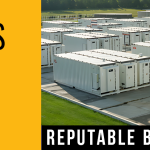
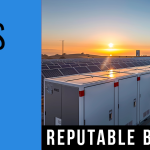
So what does hybrid refer to in the world of energy storage? While the idea isn’t new, the technology is still in an early phase, only really being explored for grid applications in the past couple of years. Hybrid energy storage systems (HESS) can refer to several different types of set up; the point in common is that two or more types of energy storage are combined to form a single system.

There is no single energy storage solution that is ideal for every grid-scale application. As explained by Greentech Media, they “are typically designed for high-power applications (i.e., “sprinter” mode that provides lots of power in short bursts) or energy-dense applications (i.e., “marathon” mode that provides consistent lower power over long durations), and there are lifetime, performance, and cost penalties for using them in unintended ways.”

HESS typically combine both “sprinter” and “marathon” storage solutions to fulfill applications that have diametrically opposed requirements; e.g. fast response vs peak shaving. The potential for value stacking immediately jumps to mind.

Hybrid storage offers other avenues for cost reductions; two or more systems can share much of the same power electronics and grid connection hardware, reducing both upfront and maintenance costs. Three types of hybrid storage have started to appear past the pilot stage:

read more
Fractal Energy Storage ConsultantsHybrid Energy Storage: Are Combined Solutions Gaining Ground?