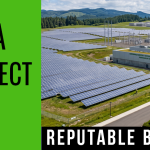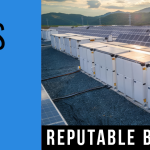
 Most of the world was focusing on the Model 3 portion of the Tesla Q1 earnings letter last night. But buried down toward the bottom of that communication, the company reiterated its goal of tripling its energy storage business in 2018. “2018 should be a very important year for our energy storage business,” the letter read. “We continue to aim for a three-fold increase in MWh deployed for our energy storage products this year.
“In Q1, energy storage deployments grew 161% from Q4 2017 to 373 MWh, which includes the 129 MWh South Australia project that was installed last year with final commercial transfer occurring in Q1. Electric utilities and power producers around the globe are increasingly appreciating the value proposition of our Powerpack storage systems based not only on economic benefits but also on the operational benefits of faster response time and greater reliability of the electric grid.”
That giant battery in South Australia surprised people with its insanely fast response the first time it was called upon after it was commissioned — an astonishing 140 milliseconds. That’s how long it took for it to start providing power to the grid when a nearby coal generating plant went offline unexpectedly.
Editor’s note: Admittedly, this is being marked/communicated as a big surprised, but this is how batteries work, and Younicos communicated this point to us well several years ago in Berlin, especially via these two graphs:
Such perfomance is making other utility companies sit up and take notice. Tesla is in talks to provide a similar grid-scale battery to Queensland, Australia. It is also working with Consolidated Edison in New York, Xcel Energy in Colorado, and PG&E in California.
Elon said on the conference call last night, “Tesla may have a gigawatt-scale deal announced in a matter of months.”
read more Tesla has continued to grow its energy storage business, but is also seeing a continued slide in slow solar power deployments per its
  Just weeks after the
  While lightweight lithium-ion batteries are ideal for electric cars, they are also quite expensive – and therefore unsuitable for large-scale, stationary power storage, claimed scientists from ETH Zurich and Empa in Switzerland.
 Almost every automaker working on electric cars is also currently looking at ways to leverage their battery technology development into other products. It started with Tesla’s launch of ‘Tesla Energy’ in 2015 and now BMW, Renault, Nissan, and several others have also launched similar products or even new energy divisions.
 Energy storage is a new disruptive trend. It basically involves storing energy that can later be harnessed for electricity to power our homes, our cars – our future. Energy storage is growing fast as it complements the renewable energy sectors of wind and solar.
 Battery storage is a “necessity” for Hawaii to reach its 100% renewable energy by 2045 target, leading to electric cooperative KIUC becoming the top-ranked US utility for watts of energy storage deployed per customer in 2017.
 Energy storage (batteries and other ways of storing electricity, like pumped water, compressed air, or molten salt) has generally been
  Gas distributer Northern Gas Networks (NGN) has hailed the results of a power-to-gas feasibility study which suggest that hydrogen’s potential as a form of energy storage could be delivered at scale.