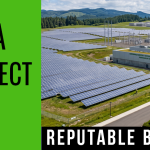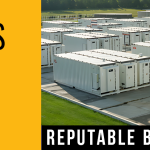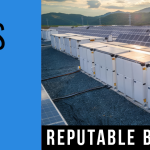
 A plan by Edison-owned Exelon Corporation to build one of the first utility-scale microgrid clusters in the US has been approved by regulators.
Renewable Energy News reports that the microgrid in the Bronzeville neighborhood on the South Side of Chicago will connect with an existing microgrid on the campus of the Illinois Institute of Technology (IIT), creating one of the most advanced clustered urban microgrids in the United States.
Joe Svachula, vice president, Engineering and Smart Grid Technology, ComEd, said in a statement, “By connecting with the IIT microgrid, we’ll learn how to integrate microgrids with renewable energy resources and how to maximize the value of the interaction between two microgrids. It’s an important step forward in our effort to develop a more secure, resilient and reliable distribution system in the future.”
According to ComEd, the neighborhood was selected following a comprehensive study to identify an overall resiliency metric for small sections of ComEd’s northern Illinois service territory and map locations where a microgrid could best address both security and resiliency. The project will serve an area that includes 10 critical service facilities.
ComEd said that the first phase of the project will include 2.5 MW of load and require reconfiguration of an existing feeder, and installation of battery storage and solar PV. The second phase will add 4.5 MW of load and 7 MW of distributed energy resources, enough to meet the peak electricity demand of customers within the microgrid footprint and maintain service when the microgrid is islanded from ComEd’s grid.
read more The global grid-connected battery energy storage systems (BESS) market witnessed a market volume of 3.8 gigawatts (GW) for projects installed up to 2017, which is expected to reach 23.4GW for projects installed up to 2022. According to GlobalData’s latest report Grid-Connected Battery Energy Storage Systems, Update 2018 – Global Market Size, Competitive Landscape, Key Country Analysis, and Forecast to 2022, the top five countries in the global market were the US, South Korea, China, Japan, and Australia for projects commissioned up to 2017, with the US having a 28% market share and leading the global BESS market.
 The collaboration between Cleanergy and Masen in Concentrated Solar Power (CSP) and Thermal Energy Storage (TES) solutions is taking a big step towards commercialization. Through the agreement, Masen will take a place in Cleanergy’s board of directors and fund a substantial part of the company’s Thermal Energy Storage R&D, industrialisation and business development.
 In a perfect world, grid-connected energy storage plants would never be needed. The diversity and inherent flexibility of thousands of generators and loads in a large power system would provide all the flexibility that we could need to continuously match supply and demand at a very low cost, even with variable renewables dominating our generation resources.
 Tesla has unveiled yet another new large Powerpack energy storage project and this time, it’s going to be used as a virtual power plant for grid balancing in Europe.
 CARMEL, Ind. — Stakeholders last week said they foresee
  MGX Minerals Inc. (“MGX” or the “Company”) (CSE:
 We normally associate Cornwall in England with scones and cream teas … or, if we are really metal nerds, we associate the sometimes-sunny southeast country of the British Isles with mining (particularly with tin mining).
 Microgrids collaborate copasetically with distributed renewables, they guard against widespread blackouts, and they insure institutions against the losses those blackouts cause, so why aren’t they sprouting up everywhere?