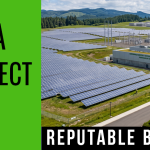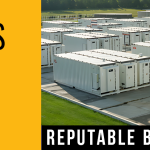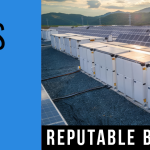
 Ambitious solar and storage project developer Lyon Infrastructure has teamed up with two major international energy and battery storage groups to pursue its portfolio of projects in Australia, and others overseas.
In joint announcement on Tuesday, Lyon says it has signed a “collaboration” agreement with Japan’s JERA and US-based Fluence to “identify and pursue utility-scale battery storage development and investment opportunities in Asia-Pacific markets.”
The agreement may provide renewed momentum for Lyon’s list of major solar and storage projects, which have attracted big headlines and publicity, but are yet to advance to contracting, financial close, or construction.
The three Australian projects flagged in this deal were due to begin construction in 2017 (see table below) and executive chairman David Lyon still promises that an announcement for a start in the first of those will be made in the first “within a few months”.
A legal battle with US solar giant First Solar over the details of one of Lyon’s projects appeared to take the wind out of its sails late last year.
But while the legal dispute is ongoing, Lyon’s David Green told RenewEconomy he is confident the company can move forward and it will not impact its projects.
Both JERA and Fluence are joint ventures created by some of the biggest energy players in the world.
JERA is joint venture of two major Japanese electricity companies, TEPCO Fuel & Power Inc and Chubu Electric Power Co, while Fluence is an equal joint venture of Siemens and AES that focuses on battery storage.
Together, the three groups say they will look at utility and industrial scale battery storage solutions in new projects and at existing renewable and thermal generation plants.
Lyon would be the project developer, JERA an investor, and Fluence the energy storage solution and service provider.
Top of the list in Australia are three long talked about projects that Lyon has been developing, and was talking about a year ago as on the point of development:
read more California has opened the door for residential microgrids in all new homes with the recent release of 2019 building standards aimed at improving energy efficiency.
 Most current solar energy systems utilize storage outside of the generators that create the power. In other words, two separate systems are required to ensure successful operation.
 No, we are not claiming a low cost, environmentally friendly carbon proton battery will be replacing conventional lithium ion batteries any time soon. But it might someday, and that’s news you can use. Researchers at Australia’s RMIT University in Melbourne say that, after many years of intensive research, they have created a battery that uses a carbon electrode, water, and a permeable membrane to store electricity. The research is funded by the Australian Defense Science and Technology Group and the US Office of Naval Research Global.
 The Internal Revenue Service has indicated that federal solar tax credits extend to battery systems added as retrofits — a policy that could “open the floodgates” for residential solar installers eager to add energy storage to their mass-market offerings.
 Siemens Gamesa, the world’s largest wind turbine manufacturer, is boosting its focus on energy storage technology, the latest sign of the growing importance of batteries to extending the reach of wind and solar power.
 Technology to design and use batteries to store electricity harnessed from solar panels has received substantial interest recently. Companies like Tesla and Daimler already have a foot in the door with battery technology and recently, Japanese automaker Nissan has announced that it will soon join the duo. These companies have previously used battery tech to power their electric vehicles, some of which also come with integrated solar panels built into the roof.
 Last week I happened to catch an intriguing documentary on NOVA called
  These localized, small-scale power grids operate independently from the main electrical network and are increasingly being used to boost the amount of power in remote areas or act as a back-up for mission critical buildings like hospitals and data centers. They are able to integrate various sources of decentralized energy – most notably renewable energy.
 Dutch energy solutions company Alfen is supplying an integrated