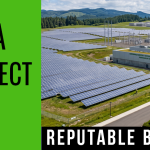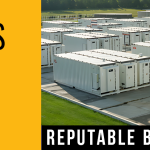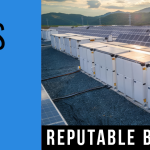
 Salt River Project has announced contract execution and the start of construction with The AES Corp. for SRP’s first standalone battery-based energy storage project. The 10-MW, four-hour duration energy storage solution, to be supplied by Fluence, will provide peaking capacity that will inject power into the grid during high peak demand periods for SRP customers.
The 10-MW project, to be built in Chandler, was procured as part of an SRP initiative to learn more about grid-scale battery storage so that SRP will be better prepared to implement battery storage technology at an even larger scale in the future.
“Energy storage is already providing a wealth of services to central Arizona’s grid through other deployments, from supporting the growth of renewables to boosting reliability on transmission and distribution grids,” said Mike Hummel, SRP’s General Manager and Chief Executive Officer. “This latest investment will add needed much-needed efficiency and value for our more than 1 million electric consumers.”
Under the 20-year agreement, AES will provide SRP with the 10-megawatt, 40 megawatt-hour battery-based energy storage system that will be charged by an SRP distribution substation. Fluence’s Advancion energy storage technology platform was selected to meet SRP’s need for an industrial-strength solution with high dependability, reliability and the ability to evolve over long-term operations. The solution can deliver the energy equivalent to power about 2,400 homes in the greater Phoenix metropolitan area for up to four hours and will help SRP assess how best to scale up future energy storage projects across its 2,900-square-mile electric service area.
SRP’s new energy storage project marks the latest move to secure resources that enable the integration of more renewables for its electric service area. This comes at a time when Arizona is evaluating steps to transform its energy infrastructure, including proposals for both the largest energy storage target in the United States – 3 gigawatts by 2030 – and a “clean peak” standard.
“AES is committed to developing solutions which will accelerate a cleaner and greener energy future,” said Ken Zagzebski, President of AES Southland Energy. “This project will allow SRP to continue meeting customer demands while also supporting the ongoing integration of renewable power sources.”
As the largest provider of power to the greater Phoenix area, SRP is drawing on both AES’ experience developing energy storage projects across its platform and Fluence’s experience in designing and deploying energy storage solutions in 16 countries. Together, SRP, AES and Fluence will deliver a long-lasting, reliable energy storage solution for central Arizona’s power grid and SRP’s electric customers.
read more The Energy Storage Association (ESA) honored Renewable Energy Systems (RES) and Lon Huber, Strategen vice president, at the 28th Annual Energy Storage Conference for their efforts in advancing the energy storage industry.
 Hurricane Harvey left Texas with $125 billion in damages, record rainfall, flooding that displaced 30,000 people, and destruction of more than 200,000 homes and businesses.
 As this year’s hurricane season bears down on Puerto Rico, people are bracing for more power outages, while holding out hope that new microgrids will be built to fortify the island and people’s access to electricity.
 New York State has awarded
  LAES is one of the technologies attempting to stretch out the duration of energy storage systems. LAES technology is similar to compressed air energy storage (CAES) except that it cools air to -169 degrees Celsius to turn it into a liquid.
 An increasing number of major car manufacturers are developing solutions in a space that at first glance may seem like a strange choice: energy storage.
 Tesla
Tesla  San Diego Gas & Electric (SDG&E) has obtained approval to add 83.5 MW of energy storage facilities in California, the power utility said on Monday.