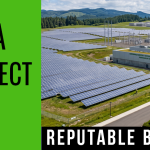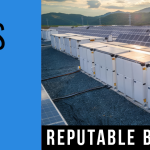
 German frequency response service revenues have dropped almost two-thirds in two years as utilities have rushed to deploy energy storage, research shows.
Wood Mackenzie Power & Renewables this month said prices in a June 2016 German frequency market auction cleared €23 ($26) per megawatt-hour, but were down to €8 ($9) per megawatt-hour in July 2018, a 65 percent reduction.
The reduction followed big investments in utility-scale front-of-meter energy storage systems for frequency markets.
“As these markets become increasingly crowded, we have seen prices plummet to levels which will make for lower-than-anticipated project returns,” said Wood Mackenzie in a press release.
Germany and the U.K. have led utility investments in energy storage over the last two years, according to Wood Mackenzie’s Europe Energy Storage Landscape 2018 report.
“By investing in energy storage, these companies are able to diversify their portfolio and improve their customer offering by including a clever piece of technology alongside a necessary service,” said report author Rory McCarthy, a senior research analyst.
Although there are gaps across Europe as policymakers struggle to keep pace with new technology, energy storage deployments continue to ramp up, he said. “Europe is now a very real contender for that global top spot in terms of total deployments,” he commented.
The continent is witnessing a glut of developers entering the market across the utility, commercial and industrial (C&I) and residential segments, he said.
Europe’s energy storage markets have received added impetus in the last couple of years from solar developers, which see batteries as a complementary revenue stream to traditional PV system sales that have been hit by a reduction in state subsidies across the continent.
read more Scale Microgrid Solutions is on a mission to make sophisticated microgrids as easy to deploy and finance as rooftop solar, said Timothy Hade, microgrid specialist for the company.
 Among other diversified topics, the sessions will deal with current findings on test procedures, problems with energy storage usage, safety and protection for batteries as well as new technologies such as ceramic batteries. The conferences include the 8th Energy Storage Europe Conference (ESE) of Messe Düsseldorf and the 13th International Renewable Energy Storage Conference (IRES) of EUROSOLAR e.V. and will take place parallel to the exhibition.
 NEC Energy Solutions has secured two engineering, procurement and construction (EPC) contracts from Gore Street Energy Storage Fund for UK energy storage projects.
 In order to address intermittency in its grid, the South Australian Government has introduced a AU$50 million (US$36 million) Grid Scale Storage Fund (GSSF) to help accelerate the deployment of new large energy storage projects, including pumped hydro,
  Energy storage, rooftop solar panels and LEED construction used to be expensive, customized options for wealthier homeowners, but they are rapidly going mainstream. The combination of experience, economies of scale and advanced technology is making it possible for more home buyers — and renters — to live a low-carbon life. A case in point is a new Google Home-enabled partnership between two leading companies in the sustainability field,
  The market for energy storage is rapidly gaining momentum around the world. The growing cost-competitiveness of carbon-free energy sources, coupled with improving technology and more environmentally conscious government policies are driving a demand boom for batteries in both the transportation and utility power sectors. But just how big is this boom expected to be?
 The China Energy Storage Market is set to grow from its current market value of more than $700 million to over $6 billion by 2024; as reported in the latest study by Global Market Insights, Inc.
 Eversource Energy is working out a lease agreement with Provincetown, Mass. to site a 25-megawatt energy storage facility at the town’s transfer station. The energy will be used to “increase reliability and supplement the electric infrastructure for Cape Cod and Martha’s Vineyard,” according to the