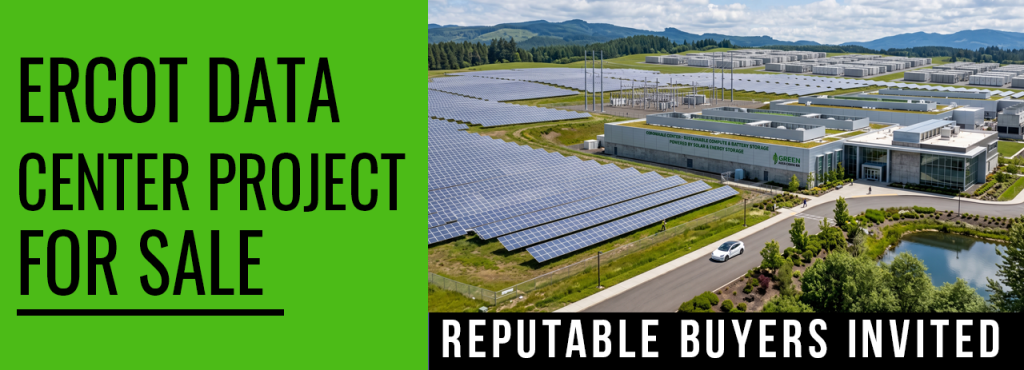
PROJECT CISCO CITY SALE PROCESS ERCOT NORTH DATA CENTER READY
Fractal, on behalf of our client Brave Mist Holdings LLC, invites qualified buyers to participate in the Project Cisco sale process (the “Process”).
Project Cisco comprises a single 191-acre, datacenter-ready site in Eastland County, Texas — approximately 40 minutes from Abilene and two hours from Fort Worth, with a target commercial operation date (COD) of Q3 2028. The site offers access to fiber, natural gas (130 MMcf/day), high-voltage transmission (345 kV), and water.
This is a limited-time process. Interested parties may request the Process Letter and access to the Virtual Data Room (“VDR”) by emailing Sean Bruno at sean@fractalba.com.
Upon execution of the NDA, respondents will receive the Confidential Information Memorandum (“CIM”), the Process Letter, and access to the VDR. The Process Letter sets out the timing and guidelines for submitting non-binding offers and advancing to Phase II due diligence with our client.
THIS PROCESS JUST STARED PHASE 2 AND STILL ACCEPTING OFFERS.
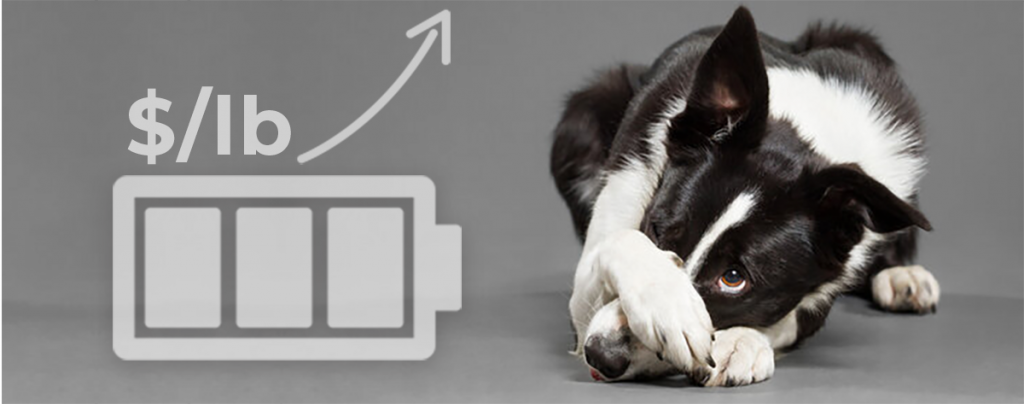
Sales for electric vehicles, consumer electronics and stationary storage are expected to increase lithium-ion demand by double in 2025 and quadruple by 2030. That will create a LOT of spent batteries. Lithium-ion battery recycling is not well developed. Despite the eminent need for recycling, the economics are not financially compelling. The purpose of this article is to discuss these challenges and to share recent recycling costs.
Complicated and Time Consuming
Lithium-ion batteries have a wide variety of materials in each cell. The active materials are in the form of powder that are coated onto metal foils. These different materials must be separated from each other during recycling. Some large format lithium-ion manufacturers encase the cells in epoxy, making deconstruction extremely difficult. In addition, a lithium-ion pack is likely to contain 100 or more individual cells. This makes recycling a costly and complicated process.
Critical Metals
Cobalt, nickel and lithium have been identified by the Biden administration as “critical metals.”[1] Cobalt has driven the business case for recycling, but in the future, the value of the reclaimed nickel and lithium may also help. Unfortunately, the amount of these critical metals represents a small fraction of the total battery weight (low single digit percent). Battery manufacturers require critical metals to have the highest purity, this makes the economics of recycling even more difficult.
Diminishing Cobalt Content
Manufacturers have been systematically reducing their dependency on cobalt. As the cobalt content diminishes, so does the immediate motivation to recycle. Cobalt creates substantial supply chain risk for battery manufacturers due to its price volatility (prices have ranged from USD $10-$42/ton). Additionally, cobalt mining has issues with human rights, including child labor. The Democratic Republic of Congo (DRC) is by far the world’s largest producer of cobalt, accounting for roughly 60 percent of global production. Avoiding DRC sourced cobalt creates further pressure on prices.
Following the commercial success of equally blended NMC[2] (⅓ nickel, ⅓ manganese, ⅓ cobalt – also abbreviated as NMC 111), NMC cathodes have migrated to a lower cobalt ratio. Many EV and stationary storage battery makers are now using NMC 811 (cathode composition with 80% nickel, 10% manganese, and 10% cobalt). Lithium Iron Phosphate (LFP) batteries have been gaining market share due to their low cost (no cobalt content).
These trends underscore one of the fundamental challenges that will complicate the future of the recycling landscape. Without cobalt, there may be little financial incentive to recycle batteries or to invest in recycling technologies (without subsidies or grants).
U.S. Legislation is Lagging
The European Union (EU) has implemented a directive for collection and recycling of batteries. The EU Battery Directive (2006/66/EC) regulates the manufacturing, disposal and accumulators of batteries in the EU to minimize the negative impact on the environment. Most notably:
Battery producers or third parties acting on their behalf cannot refuse to take back waste batteries.
All collected batteries must be recycled.
Batteries cannot be disposed of in landfills or by incineration.
Recycling processes must achieve a minimum efficiency of 65% for lead-acid batteries, 75% for nickel-cadmium batteries and 50% for other batteries.
The U.S. pales in comparison. In 2017, the Trump administration introduced EO 13817 – A Federal Strategy to Ensure Secure and Reliable Supplies of Critical Minerals.[3] The EO cited the national dependency on foreign sources for certain mineral commodities (lithium and cobalt). The EO called for the following actions:
Increasing private-sector domestic exploration, production, recycling, and reprocessing of critical minerals, and support to identify alternatives
Increasing activity at all levels of the supply chain to expedite exploration, production, processing, reprocessing, recycling, and domestic refining of critical minerals
In response to the EO, the Department of Energy Vehicle Technologies Office (VOT) initiated three areas of R&D:[4]
Supporting laboratory, university, and industry research to develop low-cobalt (or no cobalt) active cathode materials for next-generation lithium-ion batteries.
Establishing the ReCell Lithium Battery Recycling R&D Center focused on cost effective recycling processes to recover lithium battery critical materials.[5]
Launching a Lithium-Ion Battery Recycling Prize[6] to incent American entrepreneurs to find innovative solutions to solve current challenges associated with collecting, storing, and transporting discarded lithium-ion batteries for eventual recycling.
Unfortunately, despite all the climate friendly ambitions our country has postulated, our plan for domestic recycling is nowhere close to maturity.
Recycling Costs Have Actually Increased
Prior to 2018, numerous U.S. companies claimed to “recycle” lithium-ion batteries, but in actuality they were shipping the batteries to China (similar to plastics). For over a decade, recyclables and scrap materials have been one of the country’s largest exports to China. In 2018, China enacted the National Sword policy restricting plastic waste imports to protect their environment and to develop their own domestic recycling capacity. In addition to the bans, China reduced the number of import licenses, meaning that fewer businesses could import waste.[7] In response, many recyclers moved their operations from China to other countries in Asia. Exports from the U.S. to Thailand jumped almost 7,000 percent in one year, while Malaysia’s went up several hundred percent.[8] The actual amount of U.S. plastic waste that ends in countries with high waste mismanagement may be even higher because the U.S. exports millions of kgs of plastic waste to countries like Canada and South Korea who may re-export U.S. plastic waste to other countries.
Current Recycling Costs
Fractal received a quote from a recycling company in Q2/2021 that costs $1.00/lb to collect and accept batteries from a project site. This includes the cost of pick up and transport by a qualified Universal Waste Handler. But this does not include the cost of packaging the batteries onto pallets (about $0.50/lb). It is unknown what happens to the batteries once they are accepted by the recycling company. Sadly, they are most likely put in a landfill.
Non-Lithium Batteries
Quotes for Sodium Sulfur ($1.70/lb) and Zinc Air ($1.85/lb) batteries were also received. Keep in mind that Fractal only received quotes from two companies. Other recylers may have better pricing, volume discounts or corporate partnerships.
Impact of Energy Density
Since we know that recycling costs are a function of weight, let us exam how energy density impacts recycling costs. Note: The number of enclosures, modules and weights will vary across vendors, but this is an example of density variations across battery chemistries. Fractal has intentionally omitted the total cost to preserve your sanity.
Chemistry
Lithium NMC
Lithium LFP
Zinc Air
Power/Energy
10 MW / 40 MWh
10 MW / 40 MWh
10 MW / 40 MWh
Footprint
10 x 40ft Containers 442 modules / container
20 x 40ft Containers 256 modules / container
320 x 25ft Containers 144 modules / container
Weight
148.77 lbs / module Total Weight: 657,563 lbs
198.42 lbs / module Total Weight: 1,015,910 lbs
215 lbs / module Total Weight: 9,907,200 lbs
Fractal Energy Storage Consultants is a consulting and OE firm that specializes in energy storage and hybrid systems. More information at https://www.energystorageconsultants.com
[6] The $5.5-million, three-phased Lithium-Ion Battery Recycling Prize was announced by Secretary of Energy Rick Perry in January 2019. https://americanmadechallenges.org/batteryrecycling/
Do you have questions about energy storage, solar+storage, wind+storage technology, financials, prices or opportunities? Fractal can give you unbiased answers and support.
Event Name: 2019 Distributech International
Event Date(s): February 4-7, 2018
Event Location: Ernest N. Morial Convention Center, 900 Convention Center Blvd, New Orleans, LA 70130
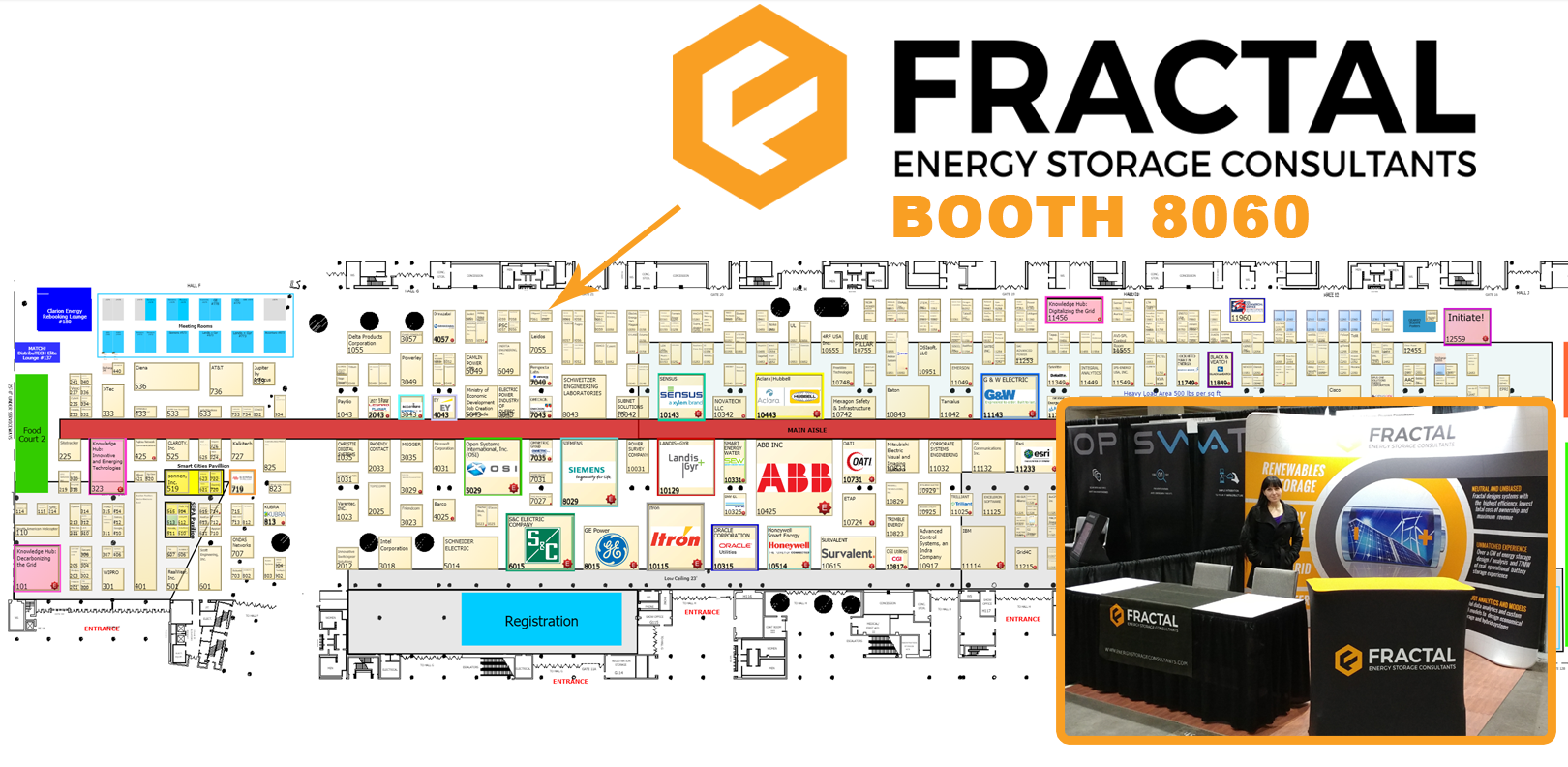
Find Fractal: Find Fractal in the exhibition hall at Booth 8060. Contact Usto set up a meeting time or swing on by!
Do you have questions about energy storage, solar+storage, wind+storage technology, financials, prices or opportunities? Fractal can give you unbiased answers and support.
Event Name: 2018 Solar Power International and Energy Storage International
Event Date(s): September 24-27, 2018
Event Location: Anaheim Convention Center, 800 W Katella Ave, Anaheim, CA 92802
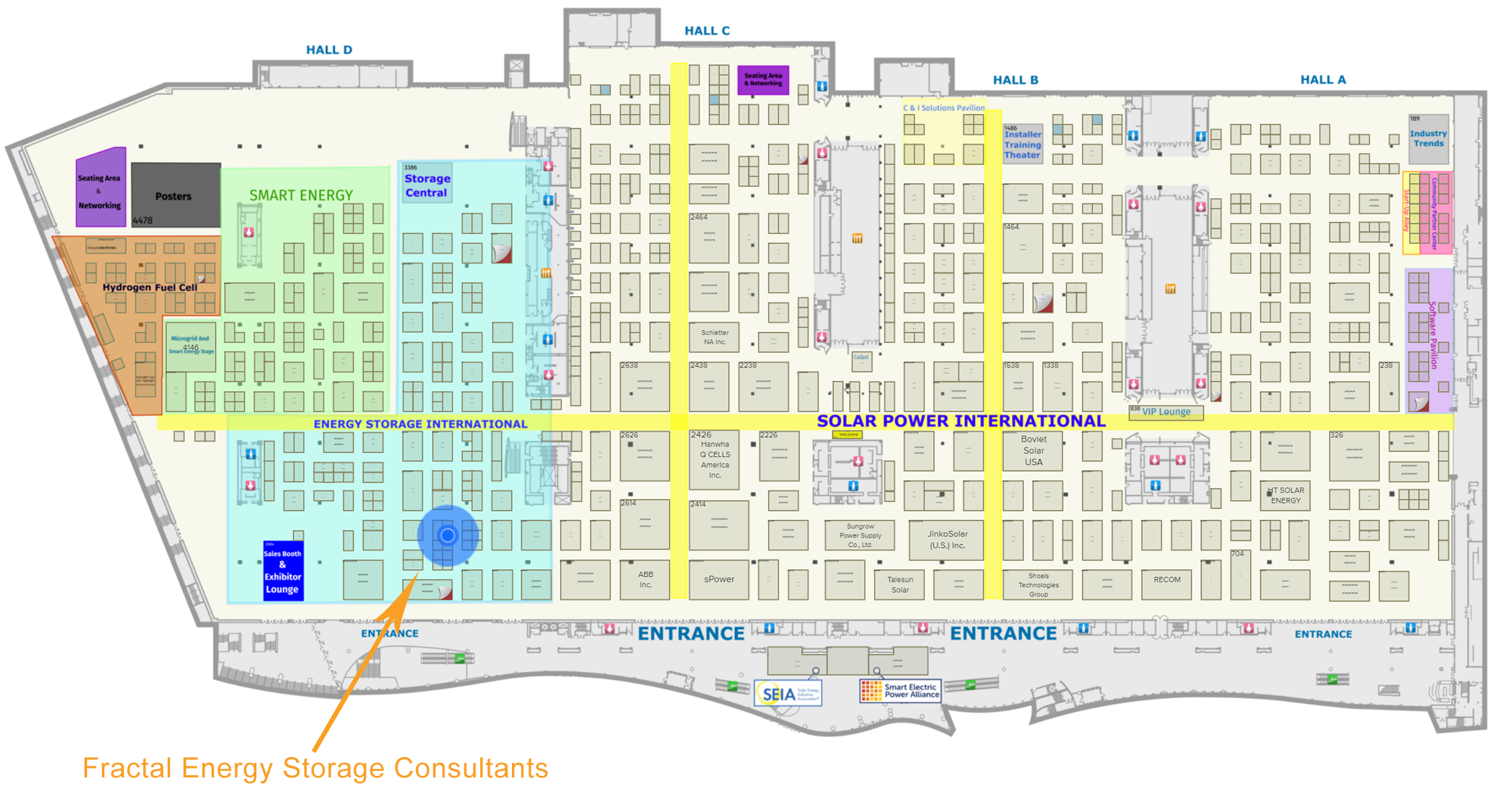
Find Fractal: Find Fractal in the exhibition hall at Booth 3316. Contact Us to set up a meeting time or swing on by!
Event Location: Orange County Convention Center, 9800 International Dr, Orlando, FL 32819
Event Description: As the World’s Largest Power Generation Event, POWER-GEN International is the industry leader in providing comprehensive coverage of the trends, technologies and issues facing the generation sector. Displaying a wide variety of products and services, POWER-GEN International represents a horizontal look at the industry with key emphasis on new solutions and innovations for the future.
Find Fractal: Find Fractal in the exhibition hall at Booth 1537. Contact Us to set up a meeting time.
Event Location: Pasadena Civic Auditorium, 300 East Green Street, Pasadena, CA 91101
Event Description: Once a year, a marketplace for the Energy Storage sector is established for the entire value chain to meet, network and learn in one location over three days. From November 6-8, 2018, thousands of developers, energy users, utilities and policymakers will gather in Pasadena to advance the understanding and deployment of energy storage.
Where the Future of Power and Transportation Meet
Speakers and presenters from NY, TX, MA, HI, CA, Canada, and more
Inspiring and informative keynote sessions from female leaders in Energy Storage
Mobility and Storage sessions produced with CALSTART, the leading advanced transportation technologies consortium in the USA
A Global Grid track to build connections and insights in emerging energy storage markets of Australia, Europe, and Latin America
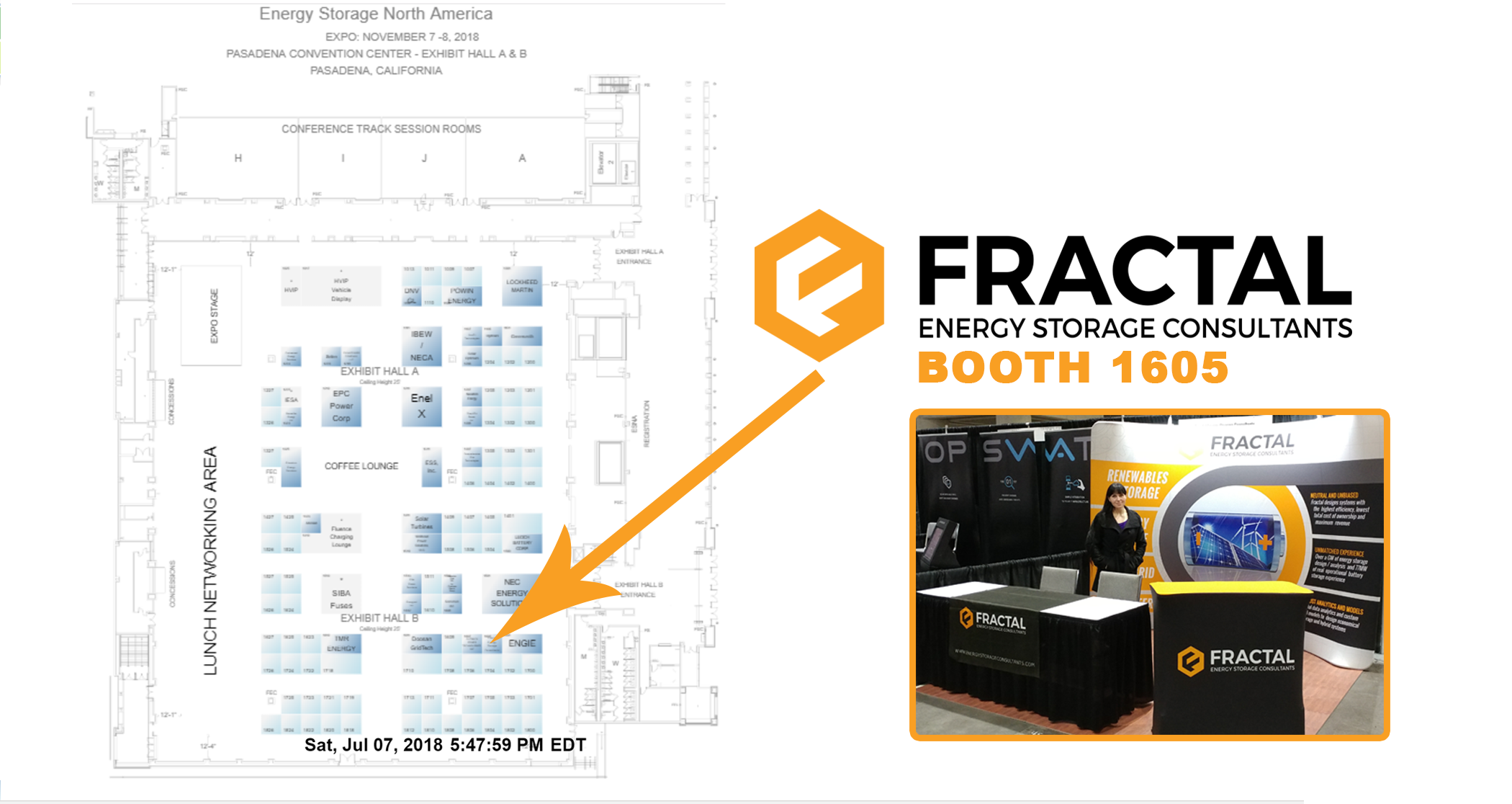
Find Fractal: Find Fractal in the exhibition hall at Booth 1605. Contact Us to set up a meeting time.
Event Description: From battery storage and distributed solar to the rise of electric vehicles and increased cyber-security concerns – GridNEXT is the place for renewable industry leaders to come learn, connect, and innovate with their peers about the latest energy trends and developments.
Find Fractal: Find Fractal in the exhibition hall. Contact Us to set up a meeting time.
Event Description: This year’s Storage East by Infocast we will feature detailed case studies of implemented projects, providing long sought after information on the realities of how EPC issues have been handled, the realities of stacking value streams and their impacts on revenue streams, the state of the art in project structuring and contracting, and more! Join the senior executives and active financiers at the forefront of deploying behind the meter and grid-connected energy storage systems as they explore the road to bankable projects!
Find Fractal: Find Fractal in the exhibition hall. Contact Us to set up a meeting time.
Fractal will be exhibiting at the 2018 Intersolar North America, July 10-12, 2018 at the Moscone Center West in San Francisco.
Intersolar North America is North America’s most attended solar event and premier networking platform. The event’s exhibition and conference both focus on the areas of photovoltaics, PV production technologies, smart renewable energy and solar thermal technologies. Since being founded, Intersolar has become the most important industry platform for manufacturers, suppliers, distributors, service providers and partners of the solar industry. Energy Storage International is co-located with Solar Power International and paves the way for greater integration between the energy storage and solar markets.
Fractal is a specialized energy storage and renewable energy consulting firm that provides expert evaluation, technical design and financial analysis of energy storage and renewable energy projects. Fractal is great resource for answering questions on all things storage. Come ask us some questions!
Contact Us to setup a meeting time. Hope to see you there!

 Event Website:
  Event Website: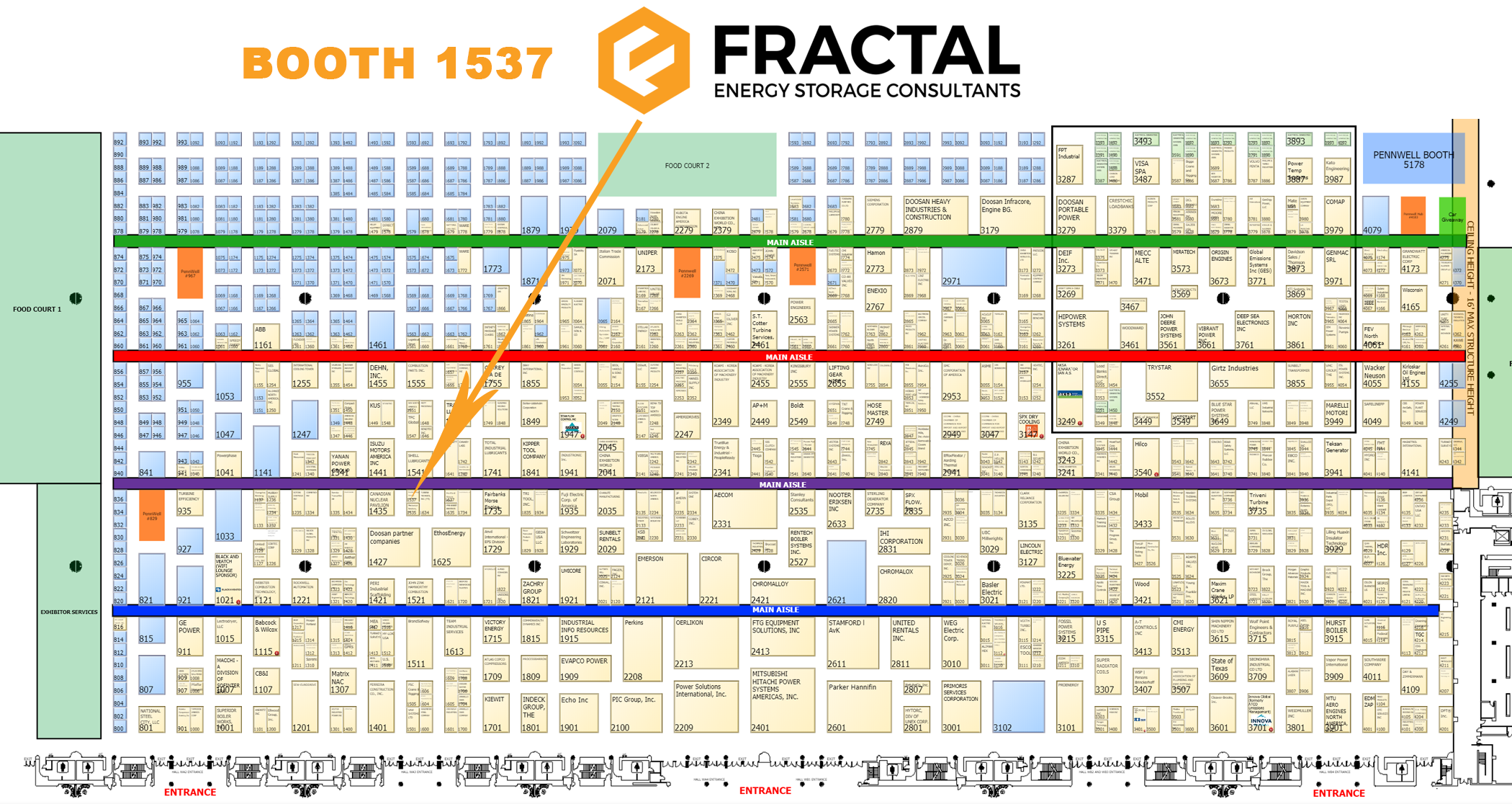
 Event Website: