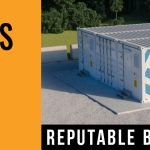
Enel Latest Big Name to Hit Ontario’s Energy Storage Space With 1MWh Commercial Project

on April 14, 2018

Energy-Storage-NewsEnel has become the latest big name to spy opportunities in the commercial and industrial (C&I) energy storage space in Ontario, Canada, signing an agreement this week for its first project in the region.

Due to come online in the first half of this year, Enel X, Enel’s advanced energy services division, through its acquired US subsidiary EnerNOC Inc, has done a deal with an apple orchard group, Algoma Orchards of Ontario, Canada, to install a 1MWh lithium-ion battery energy storage system at the latter’s facilities.

Under an 11-year agreement, EnerNOC will continue to operate the behind-the-meter system and will reap financial benefits on two fronts: firstly from reducing the apple producer’s peak demand from the grid, as is common in such installations, and also by using the battery to participate in Ontario’s regional demand response programme.

Back in 2016, Energy-Storage.News reported from talks with the trade group Energy Storage Ontario (now known as Energy Storage Canada) that the clean energy industry credited the province’s regulators and policymakers for sticking to a “clean, reliable and affordable” remit when it came to grid and energy infrastructure planning.

This has lead not only to support for front-of-meter, grid-scale energy storage deployed directly to benefit the grid, but also created the likes of the Global Adjustment Charge, by which grid upgrades, decarbonisation and modernisation of the network are partly paid for by charging business electricity ratepayers’ peak demand costs. In its release yesterday Enel said the 1MWh Algoma Orchards battery would indeed benefit from financial savings under that policy.

A report from the Fraser Institute found that electricity costs for large businesses in Toronto and Ottawa, both cities in Ontario, rose by around 50% in each between 2010 and 2016, compared to an average of 14% for other cities in Canada. However, hourly energy costs have steadily declined almost five times over in that period.

read more
Fractal Energy Storage ConsultantsEnel Latest Big Name to Hit Ontario’s Energy Storage Space With 1MWh Commercial Project

Microgrids Will Disrupt the Energy Industry of the Near Future

on April 14, 2018

The-Energy-CollectiveThere is no longer any room for doubt — our climate is changing and it’s largely our fault. Thankfully, the sciences have done what they do best and provided us with several short- and long-term measures to help us stop and eventually reverse the trend of ever-higher average temperatures across the globe.

The microgrid is almost certainly one of the most exciting and revolutionary examples of climate-fortifying technology. It could, if we get serious about it, help us meet the two-degree temperature rise benchmark scientists recommend for staving off planetary-scale disaster. These are the stakes.

What Are Microgrids and Why Have They Become Necessary?

Industrial technologists and climate scientists have found a consensus on one of the first steps required to prevent catastrophic changes across our planet brought on by our overreliance on fossil fuels — hook everything up to the electric grid.

Does it sound deceptively simple? It’s nearly as straightforward as it sounds. Consider the energy needs of the average family home. It already requires electricity to power the refrigerator, the lights and many other appliances. It might have a natural gas hookup for a fireplace insert or a propane tank outside for the range. That’s a lot of redundancy and a lot of waste.

Technologies that rely on combustion, including our vehicles and those big, ungainly heating oil tanks in our basements, are wasteful and dirty up the atmosphere. So, we have to shift toward hooking up everything that requires energy to function to the electric grid.

Of course, that’s where things get complicated. Enter the microgrid.

Along with this newfound dependence upon a larger, more interconnected electrical grid comes a host of other requirements, not the least of which are:

  • A greener electric grid powered by renewable energy
  • A more stable electric grid that delivers uniform supply even during peak demand
  • An electric grid hardened against predictable and unforeseen natural disasters, such as hurricanes.

Hurricane Maria is known to have caused the most widespread electrical blackout in this history of the United States. So we know it’s not enough that our electrical grid becomes more sustainable — it must also become more resilient and more predictable when it comes to output.

read more
Fractal Energy Storage ConsultantsMicrogrids Will Disrupt the Energy Industry of the Near Future

Australia Leading the Global Energy Storage Race

on April 13, 2018

Manufacturer-MonthlyA new research by Greentech Media (GMT) shows that Australia is leading the global race in energy storage, having installed the most storage technology in the world during 2017, ahead of Germany, the United States and Japan.

According to GMT’s “Global Energy Storage: 2017 Year in Review and 2018-22 Outlook” Australia installed an astonishing 246 megawatts (MW) of energy storage power capacity, enough to power almost 400,000 homes at one time, while also taking second place for energy capacity (MWh).

“Australia is on an energy storage winning streak and was also recognised as having the biggest household storage market anywhere in the world last year,” climate councillor and energy expert Greg Bourne said.

“Our transition to clean, reliable and affordable renewable energy and storage technology is already in full swing, with the nation home to the most powerful lithium ion battery in the world plus a collection of new storage projects in the pipeline.”

Bourne, the former President of BP Australasia, said renewables plus storage technology was a winning combination for tackling worsening climate change, while also making economic sense.

“In the past eight years the price of lithium-ion batteries has dropped by 80% and is tipped to halve again by 2025, which is driving investment in this booming industry both here and abroad,” he said.

Earlier this week, the United Nations also released the latest renewable energy data for 2017 where Australia again was ahead of the pack, with investments jumping 147% to $11 billion (AU).

read more
Fractal Energy Storage ConsultantsAustralia Leading the Global Energy Storage Race

Education, Education, Education: Adapting to the Energy Storage Age

on April 13, 2018

Energy-Storage-NewsThe traditional automotive industry had been reluctant to embrace the electricity revolution. But Porsche’s recent announcement that it would be doubling its investment in electric vehicles (EVs) to €6 billion (US$7.4 billion) by 2022 can be seen as a wakeup call. The battery vehicles are coming.

And Porsche is not the only one. Other automotive companies are on the same path and investment in EVs from the EU and US automotive industries totals about €90 billion in the next five years. There is no time left to hide.

In short, energy storage technology is set to revolutionise our society, EVs and beyond, with power companies among the most affected – whether they like it or not. The sector needs to wake up to this and decide what it is going to do about it. Education could provide the wake-up call that power professionals need.

Accept the inevitable

When creating the right circumstances for a new technological solution to thrive, three key factors rank above all.

First, the technology itself needs to work, and work well. Storage scores well on this count, with batteries such as Tesla’s Powerwall capable of storing up to 13.5kWh of electricity – enough to sustain the average household for a full day before needing to draw power from the grid or generate its own renewable energy.

Second, the cost needs to come down to a level at which the solution represents better value than those that are already available. And though batteries for households and power plants remain more expensive than for vehicles, investment in storage on the grid would actually save money on the whole very quickly.

read more
Fractal Energy Storage ConsultantsEducation, Education, Education: Adapting to the Energy Storage Age

The Supersized Future Of Energy Storage

on April 13, 2018

Oil-PriceIn the battery industry, records seem set to be broken almost as soon as they are hit. This is what may be about to happen with the largest battery storage system to date, if a California company gets all the permits it needs to build a 350-MW installation in the desert near Palm Springs.

When Tesla completed its 100 MW/129 MWh last year, it became a hallmark in the evolution of renewable power, signaling that the race for bigger and better storage systems was just beginning. Now, Recurrent Battery has staked its own claim in this race.

The San Francisco-based company is the U.S. unit of Canadian Solar and it has plans to build a 350-MW solar farm in the California desert along with a battery storage system of the same size. The Crimson project will span 2,500 acres. However, it is far from certain it will be completed.

The idea is certainly great. Tesla’s battery can power several tens of thousands of households. This one—if built—would power three times that, reducing this part of California’s dependence on natural gas power plants. These are now used after sunset for lack of enough solar energy storage installations. But the key is to find a buyer for the energy that will be produced by the solar farm—and this client needs to be large enough to justify the investment.

In other words, for now, the battery that will have triple the size of Tesla’s jewel is still just a possibility. Another project, however, is not: A British billionaire is building a 120 MW/140 MWhinstallation not far from Tesla’s installation in Australia.

Sanjeev Gupta, owner of Australian steelworks Whyalla, is building the battery to use both as storage for electricity produced by a solar farm, and in construction at the steelworks site. What we’re seeing there is likely just the beginning of ever-bigger battery storage systems that will accompany every large-scale solar or wind project.

read more
Fractal Energy Storage ConsultantsThe Supersized Future Of Energy Storage

Home Battery Storage Has Trebled – But Should You Be Installing It?

on April 13, 2018

RenewEconomy-AUThere’s been plenty of talk about how Australian solar households are warming to the idea of battery storage, but little concrete data to back this up. Until now.

A new report from solar analysts, SunWiz, has revealed almost 21,000 behind the meter energy storage systems were installed in Australia in 2017, a three-fold increase on the year before.

On top of that, the report finds that 12 per cent of the 172,000 new solar systems installed in the booming 2017 market included a battery, up from six per cent in 2016.

But what does this trebling of battery storage uptake mean? Is it a sign that batteries now make economic sense to the average Australian household?

Well, it’s complicated.

If your metric is return on investment (ROI), there are a lot of variables that you need to weigh up – and they change from home to home, and state to state, and even from one distribution company to another. And we look into all that in-depth below.

But for those not banking on ROI – and plenty of consumers are not (think cars, couches, TVs) – then it’s pretty straight forward.

“With energy prices rising this year, Australians are embracing the idea of being able to control their energy consumption and costs,” said SunWiz founder and managing director, Warwick Johnston.

And battery storage can certainly do that, as long as you can afford to install it in the first place. ‘

As the SunWiz report shows – and the charts below illustrate – a Sydney household that invests in solar PV and a Tesla Powerwall 2 can achieve a $1,931 reduction (or 72 per cent) reduction in their annual power bills.

For those who can’t afford the up-front cost, there are deals like sonnenFlat – where households can install a 10kWh battery by German manufacturer sonnen at no up-front cost, instead paying a fixed monthly fee of $30, $40 or $50, depending on the system size and energy usage.

According to sonnen, this deal has already been popular in Australia – popular enough that the company is building a manufacturing plant here.

read more
Fractal Energy Storage ConsultantsHome Battery Storage Has Trebled – But Should You Be Installing It?

The Customer Has Spoken – 74% Want Energy Storage

on April 12, 2018

EnergySage says that in 2017, 74% of customers shopping for solar on their online solar marketplace were considering energy storage. The company’s Solar Marketplace Intel Report also offers evidence that customers will pay the extra costs for storage – as residential solar panel purchases have moved upmarket toward SunPower, LG, Panasonic and other premium brands. When extrapolated – these interests represent a 1-2TWh, or larger, market opportunity.

The report published a new metric, Badges – “an additional layer of information that educate shoppers about the various attributes of one quote versus another.” High quality equipment stood out by far, and only one of the top seven items – lowest $/W – suggested shoppers were focused on bargains.

The report also showed that system prices continued fall on a price per watt basis. However, total system size increased – which actually meant a net increase in total system cost (8kW at $3.36/W at the end 2016, versus 8.7kW at $3.13 at end of 2017).

Installers in Florida, Arizona and Maryland brought average costs below $3.00/W on the EnergySage marketplace, and there were some counties where average costs fell as low as $2.00/W.

That overall prices are falling while equipment from premium players like LG and Panasonic are making inroads in the solar panel market is likely a testament to the ability of those two companies to deliver higher efficiencies at respectable prices.

Another chart shows that SolarEdge has become the dominant brand in residential installations. That the size and complexity – think multiple surfaces, at multiple angles facing multiple directions – of installations has increased may be directly due to module-level electronics from SolarEdge and Enphase.

read more
Fractal Energy Storage ConsultantsThe Customer Has Spoken – 74% Want Energy Storage

Enel Unveils First Canadian Energy Storage Project

on April 12, 2018

Business-ChiefLeading Italian energy manufacturing and distribution company Enel has announced that it has launched its first energy storage project based in Canada.

Enel signed an agreement with Ontario-based Apple company Algoma Orchards that will look to use the 1MW lithium ion battery storage system to optimise its battery usage during peak hours, allowing the company to benefit from significant energy savings.

“The agreement we have just signed demonstrates the value of deploying flexible energy assets like battery storage systems to drive savings for C&I customers and improve the sustainability and reliability of the electricity grid for all consumers,” said Francesco Venturini, Head of Enel X.

By Enel deploying its DEN.OS software to power the battery, enabling Algoma Orchards to better participate in Ontario’s demand response programme – an initiative aimed at helping Canadian companies to better manage their electricity costs.

“As battery costs continue to decline, we look forward to developing many more projects like the one at Algoma Orchards that leverage our best-in-class DEN.OS optimisation software to deliver savings for customers through tailored commercial offerings,” Venturini continued.

The agreement will see Enel purchasing, installing and operating the battery storage system on behalf of Algoma Orchards.

read more
Fractal Energy Storage ConsultantsEnel Unveils First Canadian Energy Storage Project

GTM: Global Energy Storage Market Could Reach 8.6GW / 21.6GWh by 2022

on April 12, 2018

Energy-Storage-NewsThe US is expected to remain the world’s biggest market for energy storage until 2022, with China its closest rival, GTM Research has said.

The US-headquartered firm has just published an overview of the global industry in 2017, in a report which also carries GTM’s forecasting of market trends and expected deployment through to 2022. In fact last year’s leader for installations by power was Australia, commissioning 246MW energy storage power capacity, with the US leading in energy, with 431MWh added.

In total 1.4GW / 2.3GWh was installed worldwide in what the report’s authors Ravi Manghani and Rory McCarthy said had been “one of the most exciting years yet for energy storage”. While focused on the entire world, GTM picked out Europe, the UK, North America, South Korea and Australia to be notably fast-moving.

In Europe, grid services markets in the UK and Germany really led activity in the sector, including what GTM described as “shockingly low clearing prices” of as little as £7 per MWh (US$9.9) for frequency response services in Britain’s 200MW enhanced frequency response (EFR) tender, held in 2016 with projects starting to come online last year. Going forward, as regular readers of this site will also know, a great deal of uncertainty exists regarding overhauls to grid service procurement by the transmission operator, National Grid.

Germany deployed 135MW in power capacity of batteries, the UK 117MW in 2017. Going forward, GTM said changes including unified European Network Codes which could harmonise frequency markets across Europe are expected to appear. Central and northern European markets including Austria, Belgium, France, Germany, The Netherlands and Switzerland are coupled, and – as Energy-Storage.News heard from German politician Thorsten Herdan recently, big things are expected in terms of the interconnection this provides as well.

read more
Fractal Energy Storage ConsultantsGTM: Global Energy Storage Market Could Reach 8.6GW / 21.6GWh by 2022

BP Launches Battery Storage Pilot with Tesla

on April 11, 2018

Energy-Storage-NewsOil and gas giant British Petroleum has partnered with Tesla to install a storage battery at one of its subsidiaries’ wind farms in South Dakota, US, as part of a pilot programme which could see the firm further embrace battery storage.

A 212kW / 840kWh Tesla battery unit will be installed at the 25MW Titan 1 Wind Farm, owned by BP Wind Energy subsidiary Rolling Thunder 1 Power Partners LLC, in what is being described by BP as a “potential step forward in the performance and reliability of wind energy”.

The battery will be configured to help manage internal electricity demands of turbines when the wind isn’t blowing sufficiently enough to provide power. The unit will also be able to charge when the site is generating.

The battery is expected to be launched in the second half of 2018 and will allow BP to make a more informed decision when “evaluating and developing” battery storage projects in the future.

Laura Folse, chief executive at BP Wind Energy, said the project stood to provide the company with “valuable insights” as it pursued battery storage opportunities across its portfolio.

“It’s another way that we’re working to create a wind energy business that is sustainable for the long-term and supporting the broader transition to a low-carbon future,” she added.

The pilot too forms part of a much wider investment programme into low carbon technologies, for which the O&G major has set aside US$500 billion annually.

read more
Fractal Energy Storage ConsultantsBP Launches Battery Storage Pilot with Tesla