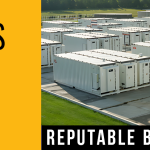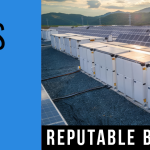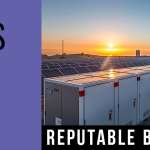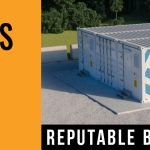
 NEC Energy Solutions announced that they have completed and commissioned an energy storage system for Germany-based EnspireME, a joint venture between Eneco, a Netherlands-based renewable energy company and Mitsubishi Corp.
The 48 MW energy storage system located in Jardelund, Germany has over 50 MWh of storage capacity and will generate revenue from the primary reserve market by providing reactive power to stabilize the transmission grid.
NEC provided turnkey engineering, procurement and construction services which included its GSS end-to-end grid energy storage solution and its AEROS proprietary energy storage controls software to build the largest energy storage system in Europe. The 48 MW energy storage system built for Germany-based EnspireME, a joint venture between Eneco and Mitsubishi Corp., has over 50 MWh of storage capacity. The system will generate revenue from the primary reserve market by providing reactive power to stabilize the transmission grid.
Transmission system operators (TSOs) in Europe are required to secure a certain number of capacity reserves to prepare for sudden power loss or an extensive blackout. The storage capacity from the system will be sold to the German electricity market through weekly common auctions where European grid operators purchase the reserve capacity they require in the primary reserve control market to guarantee the 50 Hz (Hertz) frequency on the grid. The energy storage system can also take over the role of primary reserve provider and become a more sustainable alternative to coal and gas fired plants.
In addition, Eneco and Mitsubishi Corp. will investigate connecting the battery to local wind farms, providing further value for wind farm owners by storing excess electricity generated during periods of curtailment.
read more California is generating a ton of solar power–some days, more than people can use. It could power the whole state soon, except for one problem: There’s no way to hold on to all that energy at night.
 European Commission vice president for energy, Marcos Sefcovic has referred to an EU action plan for ‘green batteries’ to be made in Europe, citing the technology as vital for renewable energy integration as well as giving the continent a ‘competitive edge’.
 June 22 (Renewables Now) – New York governor Andrew M Cuomo on Thursday unveiled a roadmap with a set of recommendations aimed at facilitating the state in reaching its goal of deploying 1,500 MW of energy storage by 2025.
 As the utility industry comes to grips with the coming of age of energy storage (see the T&D World April 2018
  Automakers like Daimler have been eager to leverage their battery operations connected with their electric vehicles (EV) programs. Late in 2016, Daimler hired Boris von Bormann, a former top executive at Sonnen, to
  FlexGen, an energy storage integrator, announced that Vistra Energy, an integrated power company, awarded a contract to design and integrate a 10-MW/42-MWh FlexGen energy storage system at the Upton 2 solar power plant in Texas.
 In order to combat the devastating effects of climate change and ensure a clean future for coming generations, massive investments and research are being undertaken in renewable energy solutions. Arguably, numerous advances have been made in solar and wind power – but these systems have a major drawback: they are most effectively used when the sun is shining or the wind is blowing.
 Daimler, through its subsidiary Mercedes-Benz Energy and with partners, is turning a coal power plant into a large energy storage facility using over a thousand modules from its electric car battery packs.