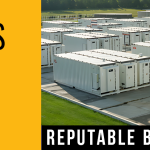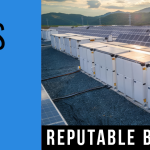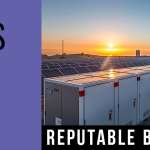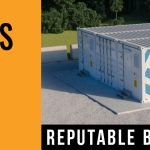
 Wind energy company Infigen Energy plans to install a 52 MWh Tesla Powerpack battery energy storage system in South Australia.
The battery system will be next to its 278 MW Lake Bonney Wind Farm near Mount Gambier.
The Battery Energy Storage System (BESS) will cost around $38 million to build and install. ARENA and the South Australian government will each contribute funding of $5 million towards the project.
Once built, BESS will be connected to the National Energy Market. It will also enable Infigen to firm up an extra 18 MW of renewable supply.
Tesla Powerpack battery: a more reliabile energy supply
Infigen’s CEO Ross Rolfe said the project will allow the company to enter into additional commercial projects in SA, which he described as being “at the heart” of the company’s strategy.
Rolfe added that BESS demonstrates Infigen’s progress in delivering on its strategy. This includes contributing towards improved energy security and reliability of supply.
SA Energy Minister Dan van Holst Pellekaan said the government is a strong supporter of battery storage to harness the state’s abundant renewable energy. He added that more battery storage will deliver lower prices to households and businesses.
Other options considered prior to BESS
According to an AFR report, Infigen examined other options to improve energy supply reliability, such as pumped hydro and gas. However, the company decided on battery storage because of the state’s dependence on renewable energy supply.
The company also acknowledged that BESS would not have been possible for the company without the $10 million funding it received.
Battery energy storage systems shore up home supply too
Installing a storage battery in this way stores renewable energy such as wind and solar power for later use. This could be at night or during high electricity demand periods. This applies not only to commercial and industrial projects, but also to households and small businesses with solar installations.
With home solar battery storage in place, the solar power generated during the day can be stored and used after dark. This helps to improve clean energy reliability and supply on the home front, as well as drastically reduce electricity bills.
read more A new lithium-ion based
  New battery technology that could see electric vehicles being charged in a fraction of the time of current standards – and powered by either electricity or hydrogen – has been developed by a team of Scottish scientists.
 t may not be smooth sailing for Pacific Gas and Electric’s landmark energy storage projects.
 A vast new energy storage system – thought to be the largest of its kind in Canada to date with 48MW / 144MWh capacity, will be built in the city of Sault Ste Marie, Ontario.
 A new type of energy storage system could revolutionise energy storage and drop the charging time of electric cars from hours to seconds.
 The automotive industry’s use of lithium-ion batteries is on track to grow seven-fold to 650 GWh by 2025, from 70 GWh in 2017; the increase in energy storage, although from a lower base, will add to this, says specialist international publisher Metal Bulletin.
 To keep pace with the changing dynamics of the energy markets, India is now working toward a National Energy Storage Mission (NESM). In February 2018, a committee with representatives from relevant ministries, industry associations, research institutions and experts, was constituted by the MNRE to propose a draft for setting up NESM in India.