 Power grid infrastructure in many parts of the United States is aging and struggling to meet increased electricity demand. In some specific areas, like ports and industrial facilities, high-powered equipment cannot be fully deployed because the grid cannot meet the intense but sporadic load demands.
The options for these necessary upgrades range widely, but can include protection equipment upgrades, pole replacement, communication networks, new lines for distribution of electricity, voltage support and system capacity increases.
With their flexibility and innovative features, ABB’s state-of-the-art microgrids and battery energy storage systems (BESS), are providing utilities and industries with innovative alternatives.
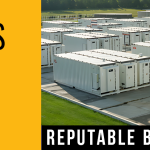
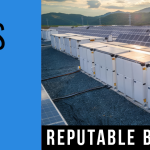
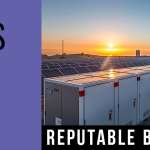
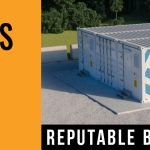
In Baltimore, MD, in response to growth and increased demand for power, ABB is supplying a BESS to Baltimore Gas and Electric (BGE). The utility was forecasting an increase in peak demand that would cause equipment to exceed its thermal capacity.
BG&E had to evaluate the cost to perform a capacity upgrade of its substation equipment versus the costs of utilizing energy storage solution. ABB proposed a BESS solution that would be quick and cost-efficient to deploy.
The BESS, commissioned in March, is key for BGE, as it enables the utility to use electricity stored within the battery for the periods of this increased peak demand. The peak shaving made possible with the BESS gives the utility the power reliability needed through an alternative solution, one that is now being considered by more and more utilities across the continent.
read more Energy storage is a compelling complement to wind and solar, because of high flexibility and ability to operate as both load, when it charges, and generation, when the energy is deployed. Energy storage addresses many of the challenges to grid operators providing safe and reliable electricity for customers, and due to rapidly declining costs, performance improvements of lithium-ion batteries and an emergence of “grid-ready” energy storage products, commercially viable grid energy storage has now arrived, in certain applications. As energy storage becomes more widely available and economically feasible, it may make renewable generation, when paired with energy storage, a more viable option to provide reliable electric generation – and load demand – service in more areas of the world.
 The US Department of Energy is launching a major research effort to develop a new generation of lithium-ion batteries largely free of cobalt, a rare and expensive metal delivered through an increasingly troubling supply chain.
 Energy Storage North America (ESNA), the most influential gathering of policy, technology and market leaders in energy storage, applauds Governor Jerry Brown and the California State Legislature for passing landmark Senate Bill (SB) 100, which sets the largest-scale zero-emission electricity targets ever established for a U.S. state.
 Several of the proposals approved by CAISO’s board on Wednesday were part of the third and final phase of the Energy Storage and Distributed Energy Resources (ESDER) initiative that stakeholders launched to foster greater participation of those resources in the wholesale market.
 The California legislature has put its stamp of approval on SB 700, a bill that will provide up to $830 million in new incentives to add behind the meter storage to residential and small business solar systems. “What we’re trying to do is create a mainstream market for energy storage, like we’ve done for solar PV,” Bernadette Del Chiaro, executive director of the California Solar & Storage Association, tells Green Tech Media.
 While a great number of blockchain endeavors in the solar arena focus on already established power generation systems and distribution networks, only a handful of projects so far look to both optimize and expand the market by
 The market Study is segmented by key regions which is accelerating the marketization. At present, the market is developing its presence and some of the key players from the complete study are ABB, GE, Echelon, S&C Electric Co, Siemens, General Microgrids, Microgrid Solar, Raytheon, Sunverge Energy, Toshiba, NEC , Aquion Energy, EnStorage, SGCC, Moixa, EnSync, Ampard, Green Energy Corp, Growing Energy Labs Inc & HOMER Energy etc.