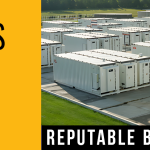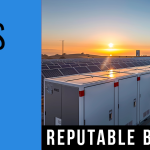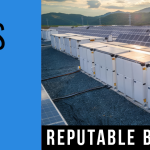
 Chinese EV, stationary battery company and PV panel maker BYD has announced the commissioning of Poland’s first large-scale solar power-linked storage project.
The company said the storage system is being operated in cooperation with Polish BIPV cell and module manufacturer, ML System.
The storage unit is linked to a 1 MW PV plant developed under Poland’s auction scheme for solar projects up to 1 MW in scale.
“The newly launched energy storage project will be combined with a 1 MW solar power plant also produced and sold by BYD, enabling peak shaving and [the creation of] a more balanced power network,” the Chinese company said.
BYD’s numbers add up
The storage units were shipped by BYD in May.
“We believe that this project will be able to provide valuable lessons for power market reform and at the same time further consolidate our position in the Polish energy storage market,” said BYD Renewable Energy Business Development Director, Guo Bin.
In 2017, the solar and battery divisions of BYD enjoyed a relatively positive year, with revenue increasing 18.85% on 2016, to reach RMB8.44 billion ($1.34 billion). Last year, batteries and PV accounted for 8% of BYD’s revenue, up from 7% in 2016.
The Chinese group entered an energy storage partnership with German inverter maker Kostal in September.
read more Among innovative technology providers developing a thermal energy storage system, Norway-based cleantech company EnergyNest is currently one of the partners selected by multinational energy provider Enel for the analysis of the benefits and impacts of the integration of its technology in one of Enel’s numerous power generation assets. According to EnergyNest, impressive economic and climate-relevant figures could be achieved by the company’s latest thermal energy storage technology when integrated in full-scale: annual CO2reduction of up to 45,000 tons, 14 million liters of fuel oil saved per year and project payback in less than three years.
 San Diego Zoo Global has chosen a unit of EDF Renewables North America to provide a 1 MW/4 MWh energy storage system that is designed to reduce energy costs while limiting emissions at the zoo.
 Australia is to trial using solar and wind power to produce hydrogen via electrolysis, with the hydrogen then being used for long-term energy storage in the Sydney gas network.
 All over California, school districts are beginning to install energy storage. Mountain View Los Altos (MVLA) High School District was the first district in the state to combine energy storage with solar power generation and electric vehicle (EV) charging stations. At ENGIE Storage, we have years of experience helping K-12 school districts generate cost savings and improve the economics of sustainability measures with our GridSynergy® energy storage systems and software platform. We recently sat down with Mike Mathiesen, associate superintendent of business services at MVLA, to talk about how school districts can benefit from energy storage.
 It’s likely a strong indication of the way the world is adopting renewable energy rapidly that just under a month ago, one of the best-established trade shows for solar in the US featured what seemed like almost as much space dedicated to national and international energy storage companies and technologies, as it did for solar.
 California recently joined other leading states, provinces, cities, and corporations around the world by setting an ambitious 100 percent carbon-free electricity target
 October 18 (Renewables Now) – In a drive to reduce its energy costs, the San Diego Zoo has awarded EDF Renewables North America Distributed Solutions an energy storage services contract supported by a 1 MW/4 MWh battery.
 Sometime in the next month or two, the first investment in what will be a significant new stage in the transition to a renewable energy dominated grid in Australia will be made.