 Sacramento, Calif. — The California Energy Commission on Wednesday approved $10 million in grants for two microgrid projects, including one that represents a new form of partnership between investor-owned utilities and a community choice aggregator.
The commission in a 4-0 vote approved $5 million apiece in grants for microgrids at California Redwood Coast-Humboldt County Airport and at Santa Rosa Junior College in Sonoma County. The CEC said the airport project enables further research into microgrids and many value streams, including demonstrating the ability for CCAs to work with utilities to maintain reliability, offsetting electricity costs, integrating microgrids into CAISO operations, generating data and producing ancillary benefits at the remote location.
The solar/storage project at the coastal airport will “represent the first multi-customer, front-of-the-meter microgrid with renewable energy generation owned by a CCA and the microgrid circuit owned by an IOU.” Redwood Coast Energy will own the generation while Pacific Gas and Electric will own the distribution circuit, with Schatz Energy Research Center leading the project.
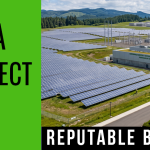
The airport facility consists of two ground-mounted solar PV arrays, one a 250-kW array configured for net energy metering service, and the other a 2-MW, 6-acre array for wholesale power sale. It also features a 2-MW/8-MWh lithium ion battery storage system and will additionally power a U.S. Coast Guard station. It will add resilience to 18 accounts on PG&E’s Janes Creek 1103 distribution circuit and is seen as providing a roadmap for microgrid development, the CEC said.
The Santa Rosa project will be 136,000 square feet of rooftop solar on two existing parking structures and two 1-MW lithium-ion battery systems. Other subcontractors and vendors include the California Center for Sustainable Energy, PXiSE Energy Solutions, WorleyParsons, SunPower, STEM and nine other subcontractors to be announced.
Chairman Robert Weisenmiller on Wednesday said the CEC has been communicating with utilities and the Public Utilities Commission about making microgrids a priority in high fire-risk areas to help maintain resilience and reliability.
read more Work has started on the first multi-megawatt
  As the largest state-owned public utility in America, in one of the most progressive states in the country, the New York Power Authority doesn’t have the option of taking a “wait and see” approach on cleantech.
 A chemical compound commonly used to boost crop yields could be the answer to helping the world increase its consumption of renewable energy.
 In a world first, the UK recently saw a liquid air energy storage (LAES) plant
  First developed by NASA, flow batteries are a potential answer to storing solar – and wind – for eight to 10 hours, far beyond what is commonly achieved today with lithium-ion. In the first of a two-part special report, Andy Colthorpe learns what the flow battery industry faces in the fight for commercialisation.
 As the demand for smartphones, electric vehicles, and renewable energy continues to rise, scientists are searching for ways to improve lithium-ion batteries–the most common type of battery found in home electronics and a promising solution for grid-scale energy storage. Increasing the energy density of lithium-ion batteries could facilitate the development of advanced technologies with long-lasting batteries, as well as the widespread use of wind and solar energy. Now, researchers have made significant progress toward achieving that goal.
 Kiran Kumaraswamy of Fluence Energy –
 The California Energy Commission yesterday approved about $10 million in grants, one for a college microgrid in Sonoma County and the second for an airport microgrid in Humboldt.